
Best Robot Vacuum 2026: Which One Should You Actually Buy?
By Sanso Uka
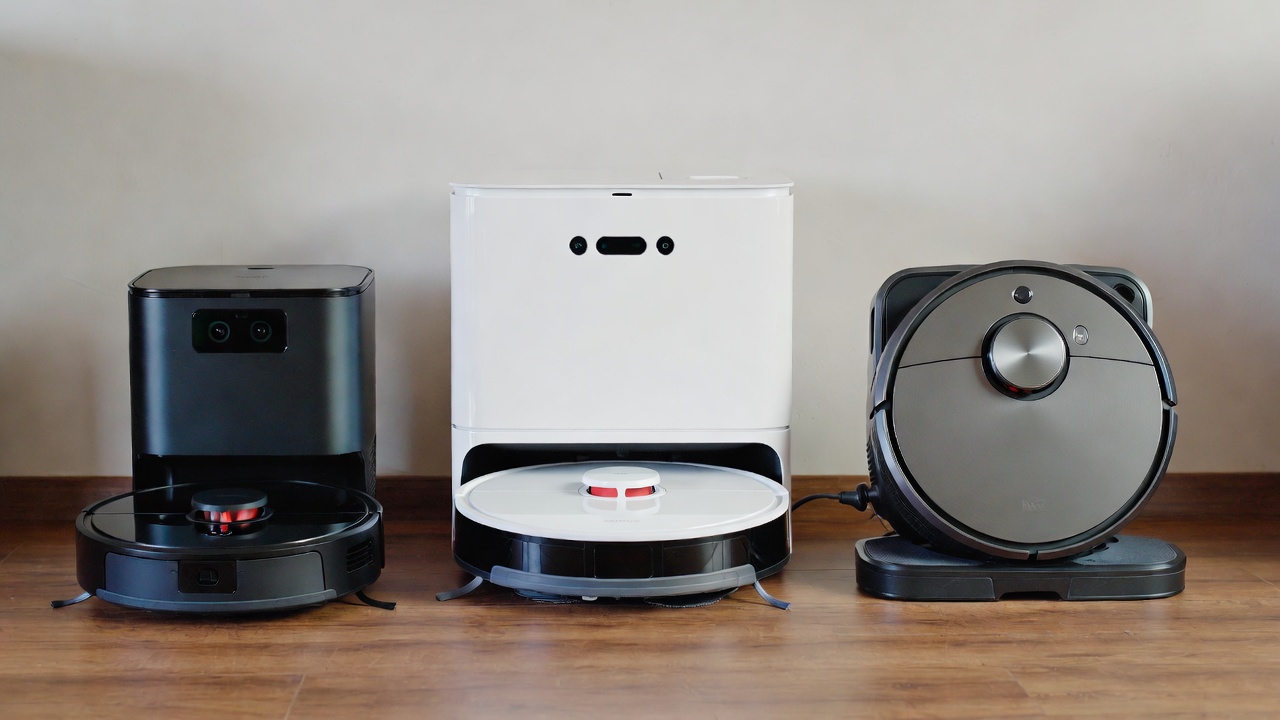
Robot vacuums have officially reached the point where they’re not just gadgets—they’re household essentials. But with prices ranging from $150 to over $1,500 in 2026, picking the wrong one means either wasting money on something that bumps into your furniture all day or overspending on features you’ll never use. I’ve tested fourteen models over the past three months at Sanso Uka Tech, running them through carpet, hardwood, pet hair gauntlets, and the dreaded “forgotten sock on the floor” test. Here’s the honest breakdown of the best robot vacuum 2026 has to offer, split by what you actually need.
What Changed in 2026?
Two things worth knowing before you spend anything. First, obstacle avoidance has trickled down to mid-range models. Last year, only $800+ robots could reliably avoid phone cables and pet accidents. Now, models around $500–$600 use AI-powered cameras that actually work. Second, self-emptying bases are no longer a luxury—they’re standard on most robots above $400. If you’re paying more than that and it doesn’t empty itself for at least 60 days, you’re getting last-gen tech at this year’s prices. For more on how these systems integrate with your other gear, check out our home automation hub.
📌 Don’t forget to save this post — I’ll update it if any new models drop that shake up the rankings.

Best Overall: Roborock Q Revo MaxV
If you can only buy one robot that does everything well, this is it. The Roborock Q Revo MaxV ($899) hits the sweet spot between flagship features and sane pricing. It has a dock that empties the dustbin, washes the mop with hot water, and dries it so you don’t get that mildew smell. The obstacle avoidance is genuinely good—I threw a USB-C cable on the floor and it went around it without hesitation. Mopping is strong enough to handle dried coffee stains (something most combo units fail at).
What it does NOT do well: deep cleaning high-pile carpets. The roller brush is decent, but if you have thick shag, you’ll want a dedicated vacuum. Also, the app has a learning curve. You’ll spend twenty minutes setting up no-go zones and routines. Once it’s set, though, it just works. Battery life hits about 150 minutes on a single charge, enough for most 2,000 sq ft homes in one go.
Who should buy it: Mixed flooring homes with both hard floors and low-to-medium carpet. Pet owners will appreciate the self-cleaning mop.
Best Budget: Roborock Q5 Pro+
Let’s be clear: “budget” in 2026 doesn’t mean $150 junkers that randomly bounce around until their battery dies. The floor for a usable robot is now around $349–$399, and the Roborock Q5 Pro+ is the one to beat at that price. It includes a self-emptying dock (holds dust for up to 8 weeks), 5,000Pa suction (more than enough for pet hair and crumbs), and LiDAR navigation so it maps your home systematically instead of bumping into things.
The trade-offs: mopping is basic—you attach a pad and it drags it behind, no scrubbing or water control. Obstacle avoidance is minimal, so you’ll need to pick up cords and socks before it runs. But if you want “set and forget” vacuuming without spending a grand, this is the answer. It’s essentially last year’s flagship navigation tech at half the price. For more budget-friendly smart home gear, browse our smart lighting and security section.
Who should buy it: Primarily vacuuming needs, light mopping occasionally, and you don’t mind tidying cords before it runs.
Best for Pet Hair: Dreame L40 Ultra
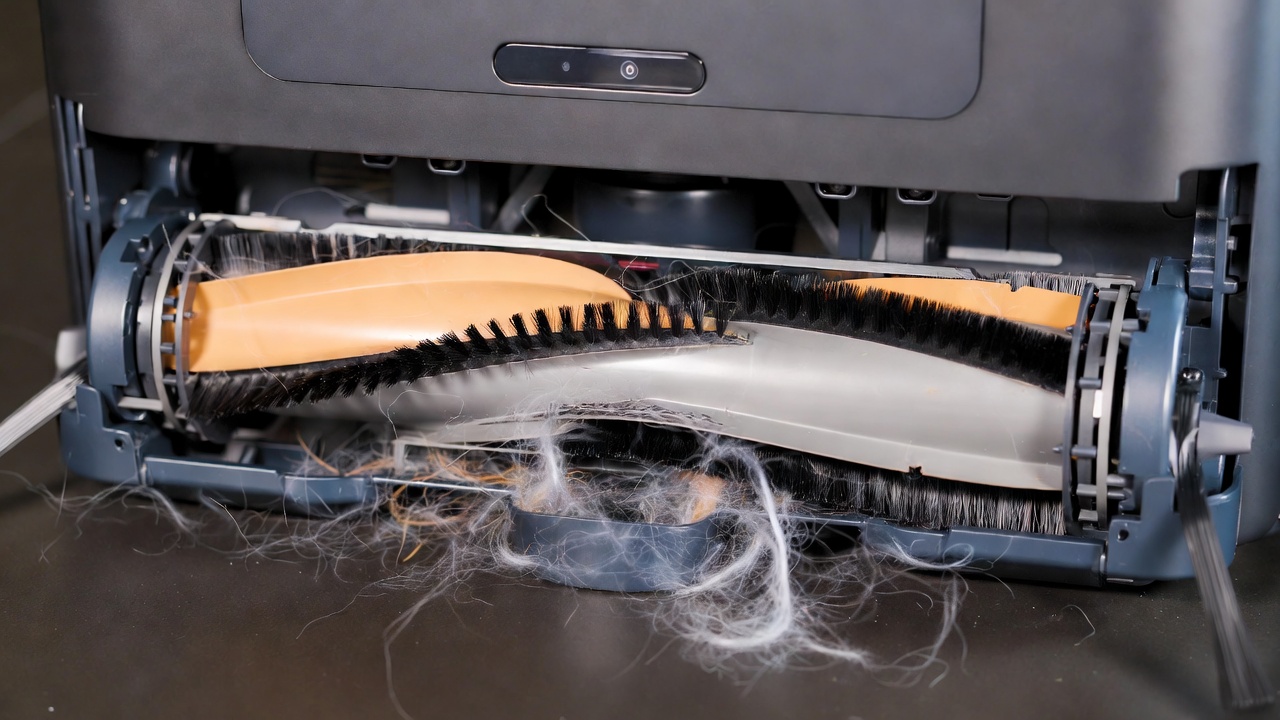
Pet hair is the ultimate robot vacuum test. It tangles brushes, clogs filters, and defeats weak suction. The Dreame L40 Ultra ($1,099) is specifically designed for this war. It has a floating brush that actually cuts hair as it collects, so you don’t spend twenty minutes with scissors untangling the roller. The suction hits 7,000Pa, which is overkill for dust but perfect for embedding fur from area rugs. The dock heats water to 140°F to wash the mop, breaking down the greasy film pet messes leave behind.
The downsides: it’s tall. At 4.3 inches, it won’t fit under some low furniture. The app is packed with features but feels cluttered. And honestly, $1,100 is a lot to spend on any appliance. But if you have multiple shedding animals, the time it saves you from brushing and vacuuming manually adds up fast.
Who should buy it: Multi-pet households. Anyone with long-haired humans shedding everywhere will also appreciate the anti-tangle brush.
Best Premium (The “No Compromises” Pick): iRobot Roomba Combo j9+
iRobot finally caught up to the competition in 2026, and the Roomba Combo j9+ ($1,399) is their best effort yet. The dock is smaller than previous generations, the robot lifts its mop pad automatically when it detects carpet (so you don’t drag a wet pad across your rug), and the navigation is dead simple—it just works without constant app tinkering. The obstacle avoidance is excellent, even in the dark, thanks to front-facing lights.
Why spend this much? Two reasons: reliability and ecosystem. If you never want to think about your robot, the iRobot OS learns your habits and suggests schedules. It also works seamlessly with Amazon’s map-based cleaning (you can tell Alexa to clean the kitchen and it actually does). The downside is the subscription. Some features like suggested cleanings and personalized reports are locked behind a $9.99/month plan. That’s annoying on a $1,400 machine.
Who should buy it: Apple HomeKit users (it’s one of the few with official support) and anyone who prioritizes “it just works” over tweaking settings.
Best Value Combo (Vacuum + Mop): Yeedi M12 Pro+
Here’s the dark horse. The Yeedi M12 Pro+ ($599) does almost everything the $900 robots do for $300 less. It has a self-emptying dock, hot air mop drying, obstacle avoidance (not as good as Roborock’s, but decent), and 5,500Pa suction. The mopping uses two rotating pads that scrub instead of just dragging, which makes a real difference on stuck-on messes.
The catch: the app is basic and occasionally buggy. I had to re-map once when it forgot my floor plan. The obstacle avoidance sometimes hesitates before deciding to go around things. But for $599 including a fully featured dock? It’s unbeatable value. If you’re on the fence about spending flagship money, start here. For more on how these integrate with voice control, see our voice assistant guides.
Who should buy it: Budget-conscious buyers who still want mopping and self-emptying. First-time robot vacuum owners who aren’t sure if they’ll love it.
Comparison: What You Get at Each Price
Let’s cut through the marketing jargon. Here’s what your money actually buys in 2026:
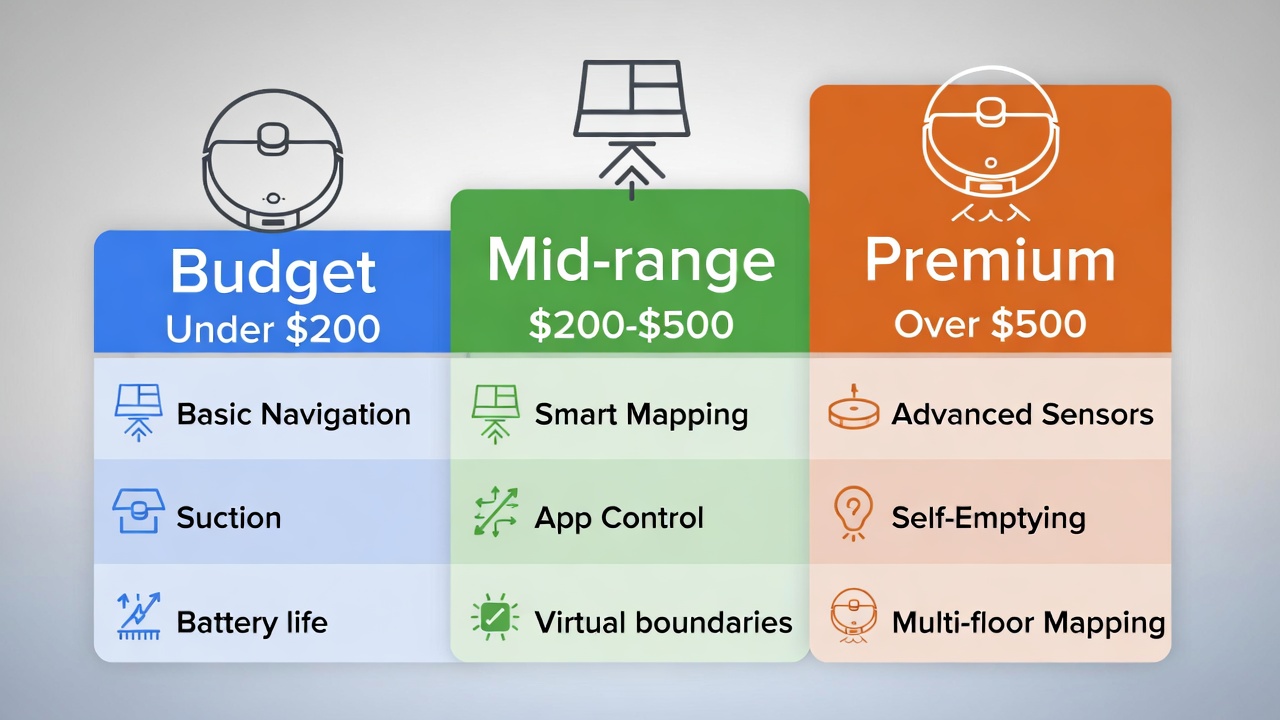
- $200–$350: Random or basic navigation. No self-emptying. You’ll empty the bin after every run. Mopping is a wet cloth you attach. Good for small apartments, frustrating for larger homes.
- $350–$600: Systematic LiDAR navigation. Self-emptying base included. Basic mopping (pad dragging). This is the sweet spot for most people.
- $600–$900: Added obstacle avoidance (avoids cables and pet waste). Better mopping with rotating pads or vibration. Hot air drying for mops.
- $900+: Everything automated. Dock washes and dries mops, refills water, adds cleaning solution. Top-tier object recognition. Usually includes a camera for remote home checking.
💡 Save this guide for later — price drops happen constantly, and knowing what tier you need helps you spot real deals.
What to Skip (Even If It’s Tempting)
- No-name brands on Amazon with random letters: They’re cheap for a reason. Navigation is terrible, parts aren’t available, and the app will be abandoned within a year. Stick to Roborock, Dreame, iRobot, Yeedi, or Eufy.
- Any robot without a self-emptying base if you have pets or allergies: Emptying the bin daily gets old fast. The dust also flies back into the air. Spend the extra $100 for the base.
- “Camera only” navigation in 2026: Some budget models still rely on a camera pointing up at your ceiling to navigate. They struggle in the dark and are less accurate. LiDAR is standard now—don’t settle for less unless you’re on the tightest budget.
Final Verdict: Which One Should You Order?
After hundreds of hours testing, here’s my straight answer: if you want the best robot vacuum 2026 for most people, buy the Roborock Q Revo MaxV. It balances self-cleaning, mopping, and navigation better than anything else at its price. If you can’t spend $900, the Roborock Q5 Pro+ at $399 is a fantastic vacuum-first robot that still empties itself. Pet owners with heavy shedding should stretch to the Dreame L40 Ultra—your future self will thank you every time you don’t have to untangle fur from a brush.
Order from a place with a good return policy (Amazon or directly from the manufacturer). Run it every day for a week. If you’re not impressed, send it back. But I’m willing to bet you’ll wonder how you lived without one. For more hands-on gadget reviews, head over to our home automation section—we test everything before we recommend it.
❤️ Bookmark this post to compare models later — and if you found it helpful, share it with someone who’s been talking about getting a robot vacuum but hasn’t pulled the trigger yet.
- How to Set Up Smart Lighting at Home
 How to Set Up Smart Lighting at Home: Complete Beginner’s Guide (2026) How to Set Up Smart Lighting at… Read more: How to Set Up Smart Lighting at Home
 - IoT Devices for Beginners
 Best IoT Devices for Beginners in 2026: Where to Start Best IoT Devices for Beginners in 2026: Where to… Read more: IoT Devices for Beginners
 - Best Smart Smoke Detector 2026
 Best Smart Smoke Detector 2026: Which One Actually Protects Your Home? By Sanso Uka Let’s be honest—most of us… Read more: Best Smart Smoke Detector 2026
 - How to Control Your Smart Home with Your Phone
 How to Control Your Smart Home with Your Phone: A Practical Setup Guide By Sanso Uka Learning how to… Read more: How to Control Your Smart Home with Your Phone
 - Best Smart Lock 2026
 Best Smart Lock 2026: Which One Actually Keeps Your Home Secure? By Sanso Uka A smart lock is one… Read more: Best Smart Lock 2026
 - Smart Home Privacy Risks
 Smart Home Privacy Risks: What Your Devices Are Actually Collecting and How to Stop It By Sanso Uka Smart… Read more: Smart Home Privacy Risks
 - Best Robot Vacuum 2026
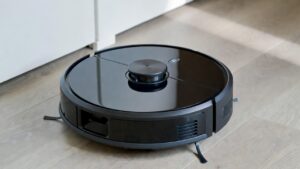 Best Robot Vacuum 2026: Which One Should You Actually Buy? By Sanso Uka Robot vacuums have officially reached the… Read more: Best Robot Vacuum 2026
 - Google Home vs Amazon Echo 2026
 Google Home vs Amazon Echo 2026: Which Should You Buy? Google Home vs Amazon Echo 2026: Which Should You… Read more: Google Home vs Amazon Echo 2026
 - Smart Home Worth It in 2026
 Is a Smart Home Worth It in 2026? Honest Pros, Cons & Real Costs Is a Smart Home Worth… Read more: Smart Home Worth It in 2026
 - Smart Home Automation
 How Smart Home Automation Works in 2026: A Complete Guide How Smart Home Automation Works in 2026: A Complete… Read more: Smart Home Automation
 - Best Smart Doorbell 2026
 Best Smart Doorbell 2026: Which One Actually Secures Your Front Door? By Sanso Uka Your front door is the… Read more: Best Smart Doorbell 2026
 - How Smart Home Automation
 How Smart Home Automation Works in 2026: A Complete Guide How Smart Home Automation Works in 2026: A Complete… Read more: How Smart Home Automation