
Google Home vs Amazon Echo 2026: Which Should You Buy?
By Sanso Uka
The Google Home vs Amazon Echo debate used to be about speaker quality and smart home device counts. In 2026, it’s mostly about which AI assistant you trust to run your daily life — and how much you’re willing to pay per month for the privilege. Both platforms have undergone their biggest upgrades in years: Amazon launched Alexa+, a conversational AI overhaul powered by large language models, and Google replaced Google Assistant on all Nest speakers with Gemini for Home. Neither platform is what it was even 18 months ago. This comparison cuts through the marketing and tells you exactly where each one wins — and where it still falls short.
📌 Don’t forget to save this post — this comparison will help you decide before you spend a dollar.
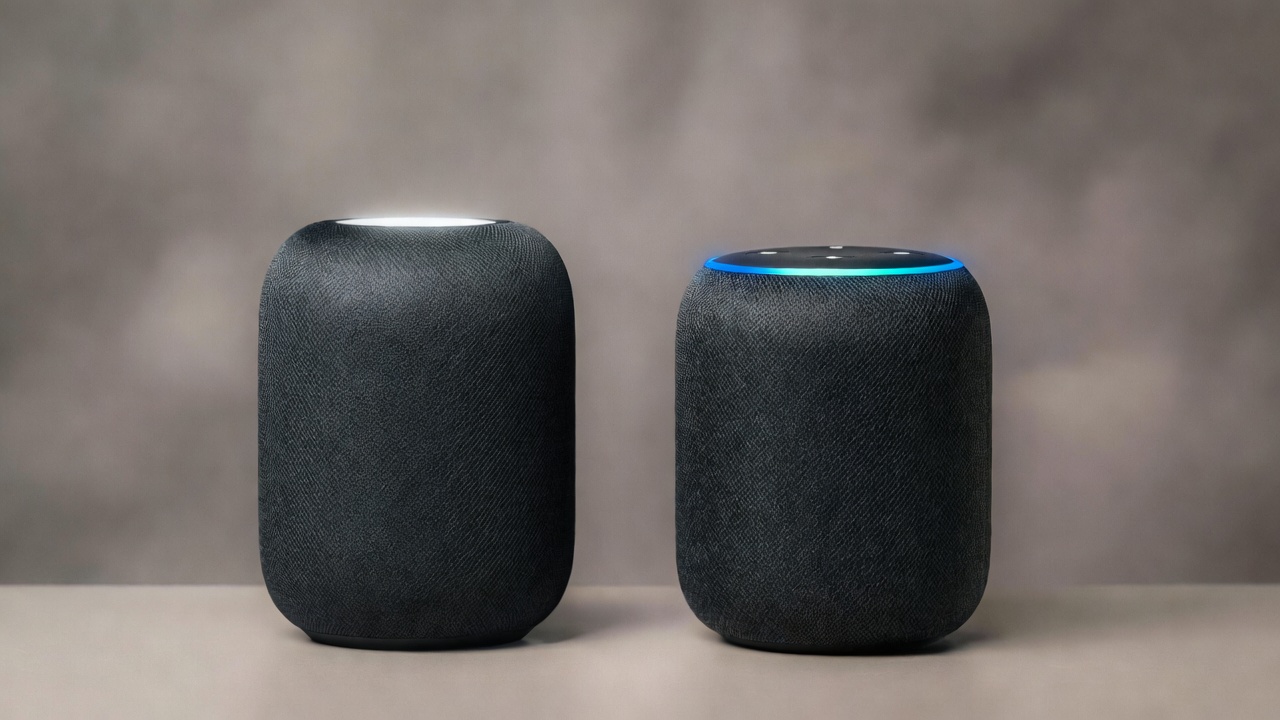
The Big Change: Both Platforms Went AI-First in 2025–2026
For years, smart speakers responded to commands. Ask for the weather, get the weather. Ask to turn off the lights, the lights go off. The commands had to be precise, and if you said something slightly off, the assistant either failed or asked you to repeat yourself. Both Amazon and Google have been working to change that, and the results are finally visible in 2026.
Amazon Alexa+ launched in early 2026 as a full-on conversational upgrade. It handles multi-turn conversations without requiring the wake word each time, remembers context across a session, and can complete genuine tasks — adding a recurring calendar event, summarizing messages, even placing Amazon orders. It also handles chained commands like “turn on the lights, lower the thermostat to 68, and start the bedtime routine” as a single request, which older Alexa couldn’t do reliably.
Gemini for Home replaced Google Assistant on Nest speakers and displays in late 2025, with updates continuing into early 2026. Google’s approach is a gradual rollout — the same model that powers Gemini on your phone is now what processes your voice commands at home. The result is noticeably more natural language understanding, especially for vague or multi-part requests. A command like “dim the living room to something cozy and warm” now works as intended rather than throwing an error.
The important difference: Alexa+ is a paid subscription, while Gemini for Home’s core features are free.
Pricing: The Real Cost of Each Ecosystem in 2026
Amazon Echo + Alexa+
Echo hardware ranges from the Echo Dot (5th Gen) at $49.99 up to the Echo Show 15 at $249.99. The Echo Dot Max, released in late 2025, sits at $99.99 and brings a significant audio upgrade over the standard Dot.
The bigger cost consideration is Alexa+, the AI-powered assistant layer. It launched February 4, 2026, and is available at no extra charge for Amazon Prime subscribers. Non-Prime members pay $19.99/month as a standalone subscription, though Prime itself costs $14.99/month or $139/year and includes shipping, Prime Video, and Music. For most people, Prime membership is the natural bundle, which makes Alexa+ effectively free. If you’re not a Prime member and don’t want to become one, the standalone pricing is steep just for a smarter voice assistant.
Google Nest + Gemini for Home
Nest speaker hardware starts with the Nest Mini at $49 and the Nest Audio at $99. The new Google Home Speaker — also priced at $99 — was announced in late 2025 but pushed to spring 2026 availability while Google prioritized rolling out Gemini to existing hardware first.
Gemini for Home’s basic features — smarter voice commands, natural language routines, general knowledge queries — are available for free on existing Nest devices. However, the full conversational experience including Gemini Live (hands-free, bi-directional conversations without a wake word) requires Google Home Premium at $10/month. If you also want advanced Nest camera features like video search and descriptive notifications, the higher tier runs $16/month. If you already subscribe to Google AI Pro for Workspace at $19.99/month, Home Premium Advanced can be added as an upgrade.
The Bottom Line on Cost
For Amazon Prime members, Alexa+ costs nothing extra — that’s a genuinely strong value proposition. For Google users who don’t need Gemini Live or camera subscriptions, the core free tier is also competitive. The cost gap opens up for non-Prime Amazon users ($19.99/month) versus Google’s free tier, where Google wins on raw affordability.
Voice Intelligence: Which Assistant Actually Understands You Better?
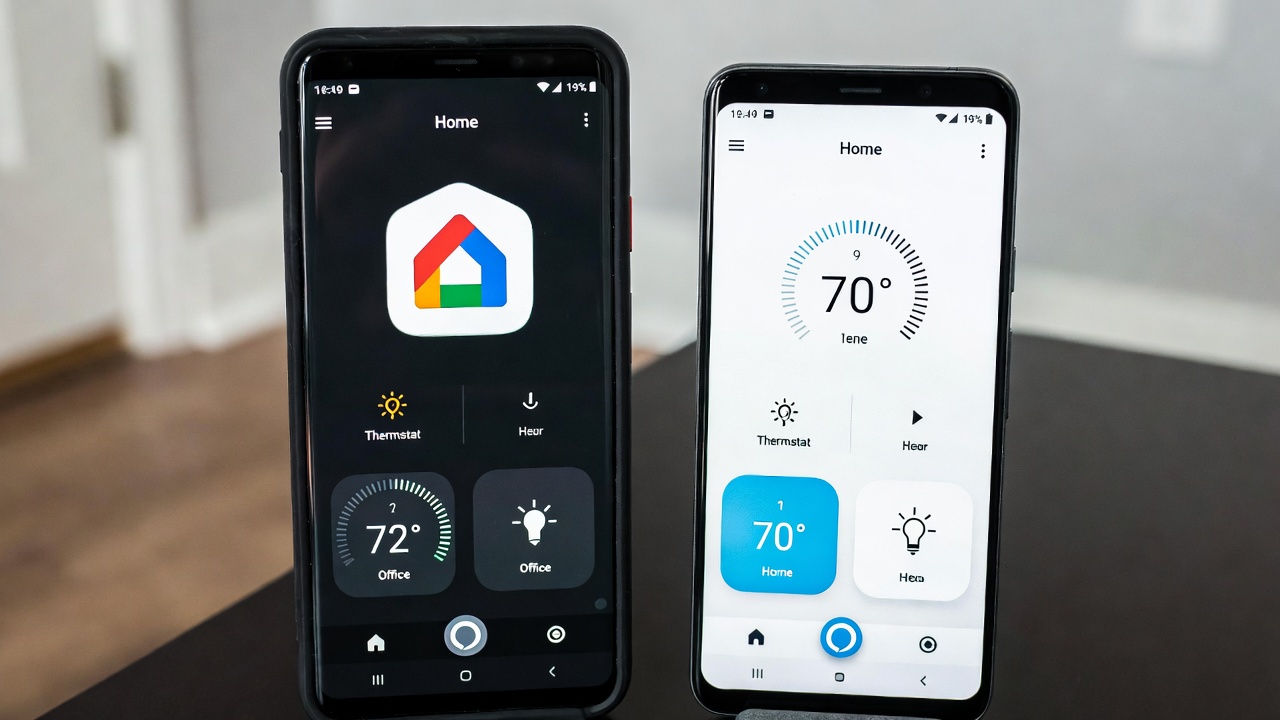
General Knowledge and Conversational Queries
Google wins this category and it isn’t close. Gemini’s underlying knowledge base and reasoning are genuinely stronger for information requests — factual questions, context-aware follow-ups, and anything touching Google’s own services like Search, Maps, or YouTube. If you ask “What’s the best route home avoiding tolls, and what’s the weather like there right now?” Google handles it in one smooth response. Alexa+ handles general knowledge much better than old Alexa did, but it still has moments where it confidently gives wrong information — something testers flagged in Consumer Reports’ extended review in late 2025.
Smart Home Control and Routines
Amazon still has the edge on raw smart home device compatibility. The Echo ecosystem supports Zigbee natively on select devices (Echo Show 10, Echo 4th Gen), which means a wider range of smart plugs, bulbs, and sensors pair directly without a separate hub. Alexa’s device compatibility list — over 140,000 compatible products — remains the largest in the category.
That said, Gemini for Home has caught up on routine creation. You can now build automations using natural language: say “remind me to take out the trash every Sunday at 7pm” and it creates the routine without going into the app. Google also added better device and location context in early 2026 updates — Gemini now uses your home address from the Home app to give accurate local weather, news, and traffic without being asked to specify.
Calendar, Email, and Productivity Integration
If you live in Google’s ecosystem — Gmail, Google Calendar, Google Drive — Gemini for Home wins without debate. Asking “when is my next meeting with Marco?” pulls the actual answer from your calendar and gives you the time, location, and any prep notes attached to the event. Alexa can sync with Google Calendar, but the integration feels secondary, not native. Alexa’s strength here is with Microsoft Outlook and Office 365 users, where Amazon has invested more deeply.
For shopping, Alexa dominates. Placing orders, tracking packages, managing shopping lists, and integrating with Amazon Fresh or Whole Foods — none of that has a Google equivalent. If you order from Amazon regularly, that’s a genuine time-saver built directly into the speaker on your counter.
Want to compare more smart home assistants in depth? See our guide on voice assistants for the smart home.
Hardware: Echo Lineup vs Nest Lineup in 2026
Amazon Echo Devices
Amazon’s Echo lineup remains the most extensive in the smart speaker market. The main options in 2026:
- Echo Dot (5th Gen) — $49.99: Best budget entry point. Good for single-room voice control. Audio is adequate for voice and casual music; not a dedicated speaker replacement.
- Echo Dot Max — $99.99: New in late 2025. 3x bass upgrade over the standard Dot, Dolby Atmos support. Better build quality and noticeably richer sound for the price.
- Echo Studio — $219.99: Amazon’s best-sounding Echo. Dolby Atmos and 360-degree audio. Can pair up to five Echo Studios or Echo Dot Max units with a Fire TV for a full surround system.
- Echo Show 8 / 10 / 15: Smart displays with screens. The Show 15 ($249.99) is the best option for a kitchen command center — 15.6-inch display, wall-mountable, and the one most people use to manage family schedules and check cameras.
Amazon regularly discounts Echo devices — sometimes 40–45% off during Prime Day and Black Friday. If price matters, waiting for a sale is almost always worth it.
Google Nest Devices
Google’s lineup is smaller but more focused. The Nest Mini ($49) is the entry-level option — good voice pickup, decent audio for its size. The Nest Audio ($99) is the sweet spot for pure sound quality in this price range; its larger 75mm woofer and 19mm tweeter produce a fuller sound than the Echo Dot Max at the same price point, with a more defined mid-range.
The new Google Home Speaker ($99), arriving spring 2026, promises a 360-degree audio design to compete directly with the Echo Dot Max and Echo Studio. Google hasn’t provided full specs before this article’s publish date, but confirmed it lacks Dolby Atmos support — a clear loss against Amazon’s lineup at that price tier.
For smart displays, the Nest Hub (2nd Gen, $99) and Nest Hub Max ($229) are the main options. The Nest Hub uses an ambient EQ sensor that adjusts the display to match the room’s lighting — genuinely useful for a bedside clock or kitchen display. Note: the Nest Hub does not have a camera, which is a deliberate privacy choice. The Hub Max does include a camera for video calls.
Smart Home Compatibility: Which Ecosystem Connects to More?
This is one area where Amazon’s years of market leadership still matter. Alexa officially supports over 140,000 smart home products across thousands of brands. If you pick up a budget smart plug, a third-party ceiling fan controller, or a niche sensor at a hardware store, odds are it’s Alexa-compatible.
Google Home’s compatibility list is smaller, though it covers all the major brands — Philips Hue, IKEA Dirigera, Nest’s own ecosystem, Yale locks, and the full Matter-certified device catalog. Both platforms are Matter-compatible, which increasingly levels the playing field for newer devices. Where Google still lags is in older, non-Matter third-party devices that manufacturers only certified for Alexa.
One hardware advantage Alexa holds: select Echo devices include a built-in Zigbee hub, letting you pair compatible smart home devices directly without a separate hub purchase. Google doesn’t offer an equivalent.
For a deeper look at how these platforms handle specific smart home categories, our home automation guide covers compatibility in detail across lighting, security, and climate control.
Privacy: What Each Platform Does With Your Voice
Both platforms process voice commands in the cloud, which means audio leaves your home. That hasn’t changed. What has changed is the scale of data each platform now processes: Alexa+ maintains conversational memory across sessions, and Gemini for Home draws on your Google account data to personalize responses.
Amazon lets you review and delete voice recordings through a privacy dashboard, with auto-delete options for 3, 18, or 36 months. Hardware mute buttons are standard on all Echo devices. Google offers similar controls through the My Activity dashboard, and the Nest Hub uses a physical mic/camera switch that hardware-disconnects both sensors simultaneously.
If privacy is a serious concern, neither platform is ideal — both are designed to learn from you over time. The alternative worth knowing about is Apple’s HomePod, which processes most Siri requests on-device and is notably more conservative about data collection, though its smart home compatibility is more limited.
Head-to-Head Summary
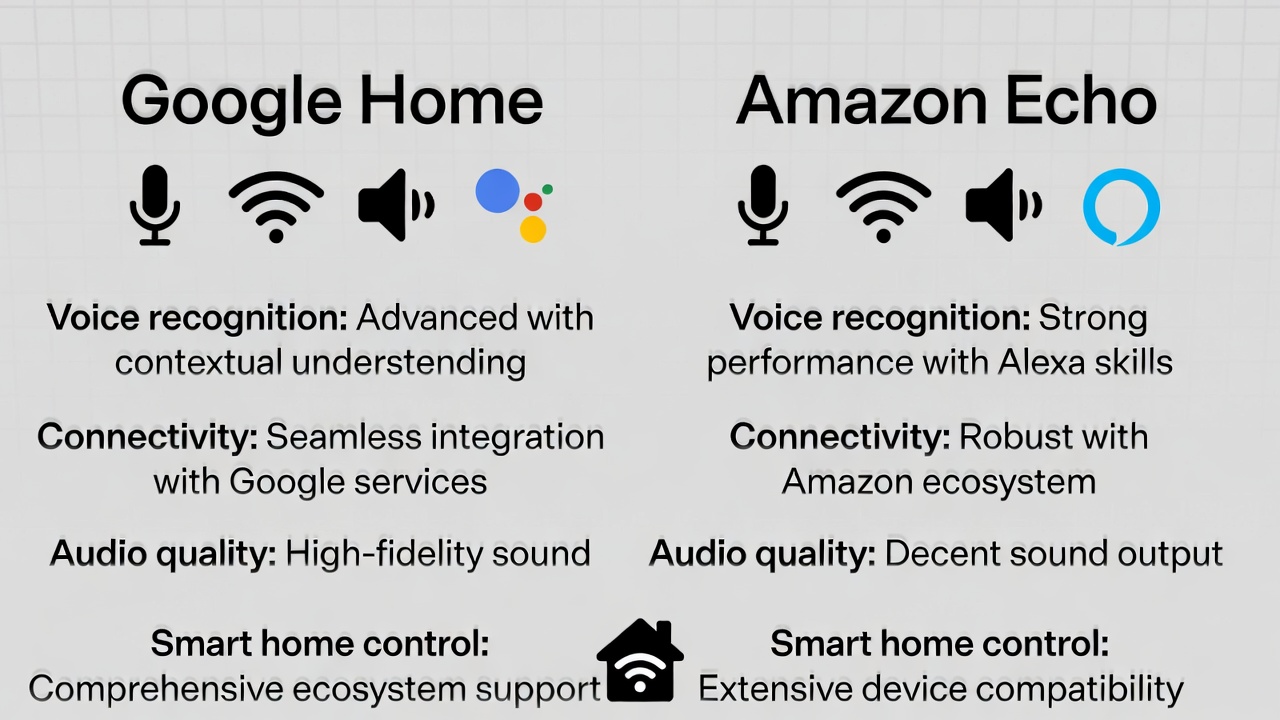
- Voice intelligence & general knowledge: Google wins. Gemini’s reasoning and knowledge retrieval are stronger across the board.
- Smart home device compatibility: Amazon wins. 140,000+ products, native Zigbee hub on select devices, broader third-party support.
- Google/Android ecosystem integration: Google wins decisively. Gmail, Calendar, Maps, Photos, YouTube — all native.
- Amazon/shopping integration: Amazon wins decisively. Shopping, order tracking, Prime Video control — all native to Alexa.
- Sound quality (same price tier): Nest Audio edges out Echo Dot Max at $99. Echo Studio wins at the $200+ tier with Dolby Atmos.
- Smart displays: Push. Echo Show 15 is better for families and wall mounting. Nest Hub Max is better for ambient bedside use.
- Price for premium AI features: Google wins for non-Prime users (free core Gemini vs $19.99/month standalone Alexa+). Amazon wins for existing Prime members (Alexa+ at no extra cost).
- Privacy controls: Roughly equal. Both offer manual controls. Neither processes primarily on-device.
For more information about the devices discussed, the Google Nest speaker lineup and Amazon’s Echo product pages list full specs for each current model.
💡 Save this guide for later — choosing between ecosystems is a long-term decision, and coming back to this comparison before you buy is worth the two minutes.
Which One Should You Actually Buy?
Buy Amazon Echo if: You’re an Amazon Prime member (Alexa+ is free for you), you shop on Amazon regularly, you use Microsoft 365 or Outlook for calendar and email, or you have a large mix of older third-party smart home devices that aren’t Matter-certified. The Echo Dot Max at $99.99 is the best value in the Echo lineup right now.
Buy Google Nest if: You’re heavily invested in Google services — Gmail, Google Calendar, Google Drive, Android — and want your home to connect to those without extra setup. The free tier of Gemini for Home is genuinely capable, and the Nest Audio at $99 sounds better than any Echo at the same price. If you don’t want to pay for Alexa+, Google is the smarter free option.
If you’re building a new smart home from scratch in 2026: Start with whichever phone platform you already use. Android users will feel at home with Google immediately. iPhone users who don’t use Gmail or Google Calendar might find Amazon’s more neutral ecosystem easier to live with day-to-day. Either way, prioritize Matter-certified smart home devices so you’re not locked in if you change your mind later.
The one thing that hasn’t changed: both platforms have gotten meaningfully better, and either is a reasonable starting point. The wrong choice is continuing to research instead of picking one. You can always sell a $49 speaker if you switch sides.
❤️ Bookmark this post to try these ideas later — and share it with anyone still trying to make this decision.
- How to Set Up Smart Lighting at Home
 How to Set Up Smart Lighting at Home: Complete Beginner’s Guide (2026) How to Set Up Smart Lighting… Read more: How to Set Up Smart Lighting at Home
 - IoT Devices for Beginners
 Best IoT Devices for Beginners in 2026: Where to Start Best IoT Devices for Beginners in 2026: Where… Read more: IoT Devices for Beginners
 - Best Smart Smoke Detector 2026
 Best Smart Smoke Detector 2026: Which One Actually Protects Your Home? By Sanso Uka Let’s be honest—most of… Read more: Best Smart Smoke Detector 2026
 - How to Control Your Smart Home with Your Phone
 How to Control Your Smart Home with Your Phone: A Practical Setup Guide By Sanso Uka Learning how… Read more: How to Control Your Smart Home with Your Phone
 - Best Smart Lock 2026
 Best Smart Lock 2026: Which One Actually Keeps Your Home Secure? By Sanso Uka A smart lock is… Read more: Best Smart Lock 2026
 - Smart Home Privacy Risks
 Smart Home Privacy Risks: What Your Devices Are Actually Collecting and How to Stop It By Sanso Uka… Read more: Smart Home Privacy Risks
 - Best Robot Vacuum 2026
 Best Robot Vacuum 2026: Which One Should You Actually Buy? By Sanso Uka Robot vacuums have officially reached… Read more: Best Robot Vacuum 2026
 - Google Home vs Amazon Echo 2026
 Google Home vs Amazon Echo 2026: Which Should You Buy? Google Home vs Amazon Echo 2026: Which Should… Read more: Google Home vs Amazon Echo 2026
 - Smart Home Worth It in 2026
 Is a Smart Home Worth It in 2026? Honest Pros, Cons & Real Costs Is a Smart Home… Read more: Smart Home Worth It in 2026
 - Smart Home Automation
 How Smart Home Automation Works in 2026: A Complete Guide How Smart Home Automation Works in 2026: A… Read more: Smart Home Automation
 - Best Smart Doorbell 2026
 Best Smart Doorbell 2026: Which One Actually Secures Your Front Door? By Sanso Uka Your front door is… Read more: Best Smart Doorbell 2026
 - How Smart Home Automation
 How Smart Home Automation Works in 2026: A Complete Guide How Smart Home Automation Works in 2026: A… Read more: How Smart Home Automation