
Best Smart Thermostat of 2026: Which One Is Actually Worth Buying?
By Sanso Uka
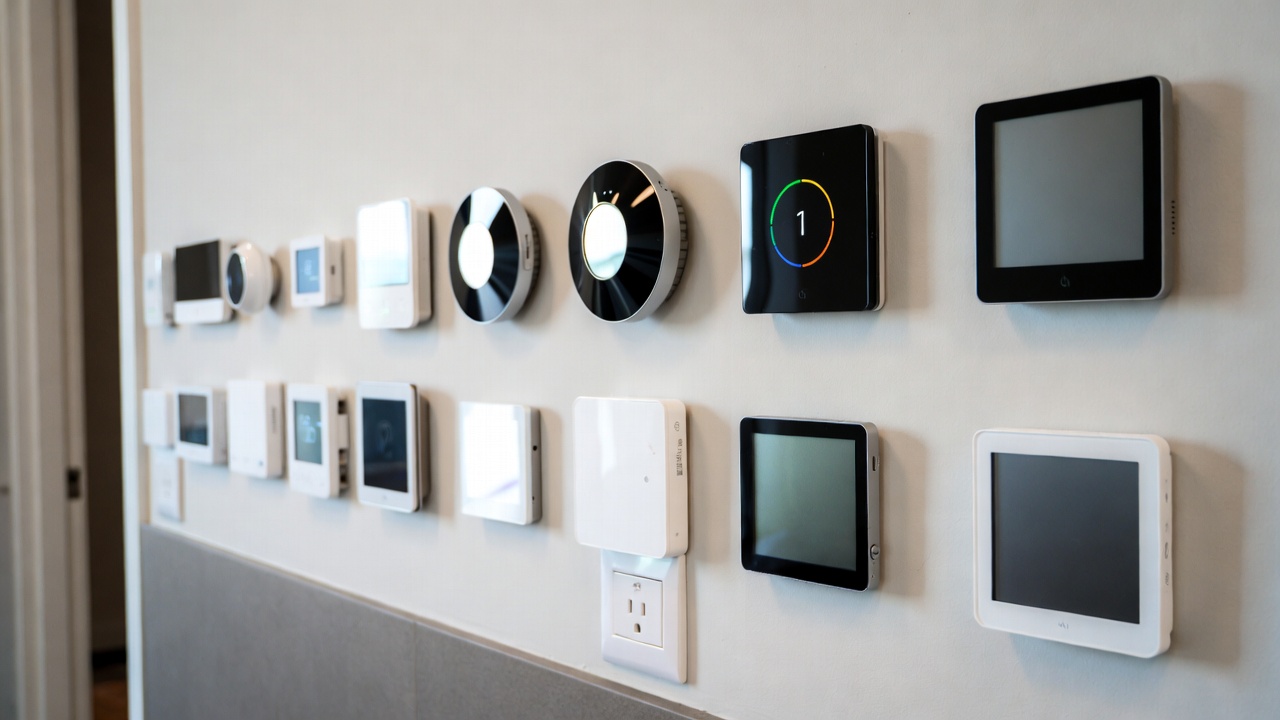
The best smart thermostat does more than let you adjust the temperature from your phone — it learns your habits, trims your energy bills, and plays nicely with the rest of your smart home. Prices in 2026 range from around $55 for a no-frills entry-level unit to $280 for a full-featured flagship, and the right choice depends almost entirely on your HVAC setup, your smart home ecosystem, and how much automation you actually want. This guide breaks down the top models available right now so you can pick one without second-guessing yourself later.
📌 Don’t forget to save this post — it covers every tier from budget to premium so you can come back when you’re ready to buy.
What to Check Before You Buy Anything
Before you fall in love with any thermostat, confirm two things: whether your HVAC system is compatible, and whether your home already has a C-wire (common wire). Most smart thermostats need a C-wire to draw constant power. Several top models include workarounds — Google’s Power Sharing technology and Ecobee’s Power Extender Kit (PEK) — but it’s worth checking your wiring before ordering. Every major brand has an online compatibility checker; use it. Running it takes about two minutes and can save you a return trip to the hardware store.
Beyond compatibility, think about your smart home ecosystem. If you’re already deep into Google Home, the Nest is an obvious pairing. Apple HomeKit households will find Ecobee far more capable there. And if Alexa is your daily driver, almost every option on this list will work, though the Amazon Smart Thermostat leans into that integration most naturally.
Best Overall: Google Nest Learning Thermostat (4th Gen) — $279.99
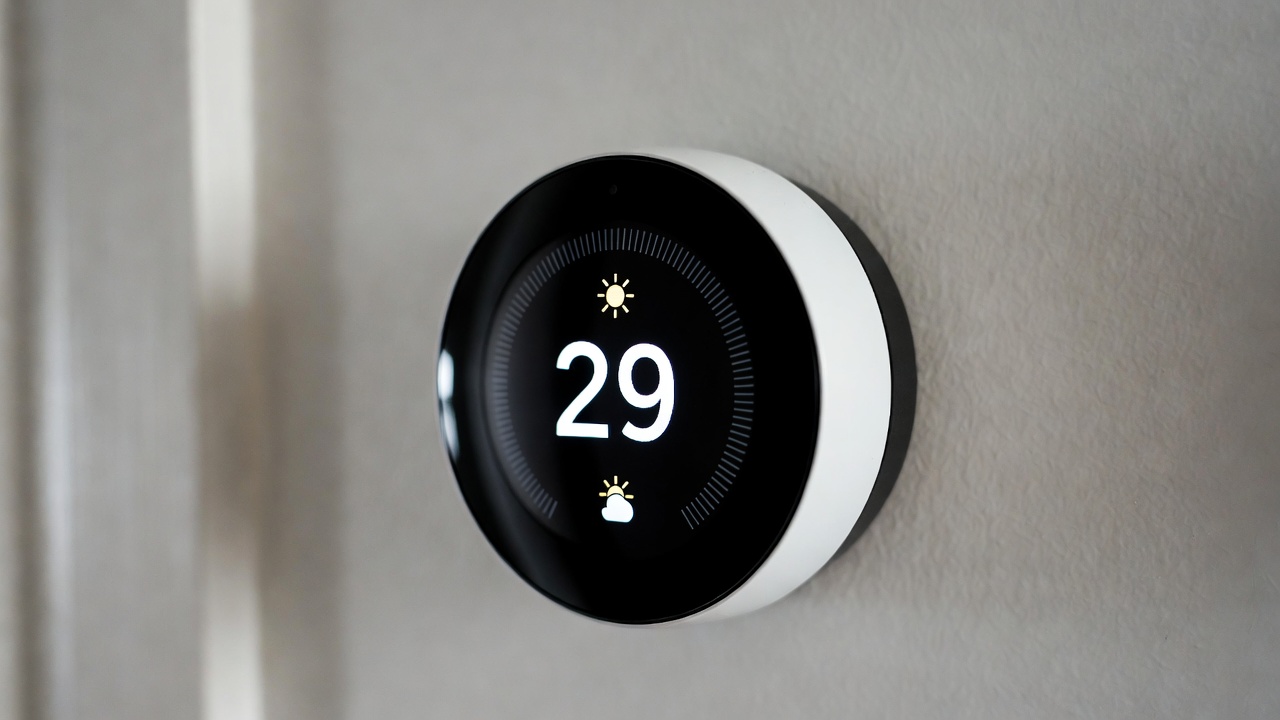
Google finally updated the Nest Learning Thermostat in 2024 after nearly a decade, and the 4th generation is a meaningful upgrade. If you’re building a broader smart home setup, this thermostat slots in naturally. The new 2.7-inch display is 60% larger than the previous model, borderless and clean, with a Dynamic Farsight feature that shows you the time, temperature, weather, or air quality from across the room. It looks genuinely good on a wall.
The learning side actually works. The thermostat watches your manual adjustments for the first week or two, then builds a schedule around your patterns. It also factors in outdoor temperatures — when sun through your windows is already warming the space, it pauses the heat and saves energy. This “Natural Heating and Cooling” feature is new to Gen 4 and contributes to Google’s claim of up to 31% savings on heating and cooling, though real-world results will vary depending on your climate and habits. Independent testing found average savings of around 12% on heating bills and 15% on cooling.
The Adaptive Eco mode kicks in when you leave and uses both your phone’s location and the built-in Soli motion sensor to detect when no one is home. It aims to return your house to a comfortable temperature within an hour of your arrival — not instantly, which is worth knowing if you work irregular hours. Compatibility covers most 24V systems (gas, electric, oil, forced air, heat pump, radiant), and a C-wire is not required in most homes. It also ships with a Nest Temperature Sensor (2nd gen) and is Matter-certified for broad smart home integration.
The one real limitation: it doesn’t support room sensors beyond the included one natively, which means homes with significant hot and cold spots might find Ecobee’s multi-room system more effective. And at $279.99, it’s the priciest option on this list. You can find it discounted fairly regularly — it hit $219 during Prime Day 2025 — but that’s the reference price to plan around.
Best for: Google Home users who want a hands-off thermostat that learns and automates without much input.
Best for Multi-Room Comfort: Ecobee Smart Thermostat Premium — ~$229
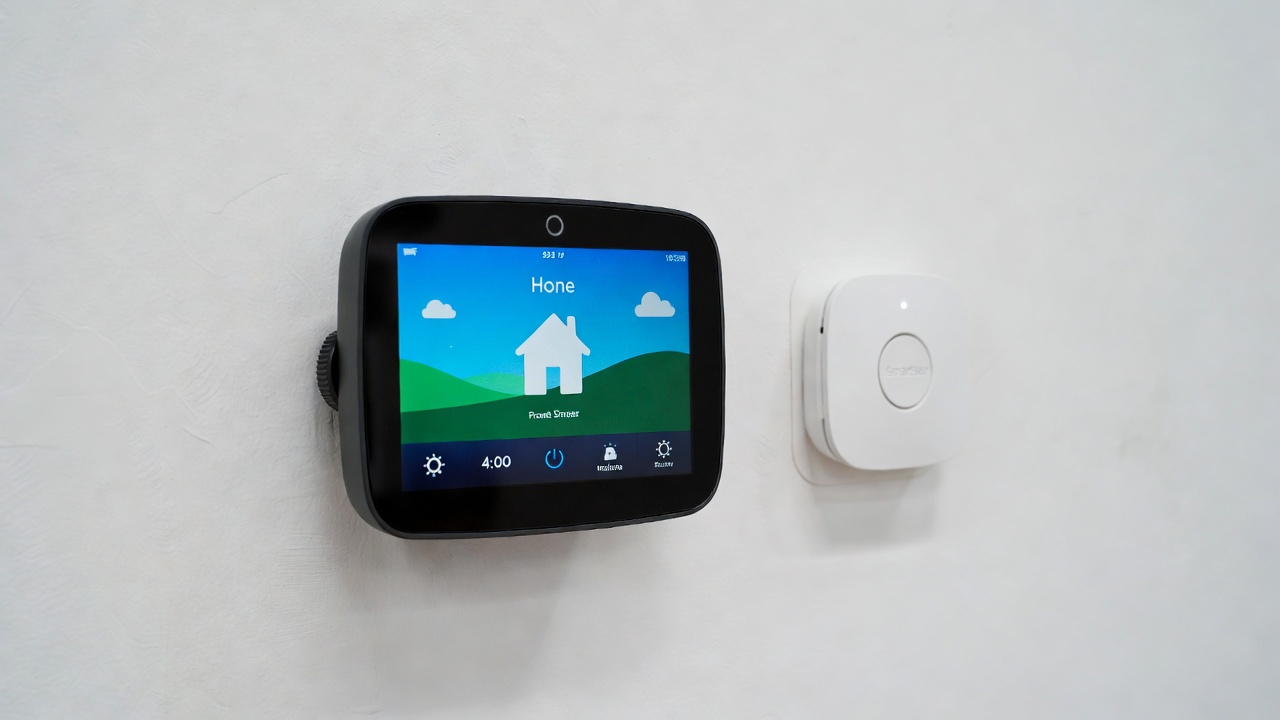
If your home has rooms that run noticeably hotter or colder than where the thermostat sits, Ecobee’s approach makes more sense than any other brand’s. The Smart Thermostat Premium ships with one SmartSensor — a small, battery-powered room sensor you place wherever temperature consistency matters most, like a bedroom or home office. Additional sensors run $39.99 each or $99.99 for a three-pack. The thermostat then uses those remote readings to make smarter decisions about when to run your system. Homes using this setup have seen measurably better energy efficiency compared to single-sensor thermostats, per testing data from Energy Star.
The Premium model sits at the top of Ecobee’s lineup and goes beyond temperature control. It includes a built-in indoor air quality monitor that alerts you when VOCs or CO2 levels rise too high and suggests actionable fixes (open a window, run an air purifier). It doubles as a smart speaker with Alexa or Siri built in — though using Siri requires an Apple HomePod as a home hub. It works with every major platform: Alexa, Google Home, Apple HomeKit, and Samsung SmartThings. Ecobee claims savings of up to $284 per year compared to a standard programmable thermostat, based on their own internal analysis.
The downside is that the Ecobee Premium doesn’t learn your schedule the way Nest does — it suggests schedule changes and asks your approval, rather than applying them silently. Some people prefer that level of control; others find it one more notification to dismiss. The interface is also busier than Nest’s, with a full touchscreen menu system. Setup requires a C-wire or the included Power Extender Kit, which handles most homes without one.
For an Apple HomeKit household, especially one with multiple rooms to manage, this is the stronger pick over Nest. Check out our voice assistant compatibility guide if you’re unsure how it fits your setup.
Best for: HomeKit users or anyone with uneven temperatures across rooms who wants detailed air quality data.
Best Value with Smart Features: Ecobee Smart Thermostat Essential — $129.99
Released in March 2025, the Ecobee Essential is the most practical new entry in this category. At $129.99, it lands between the budget Amazon option and the mid-range Enhanced model. You get a full color touchscreen, standard scheduling, geo-based home/away switching, app control, and compatibility with Alexa, Google Assistant, and Siri. Ecobee’s own analysis suggests up to 23% savings on annual heating and cooling costs, which at average US energy spend translates to roughly $250 per year — meaning it could realistically pay for itself within six months.
What it doesn’t include compared to the Premium: no built-in speakers, no air quality monitor, and no radar occupancy sensing. Room sensors are sold separately (the Power Extender Kit for C-wireless homes is also separate on this model, unlike the Premium). If you just want a capable, reliable smart thermostat without the extras, this hits a genuinely strong price-to-feature ratio.
Best for: First-time smart thermostat buyers or anyone upgrading from a dumb programmable unit who doesn’t need the full premium feature set.
Best Budget Pick: Amazon Smart Thermostat — ~$80
If you primarily use Alexa and don’t need a learning thermostat, the Amazon Smart Thermostat at around $80 is hard to argue against. It supports standard scheduling, app control, and integrates deeply with Alexa routines. Independent testing found average annual savings of $179 compared to a basic programmable thermostat — that’s real money for an $80 device. Amazon also offers free professional installation in many areas through its Home Services program, which removes the DIY hesitation entirely.
The trade-offs are real, though: it doesn’t learn your habits, doesn’t work with Google Home or Apple HomeKit natively, and lacks room sensor support. It’s also purely utilitarian in appearance compared to Nest or Ecobee. But if you have an Alexa-centric home and want to automate your HVAC without spending $200+, it does the job reliably.
Best for: Alexa-only households on a tight budget looking for basic smart scheduling without the complexity.
Best Touchscreen Experience: Sensi Touch 2 Smart Thermostat — ~$140
The Sensi Touch 2 doesn’t get as much attention as Nest or Ecobee, but it earns its spot on this list. Its wide touchscreen is one of the easiest to read from across the room, and the app-guided Bluetooth setup is genuinely the most painless installation process of any thermostat we’ve tracked. Most users get it running in under 30 minutes. Emerson, which makes Sensi, explicitly states they won’t sell user data — a privacy commitment not all competitors make publicly. It’s Energy Star certified, supports optional room sensors, and works with Alexa, Google Assistant, and HomeKit.
The limitation is that it doesn’t learn your schedule automatically — you set it manually. That’s fine for people who prefer control over automation, but if you want a thermostat that handles itself, look at Nest.
Best for: Privacy-conscious buyers or those who want a straightforward, good-looking interface without the learning curve.
How Much Can You Actually Save?
The U.S. Department of Energy estimates you can save about 10% per year on heating and cooling simply by adjusting your temperature 7–10°F for eight hours a day. A smart thermostat makes that happen automatically. Real-world savings across independently tested models range from around $179 to $284 per year compared to standard programmable thermostats, depending on your home size, climate, and energy costs. Most mid-range smart thermostats pay for themselves within 12 to 18 months.
Many utility providers also offer rebates for smart thermostat purchases — typically $25 to $100 back. Both Google Nest and Ecobee have rebate finder tools on their websites. It’s worth checking before you buy; that rebate can effectively bring the Nest Gen 4 down to the same price as an Ecobee Essential.
💡 Save this guide for later — it has every major model at every price point so you can revisit when your energy bill spikes.
Which One Should You Buy?
For most people with a standard Google Home setup who want a thermostat that handles itself, the Google Nest Learning Thermostat (4th Gen) is the clear pick at $279.99 — or less when it goes on sale. For Apple HomeKit households or homes with multiple rooms at different temperatures, the Ecobee Smart Thermostat Premium is the better fit. If $280 is more than you want to spend and you just want reliable smart scheduling without the premium features, the Ecobee Essential at $129.99 is the most honest value in the market right now. And if budget is the primary concern and Alexa is already in your home, the Amazon Smart Thermostat around $80 gets the job done without the fuss.
Before ordering any of them, run the manufacturer’s compatibility checker. Five minutes of that will save you a weekend of frustration. For more help building out your smart home setup, our smart lighting and security guide covers the other devices that pair well with a new thermostat.
- What Is Quantum Computing
 What Is Quantum Computing? A Practical Guide (2026) | Sanso Uka Tech What Is Quantum Computing? A Practical… Read more: What Is Quantum Computing
 - Best AI Image Generators in 2026
 Best AI Image Generators in 2026: Which One Is Actually Worth It? Best AI Image Generators in 2026:… Read more: Best AI Image Generators in 2026
 - Is AI Replacing Jobs
 Is AI Replacing Jobs? The 2026 Data on What’s Actually Happening By Sanso Uka The question of whether… Read more: Is AI Replacing Jobs
 - Tech Trends 2026
 Tech Trends to Watch in 2026: What’s Actually Worth Your Attention Tech Trends to Watch in 2026: What’s… Read more: Tech Trends 2026
 - Best Free AI Tools 2026
 Best Free AI Tools 2026: My Honest Stack for $0 By Sanso Uka Let’s cut through the noise.… Read more: Best Free AI Tools 2026
 - What Is Generative AI
 What Is Generative AI? A Plain-English Guide for 2026 What Is Generative AI? A Plain-English Guide for 2026… Read more: What Is Generative AI
 - Future of Artificial Intelligence 2026
 Future of Artificial Intelligence 2026: From Chatbots to Personal Agents By Sanso Uka If 2025 was the year… Read more: Future of Artificial Intelligence 2026
 - Best AI Tools 2026
 Best AI Tools 2026: ChatGPT, Claude, Gemini & More Compared Updated · March 2026 Best AI Tools 2026:The… Read more: Best AI Tools 2026
 - How to Set Up Smart Lighting at Home
 How to Set Up Smart Lighting at Home: Complete Beginner’s Guide (2026) How to Set Up Smart Lighting… Read more: How to Set Up Smart Lighting at Home
 - IoT Devices for Beginners
 Best IoT Devices for Beginners in 2026: Where to Start Best IoT Devices for Beginners in 2026: Where… Read more: IoT Devices for Beginners
 - Best Smart Smoke Detector 2026
 Best Smart Smoke Detector 2026: Which One Actually Protects Your Home? By Sanso Uka Let’s be honest—most of… Read more: Best Smart Smoke Detector 2026
 - How to Control Your Smart Home with Your Phone
 How to Control Your Smart Home with Your Phone: A Practical Setup Guide By Sanso Uka Learning how… Read more: How to Control Your Smart Home with Your Phone