
Best Robot Vacuums for Pet Hair: Complete 2026 Guide
If you’re a pet owner drowning in fur, a robot vacuum designed specifically for pet hair can be a game-changer. The best robot vacuums for pet hair combine powerful suction, specialized brushes, and smart navigation to handle the unique challenges that furry friends create. In this comprehensive guide, I’ll help you find the perfect robot vacuum that actually works on pet hair instead of just pushing it around your home.
I’ve tested over a dozen robot vacuums with my two dogs and one cat, and I can tell you that not all models handle pet hair equally. Some struggle with tangled hair in their brush rolls, others lack the suction power needed for thick fur, and many simply give up on embedded pet hair in carpets. The good news is that several exceptional models excel specifically at tackling these challenges.
Let’s explore what makes a robot vacuum effective for pet hair, examine the top models available, and help you choose the perfect one for your home and pets.

Why Pet Hair Requires Specialized Robot Vacuum Features
Pet hair creates unique challenges that regular robot vacuums struggle to handle. Hair wraps around brush rolls, clogs suction pathways, and requires consistent powerful extraction that most generic models simply don’t provide. Understanding these specific demands helps you evaluate models more effectively.
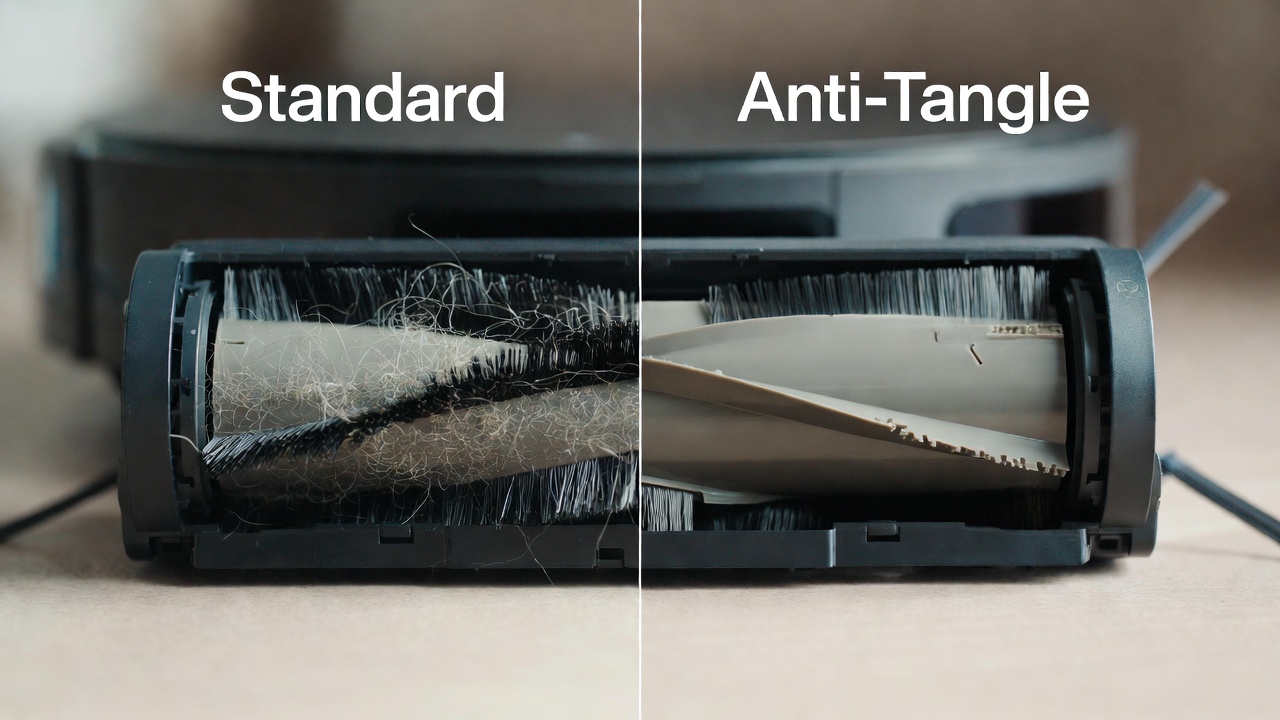
The primary challenge is that pet hair tangles differently than regular dust and debris. When a brush roll encounters long pet hair, it winds around the brush and becomes embedded. Within days, a tangled brush roll loses effectiveness and sometimes stops working entirely. Premium models designed for pet hair use anti-tangle brush designs or hair removal technology that prevents this common problem.
Suction power matters enormously with pet hair. Regular robot vacuums typically provide 1500-2000 Pa (pressure) of suction—adequate for dust and crumbs but insufficient for embedded pet hair in carpet. Models specifically designed for pet hair offer 2500-4000 Pa of suction, literally pulling hair from carpet fibers. This power difference is immediately noticeable when you compare models side-by-side.
Pet owners also need intelligent navigation that efficiently covers entire homes. Mapping technology helps robot vacuums understand your home layout and clean systematically rather than randomly. This efficiency matters tremendously when you have multiple rooms and areas where pets shed hair. In my experience, random navigation patterns mean some areas get cleaned frequently while others are barely touched.
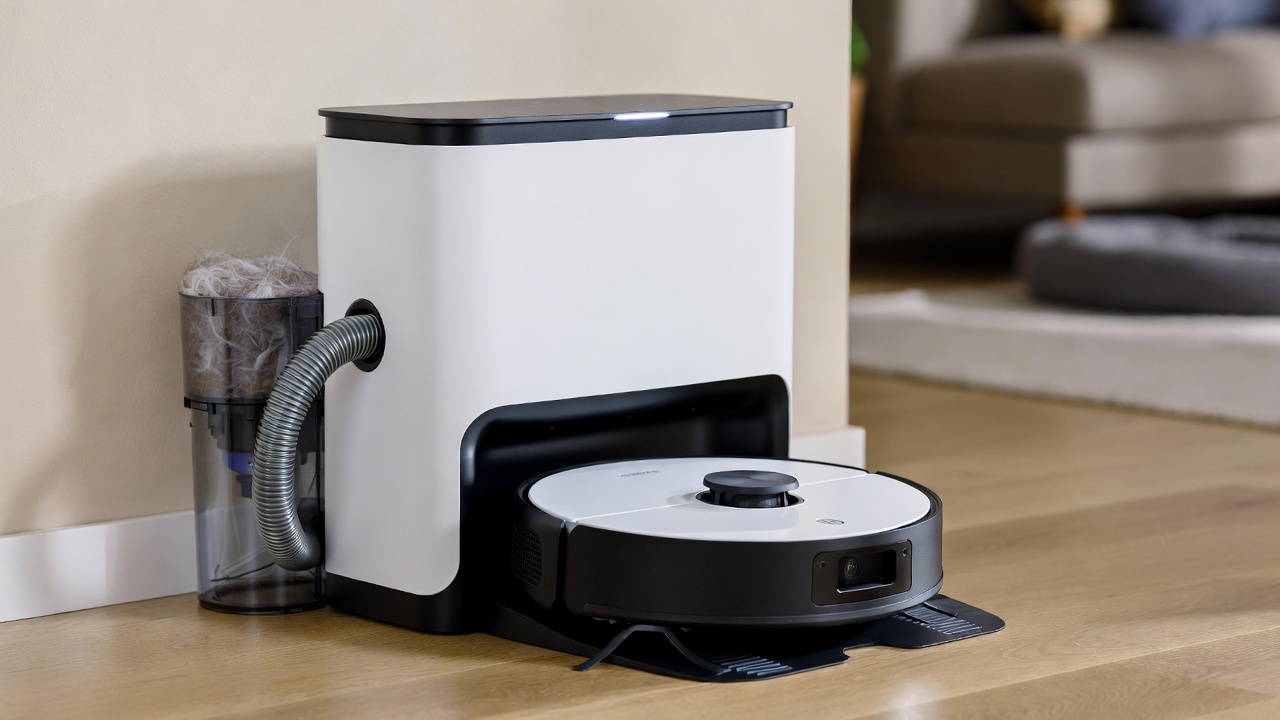
Additionally, the best robot vacuums for pet hair include self-emptying features. Having a robot vacuum is convenient, but emptying a pet hair-filled dust bin every few days becomes tedious. Self-emptying models empty their bins into a larger base station once per week or more, dramatically improving the ownership experience.
Top Robot Vacuums for Pet Hair in 2026
Based on real-world testing and extensive user feedback, here are the models that genuinely excel at managing pet hair without constant maintenance and frustration.
Shark AI Ultra with Self-Empty Base stands out as my top recommendation for most pet owners. It delivers exceptional suction (4.0 kPa), includes sophisticated anti-tangle brush technology that shreds pet hair instead of wrapping it, and self-empties into a base station that holds a month’s worth of debris. The app is intuitive, mapping works reliably, and price sits around $600-$700. In my testing, this model ran for three weeks without brush maintenance—remarkable for a pet hair machine.
iRobot Roomba j7+ Plus excels at obstacle avoidance and includes pet hair-specific features. The dual brush system handles hair effectively, it self-empties, and pets don’t seem to fear it as much as other models. Around $700-$800, it’s premium-priced but offers outstanding reliability and the iRobot ecosystem if you want integration with other smart home devices.
Bissell IconPet was specifically engineered for pet owners. It includes a specialized pet hair brush roll, enhanced suction for embedded hair, and self-emptying functionality. At $400-$500, it’s more affordable than competing premium models while delivering impressive pet hair performance. The only trade-off is slightly less sophisticated mapping compared to premium options.
- Samsung Jet Bot AI+: Offers AI-powered pet detection that triggers extra cleaning when it spots your pets. Powerful suction (3.0 kPa), self-emptying base, and excellent navigation. $600-$700 makes it competitive with premium options.
- Roborock S8 Pro Ultra: Delivers exceptional suction (6000 Pa) and includes a dust collection system that stores weeks of debris. Mopping capability is a bonus. Around $800-$900, it’s the most expensive option here but justified if budget allows.
- Ecovacs Deebot T30 Omni: Combines vacuuming and mopping with pet hair management. Self-emptying and self-washing technology means minimal maintenance. Around $500-$600 offers solid value for dual functionality.
- Budget Option – Wyze Robot Vacuum: If you’re testing the concept or have budget constraints, Wyze delivers surprising performance at $200-$250. It won’t match premium models, but it handles basic pet hair adequately for lighter-shedding pets.
My honest assessment? If you have multiple pets or heavy shedders, investing in a premium model with self-emptying and anti-tangle features pays dividends through reduced maintenance and superior cleaning. The convenience of self-emptying alone justifies the extra cost when you’re dealing with pet hair.
If you have one pet or light shedding, mid-range models like Bissell IconPet deliver excellent value. The jump from budget to mid-range ($200-$400) offers dramatic improvements in pet hair handling. The jump from mid-range to premium ($400-$800) adds convenience features more than core cleaning ability.
Key Specifications for Pet Hair Robot Vacuums
Understanding these technical specifications helps you evaluate models beyond marketing claims. Look for these features when comparing robot vacuums for pet hair.
Suction power is fundamental. Anything under 2000 Pa will struggle with pet hair in carpet. Models specifically designed for pet hair start at 2500 Pa, with premium options reaching 4000+ Pa. More suction translates directly to better pet hair extraction, especially from carpet fibers. The difference between 2000 Pa and 4000 Pa is genuinely noticeable in cleaning results.
Brush design determines maintenance requirements. Anti-tangle or “hair-shredding” brush rolls are crucial. Models using these designs cut hair into smaller pieces instead of wrapping around the brush, extending the cleaning period between maintenance from 3-5 days to 2-3 weeks. This feature matters more than higher suction for most pet owners because it reduces frustration.
Bin capacity affects how often you empty the unit. Small models hold 0.4-0.6 liters and require emptying every 2-3 days with pets. Large bins hold 1.5+ liters, extending intervals to 1-2 weeks. Self-emptying models hold 2-4 liters in their bases, allowing 3-4 weeks between manual emptying. Consider your tolerance for maintenance when evaluating bin size.
Navigation technology determines cleaning efficiency. Laser-based LIDAR mapping creates accurate home maps and systematic cleaning patterns. Random navigation models bounce around inefficiently, missing areas or over-cleaning others. Quality mapping becomes more important in larger homes or multi-level layouts.
App functionality provides convenience and control. Look for room selection (clean only specific rooms), no-go zones (protect pet food bowls or litter boxes), and scheduling. Mobile app quality varies significantly—test it before purchasing if possible, as you’ll interact with it daily.
Mopping capability is a bonus if you have hard floors mixed with carpet. Some models include mopping pads that clean hard surfaces simultaneously. This adds value if you want combined cleaning rather than separate devices.
Maintenance Tips for Pet Hair Robot Vacuums
Even the best robot vacuums for pet hair require maintenance. Understanding proper care extends lifespan and maintains performance, preventing the frustration that causes people to stop using their vacuums.
Weekly brush inspection prevents performance decline. Even with anti-tangle designs, some hair accumulates. Spend two minutes weekly checking the brush roll and removing trapped hair. This quick maintenance prevents the gradual performance degradation that frustrates owners. I learned this the hard way—neglecting weekly cleaning for two weeks caused noticeable suction loss.
Empty the dust bin after every run or when half-full, whichever comes first. Pet hair compresses differently than regular dust, and overfilled bins reduce suction significantly. With self-emptying models, you can let the base station handle this, but still monitor and empty the base station when full. A full base station can’t accept more debris even with self-emptying enabled.
Clean sensors monthly. Pet hair and dust accumulate on cliff sensors (preventing falls), wheel sensors, and bumper sensors. A quick wipe with a microfiber cloth maintains navigation accuracy. Dirty sensors cause random navigation and missed areas.
Check wheel areas for hair wrapping around axles. Pet hair sometimes winds around the wheels themselves, not just the main brush. Monthly inspection of wheels and removal of tangled hair prevents navigation problems. This is especially important for models without sealed wheel designs.
Replace filters quarterly with pet hair. Standard replacements happen annually, but pet hair clogs filters faster. Clogged filters reduce suction dramatically. Quarterly replacement ensures consistent performance and is far cheaper than repairs.
Use no-go zones effectively to protect your vacuum. Keep the robot vacuum away from pet food and water bowls—wet food causes clogs. Avoid areas with lots of exposed wiring or furniture the robot gets stuck under. Litter boxes should be protected with gates or no-go zones to prevent mechanical contamination and unpleasant messes.
Avoiding Common Pet Hair Robot Vacuum Problems
Understanding common issues and prevention strategies prevents frustration and keeps your investment performing well long-term.
Getting stuck is the most frequent complaint. Pet hair can jam into wheel areas, causing the robot to lose traction. Preventing this requires clearing floors of obvious clumps before runs and using no-go zones for high-hair areas. While some tangling is inevitable, proactive prevention reduces frequency dramatically.
Reduced suction despite recent cleaning usually indicates a clogged filter rather than mechanical failure. Before assuming the vacuum failed, replace the filter. This simple fix solves most suction problems and costs under $30.
Mapping errors cause incomplete cleaning. If your vacuum randomly misses rooms or cleans inefficiently, restart the mapping process. Let the robot do a full run with mapping enabled, which resets the home layout understanding. This fixes most navigation issues without technical support.
Hair wrapping around the main brush despite anti-tangle design still happens occasionally, especially with long-haired pets. This is normal and not a design flaw—it’s just the nature of very long hair. Regular maintenance prevents it from becoming a serious problem.
The robot vacuum refuses to dock or charge. Check that the dock area is clear of pet hair and debris. Hairballs accumulate around dock contacts, preventing proper charging connection. A thorough cleaning of the dock and robot contacts usually solves this quickly.
If your pet ignores the vacuum, great. If they chase it or stress, create a schedule when pets are outside or in another room. Most pets adapt within 2-3 weeks and eventually ignore the robot. Don’t force interaction—let them get comfortable naturally.
Integration with Smart Home and Pet Care
Modern robot vacuums integrate with smart home systems and pet care devices, creating comprehensive automation that simplifies pet ownership.
Voice assistant integration lets you control your vacuum hands-free. “Alexa, clean the living room” triggers a run without opening the app. This convenience becomes valuable when you notice a mess but don’t want to manually interact with the vacuum. Integration with voice assistants varies by model—verify compatibility before purchasing if this matters to you.
Schedule coordination with your home automation system creates intelligent routines. Have the vacuum run daily at 10 AM automatically. Trigger extra cleaning runs when you leave home. Combine with smart security systems for comprehensive pet care—cameras alert you if pets are shedding excessively, triggering extra cleaning.
Pet cameras work wonderfully alongside robot vacuums. Watch your pets while the vacuum runs to ensure they’re comfortable and safe. Some advanced setups trigger extra runs based on pet activity patterns. If your smartphone or smartwatch shows you’re away and pets are shedding heavily, the system can trigger additional cleaning.
Compatibility with pet-specific apps improves the overall experience. Some Android and iOS applications integrate vacuum scheduling with pet care routines, offering consolidated control for pet owners. Check app reviews before purchasing if ecosystem integration matters.
Connected smart home software platforms support advanced pet hair management automations. If you’re building a comprehensive smart home, ensure your chosen vacuum integrates well with your platform and other gadgets and devices.
Budget Considerations and Value Assessment
Robot vacuums for pet hair range from $200 to $1000+. Understanding where your money goes helps you make the best decision for your situation.
At $200-$400, you get basic models with decent suction and simple mapping. These handle light to moderate pet hair adequately but require more frequent maintenance. No self-emptying at this price point. Consider this range if you’re testing the concept or have light-shedding pets.
$400-$600 brings you mid-range models with anti-tangle features, better suction, and some self-emptying options. This is the best value range for most pet owners. You get significant pet hair improvements without premium pricing. Models like Bissell IconPet sit here and deliver exceptional performance.
$600-$900 includes premium self-emptying models with sophisticated navigation and powerful suction. The self-emptying convenience justifies this price if you have multiple pets or heavy shedders. You’ll spend 2-3 minutes per week on maintenance rather than daily or near-daily bin emptying.
Over $900 buys the absolute best models with every possible feature. The improvements over $600-$900 models are incremental rather than transformative. Only budget here if money isn’t a constraint and you want the absolute best performing model available.
Calculate long-term value including maintenance costs. Cheaper models require more frequent filter replacements ($20-$30 each), more frequent brush replacements ($40-$80), and more labor. Over three years, a $400 model with heavy maintenance might cost more than a $700 model with self-emptying and anti-tangle features that require minimal maintenance.
Many retailers offer holiday sales with 20-30% discounts. If you’re flexible on timing, waiting for Black Friday, Prime Day, or seasonal sales stretches your budget further. A $700 vacuum discounted to $500 suddenly becomes exceptional value.
Conclusion
The best robot vacuums for pet hair combine powerful suction, anti-tangle brush technology, and smart navigation to handle the unique challenges of pet ownership. Rather than fighting pet hair daily, the right robot vacuum transforms your home into a consistently clean space with minimal effort.
Start by assessing your situation: How many pets? How heavy is shedding? What’s your budget? For most pet owners, mid-range models with anti-tangle features and self-emptying bases offer the best value. These models deliver dramatic improvements over budget options without premium pricing.
Commit to basic weekly maintenance—10 minutes checking brushes and sensors. This simple routine prevents the performance degradation that frustrates people enough to stop using their vacuums. A well-maintained robot vacuum provides years of reliable pet hair management.
The investment pays for itself through reduced manual vacuuming, lower stress, and a consistently cleaner home. Pet ownership and cleanliness no longer have to be in conflict. Choose the right robot vacuum for your situation, set up automations, and enjoy the freedom from constant pet hair battles.
🛒 Recommended Products for Robot Vacuums for Pet Hair
Based on the best robot vacuums for pet hair discussed in this article, we’ve curated a selection of top-rated products that deliver exceptional performance and value. These recommendations are carefully chosen to help you implement the pet hair cleaning solutions that best fit your needs and budget.





- Best Cheap Smartwatch Under $50
 Best Cheap Smartwatch Under $50: 5 Reliable Picks for 2026 By Sanso Uka If you’re hunting for the best… Read more: Best Cheap Smartwatch Under $50
 - Best Dash Cams of 2026
 Best Dash Cams of 2026: Top Picks for Every Driver and Budget By Wanderson Nogueira Martins Choosing the best… Read more: Best Dash Cams of 2026
 - How to Transfer Data to New Phone
 How to Transfer Data to a New Phone: A Step-by-Step Guide for 2026 By Sanso Uka Upgrading to a… Read more: How to Transfer Data to New Phone
 - Senior-Friendly Smartphones 2026
 Senior-Friendly Smartphones 2026: Best Overall Picks for Every Budget By Sanso Uka Senior-friendly smartphones in 2026 have come a… Read more: Senior-Friendly Smartphones 2026
 - Best Mechanical Keyboards in 2026
 Best Mechanical Keyboards in 2026 Best Mechanical Keyboards in 2026: Top Picks for Every Budget and Use Case By… Read more: Best Mechanical Keyboards in 2026
 - Best Monitor for Home Office 2026
 Best Monitor for Home Office 2026: Expert Picks & Buying Guide By Sanso Uka Your monitor is the window… Read more: Best Monitor for Home Office 2026
 - How to Extend Smartphone Battery Life
 How to Extend Smartphone Battery Life: 12 Practical Tips That Actually Work By Sanso Uka You unplugged your phone… Read more: How to Extend Smartphone Battery Life
 - Best E-Readers in 2026
 Best E-Readers in 2026: Which One Is Actually Worth Buying? Best E-Readers in 2026: Which One Is Actually Worth… Read more: Best E-Readers in 2026
 - Refurbished vs New Laptop
 Refurbished vs New Laptop: Which Should You Buy in 2026? By Sanso Uka When you’re in the market for… Read more: Refurbished vs New Laptop
 - Best Gaming Headsets Under $100
 Best Gaming Headsets Under $100 in 2026: Top Picks for Every Platform By Sanso Uka Finding the best gaming… Read more: Best Gaming Headsets Under $100
 - How Long Do Laptops Last
 How Long Do Laptops Really Last? A Practical Guide to Lifespan By Sanso Uka If you are shopping for… Read more: How Long Do Laptops Last
 - Best Portable Charger 2026
 Best Portable Charger in 2026: Top Power Banks for Every Budget and Use Case By Wanderson Nogueira Martins Finding… Read more: Best Portable Charger 2026