
Smart Plug Uses for Home Automation: Complete 2026 Guide
Discovering creative smart plug uses for home automation can transform ordinary appliances into intelligent devices that save energy, enhance convenience, and add sophisticated control to your daily routines. These affordable adapters—typically costing $10-30 each—represent one of the most cost-effective entry points into smart home technology, offering immediate benefits without requiring expensive equipment replacements or complex installations.
When I first experimented with smart plugs in 2020, I bought a two-pack thinking I’d use them for basic lamp control. Fast forward to today, and I have over a dozen scattered throughout my home controlling everything from coffee makers to aquarium filters, saving me an estimated $200 annually in electricity costs while automating tasks I used to handle manually. The versatility continues surprising me as I discover new applications.
This comprehensive guide explores the most practical and innovative smart plug uses for home automation, from simple conveniences like scheduled lighting to advanced applications like energy monitoring and appliance safety cutoffs. Whether you’re just starting your smart home journey or looking to expand existing automation, you’ll find actionable ideas that deliver real value for minimal investment.
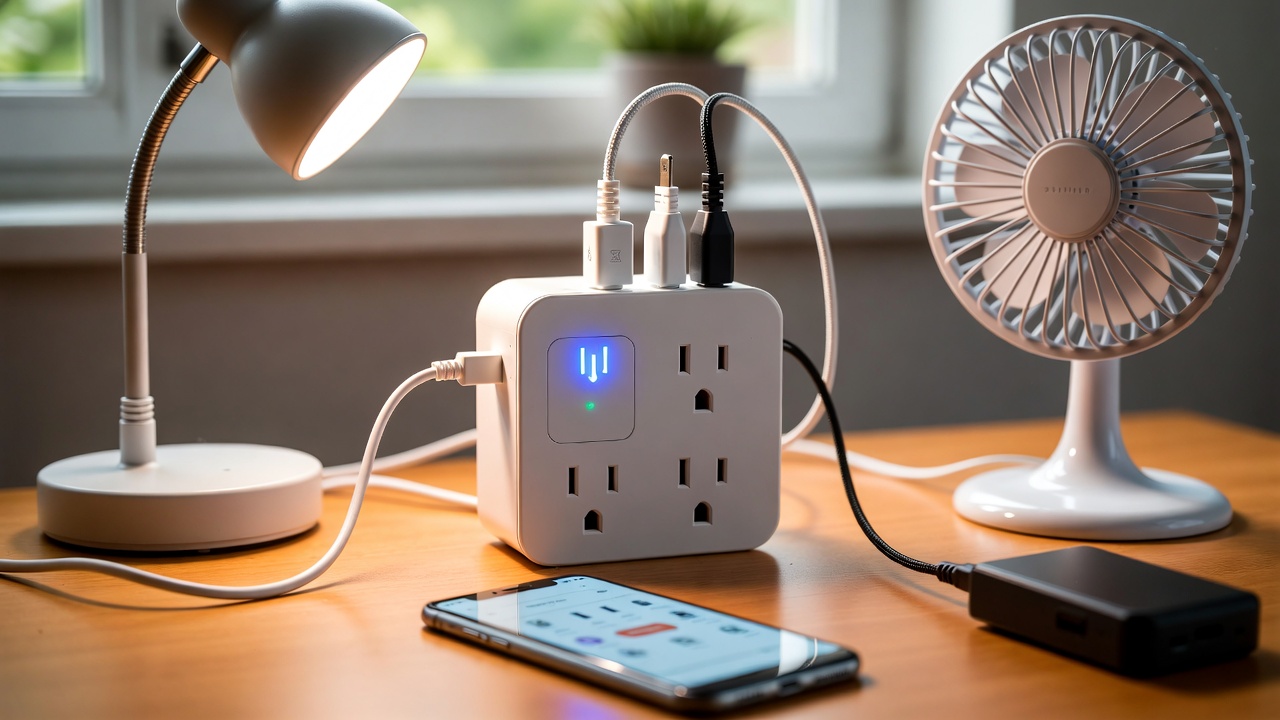
Essential Smart Plug Applications for Every Home
The most impactful smart plug uses for home automation address common daily frustrations and inefficiencies that nearly every household experiences. These fundamental applications provide immediate benefits that justify smart plug investment even before exploring more advanced automation possibilities.
Coffee maker automation ranks as the most popular smart plug application, allowing you to wake up to freshly brewed coffee without programming timers or stumbling into the kitchen half-asleep. Simply fill your coffee maker the night before, plug it into a smart plug, and schedule brewing to start 10-15 minutes before your alarm. The aroma serves as a gentle wake-up call, and your coffee reaches perfect drinking temperature by the time you reach the kitchen.
Seasonal lighting control eliminates the hassle of manually managing holiday decorations, outdoor string lights, or accent lighting. Schedule Christmas lights to turn on at sunset and off at midnight, ensuring your display looks festive without wasting electricity overnight. This single application can save $30-50 annually in electricity costs for homes with extensive holiday lighting displays.
Fan and space heater management provides both safety and energy savings. Smart plugs let you schedule fans to run only during sleeping hours or turn off space heaters automatically after you leave for work, preventing the common (and dangerous) mistake of leaving them running all day. The peace of mind knowing your space heater won’t overheat an empty room is worth the smart plug investment alone.
Phone and tablet charging optimization extends battery lifespan by preventing constant trickle charging that degrades lithium batteries over time. Schedule charging to stop after sufficient time (usually 2-3 hours for phones) rather than maintaining 100% charge overnight. This simple habit can extend your device’s battery health by 20-30% over its lifetime, delaying expensive battery replacements. For more ways to optimize your smartphone and mobile device usage, explore our comprehensive accessory guides.
Energy Savings and Monitoring Applications
Smart plugs with energy monitoring capabilities reveal hidden electricity consumption and identify opportunities for reducing utility bills. Understanding the energy-saving smart plug uses for home automation helps justify their cost through measurable monthly savings that accumulate over time.
Phantom power elimination addresses the surprising amount of electricity consumed by devices in standby mode. Electronics like game consoles, cable boxes, desktop computers, and entertainment systems draw power constantly even when “off,” accounting for 5-10% of typical household electricity usage. Smart plugs completely cut power during non-use hours, eliminating this waste entirely.
I discovered my gaming setup consumed 45 watts continuously in standby mode—over 390 kWh annually costing about $47 at my local electricity rates. A single $25 smart plug now turns everything off overnight and during work hours, paying for itself in six months while reducing my carbon footprint. Energy monitoring features on premium smart plugs reveal exactly how much each device consumes, helping you identify the worst offenders.
High-consumption appliance scheduling moves electricity usage to off-peak hours where available, reducing costs in areas with time-of-use electricity pricing. Delay running dishwashers, washing machines, or electric vehicle chargers until late evening when rates drop significantly. Households in areas with peak/off-peak pricing can save 30-50% on electricity costs for these appliances through simple scheduling.
Vampire load detection using smart plug energy monitoring helps you discover devices consuming more power than expected. That ancient refrigerator in the garage might be costing $15-20 monthly to operate, information that helps you decide whether replacement makes financial sense. Knowledge empowers better decisions about appliance efficiency and replacement timing.
- Entertainment System Control: Cut power to TVs, receivers, game consoles, and streaming devices during sleeping hours, typically saving 50-100 kWh annually per entertainment center setup depending on equipment age and quantity.
- Computer and Peripheral Management: Turn off desktop computers, monitors, printers, and external drives completely overnight or during extended absences, preventing both energy waste and reducing component wear from constant operation.
- Kitchen Appliance Scheduling: Control coffee makers, toasters, electric kettles, and slow cookers for both convenience and safety, ensuring they’re only powered when actually needed rather than sitting in standby indefinitely.
- Garage and Workshop Tools: Manage battery chargers, compressors, and power tools that often get left plugged in continuously, wasting electricity and creating potential fire hazards in spaces you don’t monitor constantly.
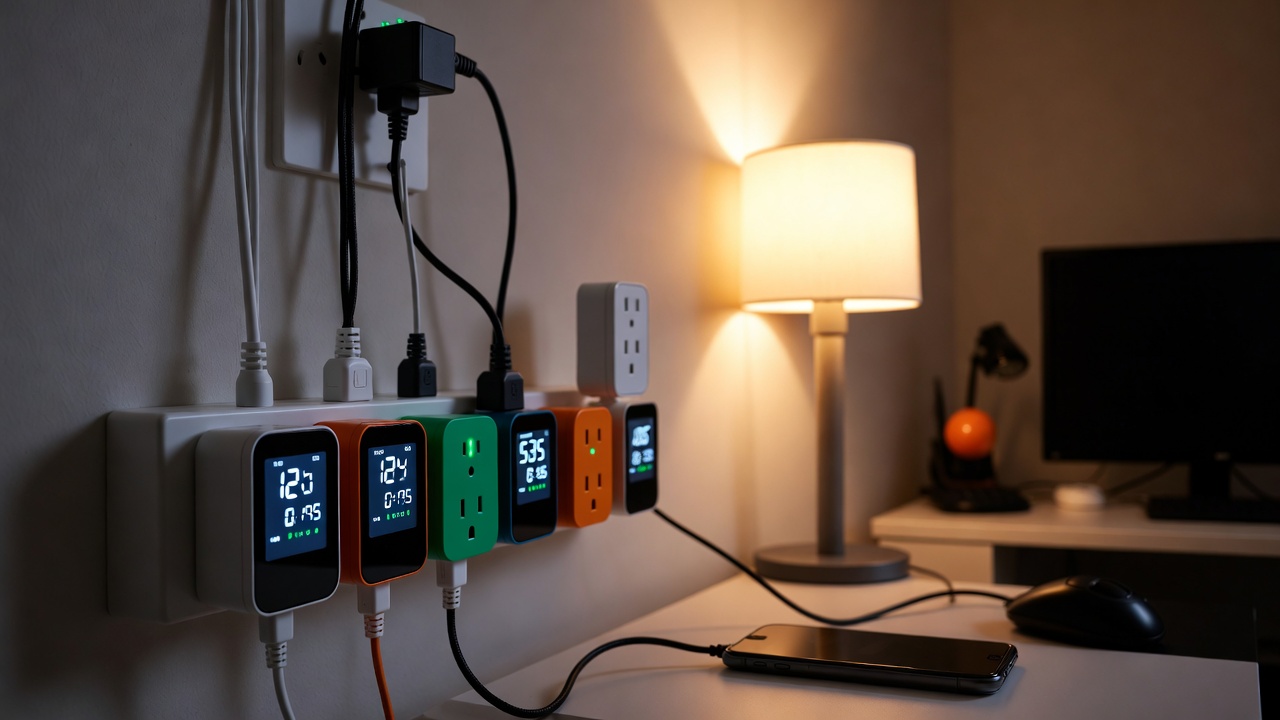
Safety and Security Enhancements
Some of the most valuable smart plug uses for home automation focus on protecting your home and family from electrical hazards and security risks. These safety-focused applications often go overlooked but provide peace of mind that’s difficult to quantify financially.
Vacation mode simulation deters burglars by creating the illusion of occupancy when you’re traveling. Program multiple lamps and a TV to turn on and off at realistic times throughout the evening, mimicking your normal routine. Randomizing timing prevents predictable patterns that observant criminals might notice, making your empty home appear occupied.
High-heat appliance cutoffs prevent fires from forgotten curling irons, space heaters, or irons. Schedule automatic shutoffs after reasonable use periods—a curling iron might get 60 minutes before forced shutdown, while a space heater could run for 4 hours maximum. This failsafe has prevented at least two potential disasters in my home when family members forgot running appliances.
Water heater and pump protection prevents flooding from failed sump pumps or water heaters by monitoring power consumption patterns. Unusual power draws might indicate pump failure or water heater issues, triggering alerts before minor problems become expensive disasters. Some smart plugs can send notifications when connected devices stop drawing expected power, alerting you to potential failures.
Elderly or child safety applications include controlling access to potentially dangerous devices. Disable power to workshop areas when children are home unsupervised, or schedule medication dispensers and medical equipment for appropriate times. For caregivers monitoring elderly parents, smart plugs provide insights into daily routines—if the coffee maker doesn’t turn on at its usual time, something might be wrong. Enhance your home security with complementary smart lighting and security solutions for comprehensive protection.
Advanced Automation and Smart Home Integration
Integrating smart plugs with broader home automation ecosystems unlocks sophisticated applications far beyond simple scheduling. These advanced smart plug uses for home automation demonstrate the technology’s versatility when combined with other smart devices and automation platforms.
Voice control integration with Alexa, Google Assistant, or Siri transforms any connected device into a voice-activated appliance. “Alexa, turn on the bedroom fan” or “Hey Google, turn off the Christmas lights” provides hands-free control that’s particularly convenient when your hands are full, you’re lying in bed, or you have mobility limitations.
Geofencing automation uses your smartphone’s location to trigger actions automatically. Configure smart plugs to turn off all non-essential devices when your phone leaves a defined home area, ensuring you never waste electricity heating empty rooms or running forgotten appliances. Upon return, exterior lights and entry area devices can power on automatically before you reach the door.
Sensor-triggered responses create intelligent automation chains that respond to environmental conditions. Connect motion sensors to lamp-controlling smart plugs for automatic lighting in hallways, closets, or garages—lights activate when movement is detected and turn off after a preset period. Similarly, temperature sensors can trigger fans or space heaters to maintain comfortable conditions without manual intervention.
Cross-device automation scenarios coordinate multiple smart home devices for complex routines. A “movie night” scene might dim smart bulbs, turn on the entertainment system via smart plug, and close motorized blinds with a single command. “Good morning” routines could start the coffee maker, gradually brighten bedroom lights, and power on your bathroom speaker for news or music. For more automation ideas and setup instructions, visit our complete home automation resource center.
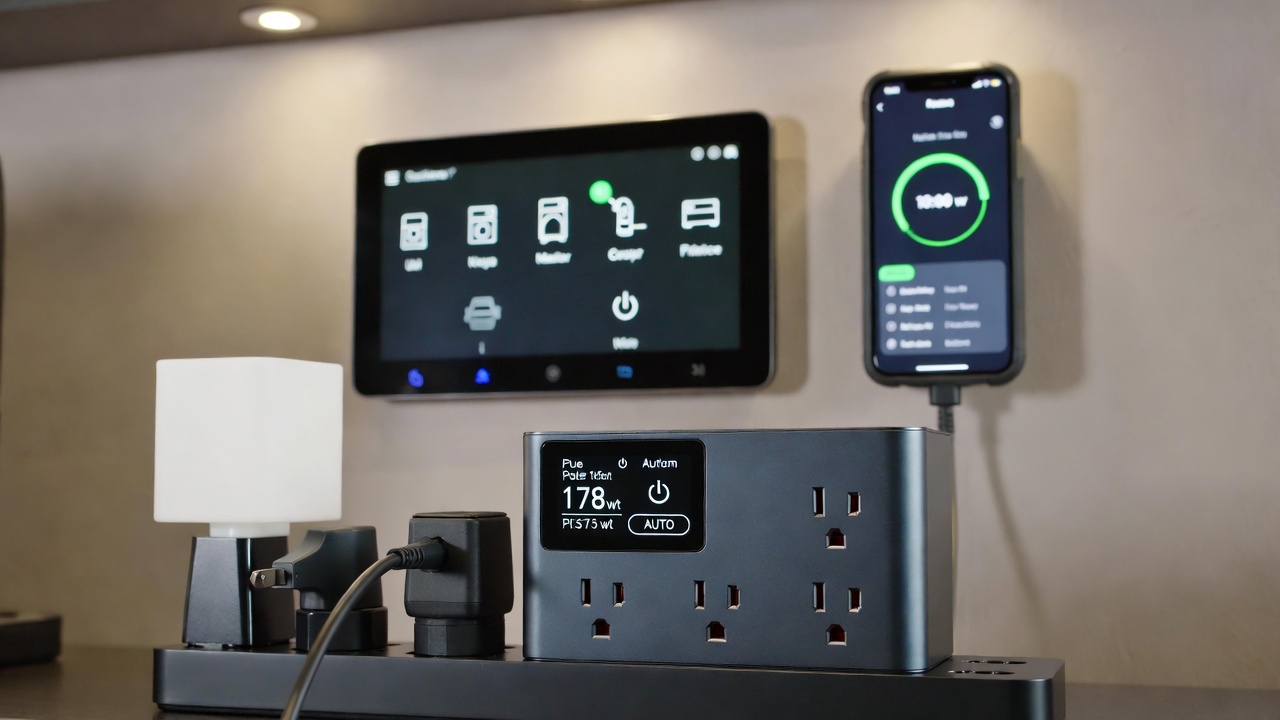
Specialty Applications and Creative Uses
Beyond conventional applications, creative smart plug uses for home automation solve unique problems and enable niche applications that demonstrate the technology’s remarkable flexibility. These specialty uses often address specific hobbies, situations, or challenges that standard automation overlooks.
Aquarium and pet care automation maintains consistent feeding schedules and environmental conditions for pets. Control aquarium lights on sunrise/sunset schedules that mimic natural cycles, promote fish health, and prevent algae growth from excessive lighting. Automatic feeders plugged into smart outlets dispense food at precise times even when you’re away, ensuring pets maintain regular eating schedules.
Garden and plant care automation extends growing seasons and maintains optimal conditions. Control greenhouse heaters, grow lights for indoor plants, or hydroponic systems with precision timing that encourages healthy growth. Smart plugs let you simulate seasonal light cycles, trigger irrigation systems at optimal times, and maintain temperature controls without constant manual adjustment.
Home office productivity enhancements create work-life boundaries by automatically controlling workspace electronics. Schedule your desk setup—monitor, lamp, PC speakers—to power on at work start time and off at quitting time, creating physical boundaries that help maintain work-life balance. This automatic shutdown prevents the “just one more email” trap that keeps you working past reasonable hours.
Hobby equipment management controls specialized devices like 3D printers, craft tools, or photography equipment. Monitor power consumption to detect when 3D prints complete (power draw drops to near zero), automatically cutting power and preventing energy waste from hot ends cooling slowly. Similarly, photography darkroom equipment, pottery kilns, or resin curing stations benefit from precise timing and automatic cutoffs. Explore how AI tools and automation can enhance your creative workflows beyond physical device control.
Choosing the Right Smart Plugs for Your Needs
Selecting appropriate smart plugs ensures they support your intended smart plug uses for home automation without limitations or compatibility issues. Understanding key specifications and features helps you match products to applications rather than discovering limitations after purchase.
Power rating capacity determines which appliances you can safely control. Standard smart plugs handle 15 amps (1800 watts at 120V), sufficient for most household electronics and small appliances. However, high-power devices like space heaters, window air conditioners, or power tools may require heavy-duty smart plugs rated for 20+ amps. Always check device power requirements before connecting to smart plugs.
Energy monitoring features add $5-15 to smart plug costs but provide valuable consumption data for optimization. If you’re primarily interested in energy savings applications, investing in monitoring-capable plugs makes sense. For simple on/off control applications like holiday lights, basic non-monitoring plugs work perfectly fine at lower cost.
Size and design matter more than you’d expect. Bulky smart plugs block adjacent outlets on wall plates or power strips, limiting placement options. Look for compact designs or models with side-mounted outlets that don’t interfere with neighboring sockets. Outdoor-rated plugs feature weatherproofing for controlling exterior lighting, fountains, or pool equipment.
Platform compatibility ensures your smart plugs work with your existing or planned smart home ecosystem. Most support Alexa and Google Assistant, but Apple HomeKit compatibility is less common and typically more expensive. If you’re committed to a specific ecosystem, verify compatibility before purchasing to avoid frustrating limitations. Check out our voice assistant comparison guide to understand platform differences.
- Budget Options ($10-15): Basic on/off scheduling without energy monitoring, perfect for simple applications like lamp control or seasonal lighting where consumption data isn’t needed and you want to outfit multiple outlets affordably.
- Mid-Range Models ($15-25): Energy monitoring, better app interfaces, and more reliable connectivity make these ideal for most home automation applications where you want both control and insights into consumption patterns.
- Premium Smart Plugs ($25-40): Advanced features like local control without cloud dependency, HomeKit support, higher power ratings, or ruggedized outdoor designs justify premium pricing for demanding applications or specific ecosystem requirements.
- Smart Power Strips ($40-80): Multiple independently controlled outlets with USB charging ports provide excellent value when controlling several devices in one location like entertainment centers or office setups.
Common Mistakes and How to Avoid Them
Implementing smart plug uses for home automation successfully requires avoiding common pitfalls that frustrate users and waste money. Learning from these frequent mistakes helps you maximize value and minimize headaches during your smart home journey.
Overloading smart plugs with high-power devices causes overheating, fire hazards, and device failure. Space heaters, hair dryers, or kitchen appliances that approach or exceed 1500 watts push standard smart plugs to their limits. Always check both the smart plug’s rating and the connected device’s power consumption, leaving at least 20% safety margin below maximum capacity.
WiFi connectivity issues plague smart plugs installed far from routers or in areas with weak signal. Before mounting smart plugs permanently or building automation around them, test connectivity at the installation location. Intermittent disconnections ruin automation reliability—that coffee maker won’t start if the smart plug can’t receive the schedule trigger from your router.
Forgetting devices are smart-plug controlled leads to confusion when physical switches don’t work as expected. Family members who don’t know a lamp is smart-plug controlled might toggle the physical switch, putting the lamp in the “off” position where the smart plug can’t turn it on. Label controlled devices or educate household members about which items are automated.
Neglecting firmware updates leaves smart plugs vulnerable to security issues and prevents access to new features. Set aside time quarterly to check for and install smart plug firmware updates through manufacturer apps. These updates often fix bugs, improve stability, and occasionally add new functionality to devices you already own. For more smart home setup and maintenance tips, browse our technology management guides.
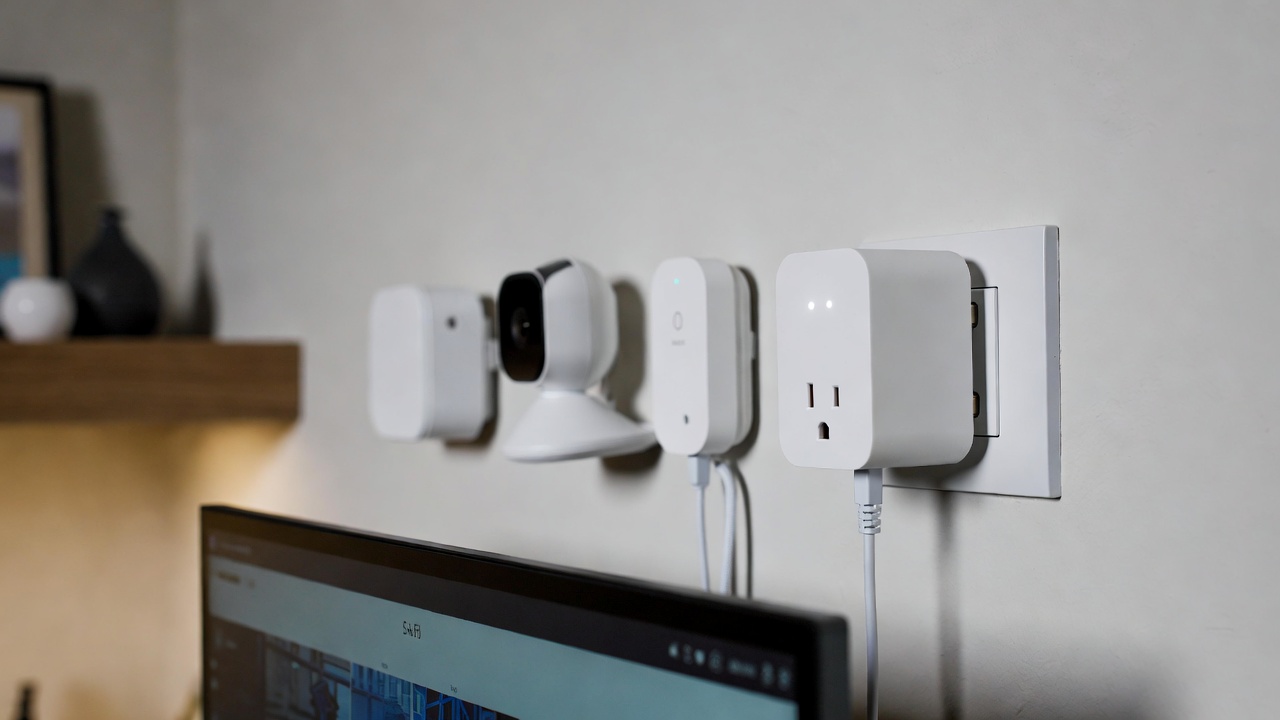
Maximizing ROI from Smart Plug Investment
Calculating returns from smart plug uses for home automation helps justify investments and prioritize which applications deliver the best value. Understanding both tangible savings and intangible benefits provides complete perspective on smart plug economics.
Energy cost savings vary dramatically based on local electricity rates and controlled devices. At average US rates of $0.12 per kWh, eliminating 50 watts of phantom power 16 hours daily saves approximately $35 annually. A $15 smart plug controlling entertainment systems pays for itself in 5-6 months, with pure savings afterward. Households in high-cost areas like California or Hawaii see even faster payback.
Appliance lifespan extension through reduced operating hours can offset smart plug costs indirectly. Cutting space heater runtime by 30% through automated scheduling extends its useful life proportionally, delaying replacement costs. Similarly, reduced computer operating hours means fewer thermal cycles and longer component life, though these benefits are harder to quantify precisely.
Convenience value deserves consideration despite being non-monetary. How much is it worth to wake up to fresh coffee automatically, never worry about forgotten curling irons, or control all your Christmas lights with a single voice command? For many users, these quality-of-life improvements justify smart plug costs regardless of energy savings.
Start with high-impact applications that deliver immediate, measurable benefits—entertainment systems, coffee makers, and seasonal lighting typically provide fastest returns. Expand gradually to specialty applications once you’ve experienced the technology’s capabilities and identified additional opportunities in your home. This measured approach prevents overspending while building a smart home that genuinely improves daily life. Stay informed about emerging smart home technologies through our latest technology news and trends.
Conclusion
The diverse smart plug uses for home automation demonstrate these simple devices’ remarkable versatility and value for modern households. From basic convenience features like scheduled coffee brewing to sophisticated safety applications and energy monitoring, smart plugs deliver tangible benefits at accessible price points that make them ideal smart home entry points.
Success with smart plugs comes from matching their capabilities to your actual needs rather than automating everything possible. Start with applications that solve real frustrations or deliver measurable savings, then expand to additional uses as you discover opportunities. This pragmatic approach ensures your smart plug investment delivers genuine value rather than becoming unused novelties gathering dust.
Remember that smart home technology continues evolving, with manufacturers adding features and improving reliability constantly. The smart plugs you purchase today will likely gain new capabilities through firmware updates, while new models introduce innovations worth considering for future expansion. For comprehensive guides covering every aspect of building and optimizing your smart home ecosystem, explore our complete smart home technology resource center with detailed tutorials, product comparisons, and automation strategies.
🛒 Recommended Products for Smart Plug Home Automation
Based on the smart plug uses for home automation discussed in this article, we’ve curated a selection of top-rated products that deliver exceptional performance and value. These recommendations are carefully chosen to help you implement the solutions that best fit your needs and budget.





- Best Cheap Smartwatch Under $50
 Best Cheap Smartwatch Under $50: 5 Reliable Picks for 2026 By Sanso Uka If you’re hunting for the best cheap… Read more: Best Cheap Smartwatch Under $50
 - Best Dash Cams of 2026
 Best Dash Cams of 2026: Top Picks for Every Driver and Budget By Wanderson Nogueira Martins Choosing the best dash… Read more: Best Dash Cams of 2026
 - How to Transfer Data to New Phone
 How to Transfer Data to a New Phone: A Step-by-Step Guide for 2026 By Sanso Uka Upgrading to a new… Read more: How to Transfer Data to New Phone
 - Senior-Friendly Smartphones 2026
 Senior-Friendly Smartphones 2026: Best Overall Picks for Every Budget By Sanso Uka Senior-friendly smartphones in 2026 have come a long… Read more: Senior-Friendly Smartphones 2026
 - Best Mechanical Keyboards in 2026
 Best Mechanical Keyboards in 2026 Best Mechanical Keyboards in 2026: Top Picks for Every Budget and Use Case By Sanso… Read more: Best Mechanical Keyboards in 2026
 - Best Monitor for Home Office 2026
 Best Monitor for Home Office 2026: Expert Picks & Buying Guide By Sanso Uka Your monitor is the window to… Read more: Best Monitor for Home Office 2026
 - How to Extend Smartphone Battery Life
 How to Extend Smartphone Battery Life: 12 Practical Tips That Actually Work By Sanso Uka You unplugged your phone at… Read more: How to Extend Smartphone Battery Life
 - Best E-Readers in 2026
 Best E-Readers in 2026: Which One Is Actually Worth Buying? Best E-Readers in 2026: Which One Is Actually Worth Buying?… Read more: Best E-Readers in 2026
 - Refurbished vs New Laptop
 Refurbished vs New Laptop: Which Should You Buy in 2026? By Sanso Uka When you’re in the market for a… Read more: Refurbished vs New Laptop
 - Best Gaming Headsets Under $100
 Best Gaming Headsets Under $100 in 2026: Top Picks for Every Platform By Sanso Uka Finding the best gaming headset… Read more: Best Gaming Headsets Under $100
 - How Long Do Laptops Last
 How Long Do Laptops Really Last? A Practical Guide to Lifespan By Sanso Uka If you are shopping for a… Read more: How Long Do Laptops Last
 - Best Portable Charger 2026
 Best Portable Charger in 2026: Top Power Banks for Every Budget and Use Case By Wanderson Nogueira Martins Finding the… Read more: Best Portable Charger 2026