
Complete Guide to Smart Lighting Setup for Your Home in 2026
Setting up a smart lighting system might sound complicated, but it’s actually one of the most rewarding home automation projects you can tackle. Whether you want to save energy, create the perfect ambiance for movie nights, or simply control your lights from your phone, a smart lighting setup transforms how you live. In this guide, I’ll walk you through everything you need to know about choosing, installing, and optimizing smart lighting for your home.
I’ve installed smart lighting in three different homes over the past five years, and I’ve learned what works, what doesn’t, and how to avoid expensive mistakes. The good news is that modern smart lighting is affordable, accessible, and doesn’t require an electrician or technical expertise to get started.
Let’s explore the different types of smart bulbs, lighting systems, and setup options available, so you can create a lighting ecosystem that perfectly fits your lifestyle and budget.

Understanding Smart Lighting Basics and Technology
Smart lighting isn’t just about turning lights on and off with your phone. Modern smart lighting systems offer so much more—color control, scheduling, automation, and integration with other smart home devices. Understanding these basics helps you make better decisions about what to buy and how to set it up.
At its core, a smart lighting system consists of three components: smart bulbs (or smart switches), a hub or bridge (in some cases), and a smartphone app or voice assistant. The bulbs connect wirelessly through protocols like WiFi, Zigbee, or Z-Wave, allowing you to control them remotely. Some systems like Philips Hue use a dedicated hub, while others like LIFX connect directly to your WiFi network.
The real power of smart lighting comes from automation and integration. Imagine your lights automatically dimming at sunset or turning on before you arrive home. Picture controlling all your lights from bed with a single voice command. These scenarios become reality with a proper smart lighting setup. I started with just two smart bulbs in my bedroom and now have thirty bulbs throughout my house, each serving a specific purpose.
Think about your specific needs first. Are you primarily interested in convenience and control? Energy savings? Creating atmospheric lighting? Your answer determines which system and products make the most sense. Different systems excel in different areas—some prioritize energy efficiency, others focus on color accuracy and ambiance, and some emphasize whole-home integration.

Types of Smart Bulbs and Lighting Fixtures
Walking into a lighting store and seeing dozens of smart bulb options can be overwhelming. Each type has different capabilities, price points, and compatibility considerations. Let me break down the main categories to help you understand what’s available.
Color-tunable bulbs are the most versatile option. They can change color temperature from warm 2700K light (like traditional incandescent) to cool 6500K light (like daylight). Brands like Philips Hue and LIFX excel here. These bulbs typically cost $10-$20 each and allow you to adjust mood and ambiance throughout the day. In my experience, color-tunable bulbs are worth the extra cost because of how much they improve your home’s atmosphere.
- White-tunable Smart Bulbs: More affordable ($8-$15) than color bulbs, these adjust brightness and warmth but not full color. Perfect for most rooms, especially bedrooms and kitchens where you want warm evening light and bright morning illumination.
- RGB Full-Color Bulbs: These display millions of colors for creative lighting effects. Fun for entertainment spaces but less practical for daily living areas. They’re energy-intensive and more expensive ($15-$30).
- Smart Switches: Instead of replacing bulbs, smart switches control existing fixtures. Great for rooms with multiple bulbs or expensive installations. Costs range from $25-$60 per switch but replace your entire fixture control.
- Smart Light Strips: These flexible LED strips stick under cabinets, behind TVs, or along shelves. Incredibly versatile for accent lighting and creating atmosphere. Prices vary from $20-$80 depending on length and capabilities.
My recommendation for most people? Start with white-tunable smart bulbs in high-traffic areas—bedrooms, kitchens, and living rooms. These offer the best balance of functionality, price, and practical benefit. Add color bulbs strategically in entertainment spaces where you want more creative control.
One important consideration: ensure compatibility with your existing fixtures. Most smart bulbs fit standard A19 sockets, but some fixtures use different bases. Check before purchasing. Additionally, smart bulbs typically use 9-12 watts, making them significantly more efficient than traditional incandescent bulbs.
Choosing Your Smart Lighting Platform and Hub
This decision is crucial because it affects future compatibility and ease of use. Think of the platform as the foundation of your smart lighting setup—choose wisely because switching later is expensive and frustrating.
Philips Hue remains the market leader for good reason. Their system offers exceptional reliability, extensive product range, and excellent ecosystem integration. The bridge is required for many features like scheduling and away mode, but it’s a one-time $40-$60 investment. Hue bulbs cost $15-$20 each, making a full setup more expensive than some alternatives, but the quality justification is clear.
LIFX takes a different approach—their bulbs connect directly to WiFi without requiring a hub. This simplifies setup and saves the hub cost, but WiFi bandwidth becomes a limitation if you have dozens of bulbs. LIFX bulbs are similarly priced ($12-$18), and many people prefer their approach for smaller homes or apartments.
Wyze and other budget brands offer significantly cheaper bulbs ($5-$10) but with more limited features and ecosystem integration. These work well for renters or those testing smart lighting before committing to a premium system. I’d recommend budget options for testing the concept, then upgrading to better systems once you understand your needs.
For voice assistant integration, consider your existing ecosystem. If you have Alexa devices, most systems work well with Echo. Google Home compatibility is nearly universal now. However, some systems integrate better with specific assistants—research this before purchasing. Integration with other smart home devices like smart security systems matters too if you’re building a comprehensive home automation setup.

Planning Your Smart Lighting Setup for Maximum Impact
Before buying a single bulb, spend time thinking about where smart lighting would genuinely improve your daily life. A well-planned setup is far more satisfying than randomly installing bulbs everywhere.
Start by identifying high-impact areas. Bedrooms benefit enormously from color-tunable bulbs that help regulate sleep through warm evening light and bright morning illumination. Living rooms appreciate the ability to adjust lighting for TV watching versus entertaining. Kitchens need bright, reliable task lighting. Entryways and hallways benefit from motion-activated automations. Being strategic means you’ll see real value immediately rather than the setup feeling gimmicky.
Consider the type of lighting each room needs. Task lighting requires brightness and reliability. Ambient lighting focuses on mood and comfort. Accent lighting highlights architectural features. Most rooms benefit from multiple types—pendant lights for task work, recessed lights for overall ambient, and maybe a lamp for accent. Smart bulbs excel in all these roles.
Don’t try to automate everything at once. I recommend starting with 4-6 bulbs in your most-used rooms, living with the system for a month, then expanding based on what you actually find useful. This approach saves money and prevents buyer’s remorse. Some automations you think will be useful turn out not to matter, while others you hadn’t anticipated become invaluable.
Room-by-room budget estimate: Bedroom with four bulbs and white-tunable brightness ($50-$80), living room with six bulbs plus color capability ($90-$150), kitchen with four bright task bulbs ($40-$80). Add a hub if necessary ($40-$60). That’s a functional whole-home smart lighting setup for $220-$370, providing immediate convenience and energy savings that quickly justify the investment.
Setting Up Automations and Scheduling
The real magic of smart lighting happens when you create automations—lights responding to time, presence, or conditions without manual input. Setting up these automations properly transforms a convenient lighting system into an indispensable part of your home.
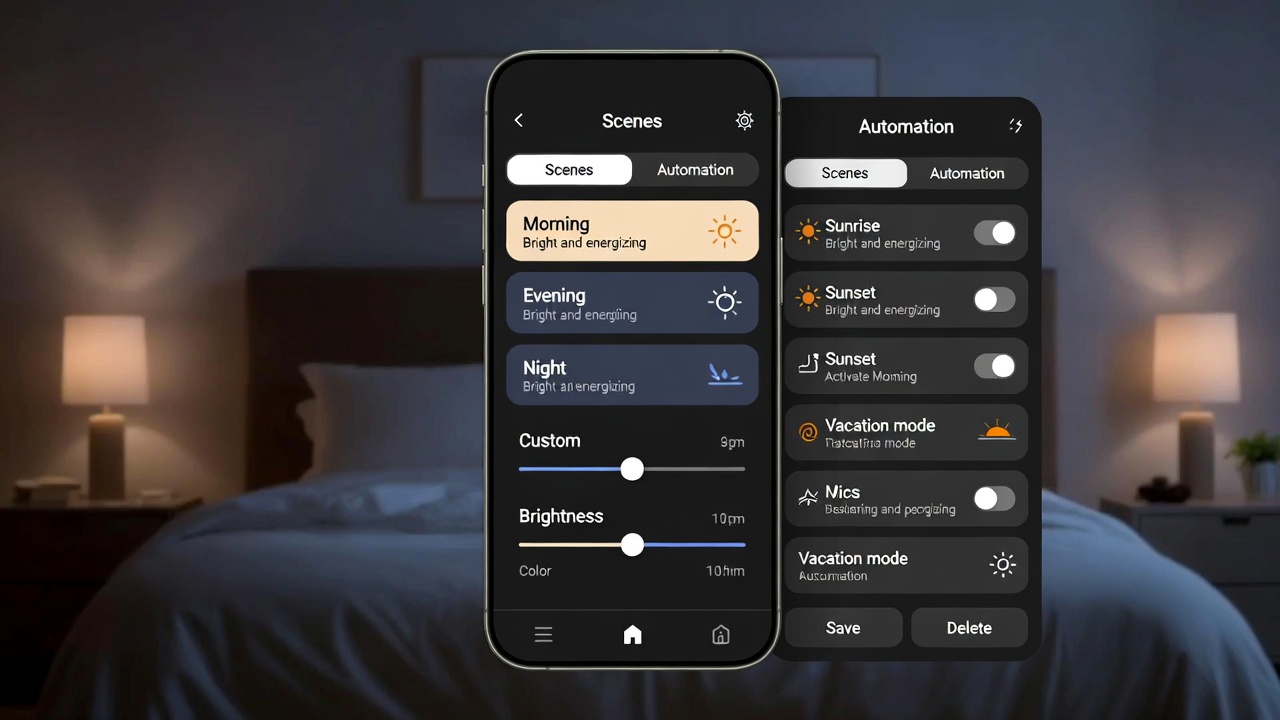
Time-based automations are the easiest to set up. Schedule bedroom lights to gradually brighten at 7 AM, helping you wake naturally. Set evening lights to warm color temperatures at sunset, supporting healthy sleep cycles. Turn off lights automatically at midnight if they’re somehow still on. These automations take five minutes to set up and provide daily benefit.
Presence-based automations use geofencing to trigger actions based on who’s home. Your lights turn on when you arrive home in the evening, turn off when everyone leaves. For renters or those concerned about security, this creates the impression someone’s home even when you’re away. I use this constantly and can’t imagine going back to manual control.
Scene creation lets you save lighting configurations for different activities. Create a “Movie Night” scene with dimmed warm lighting, a “Dinner Party” scene with brighter and more vibrant colors, a “Sleep” scene with minimal warm light. Switching between scenes requires one tap or voice command, dramatically improving usability compared to adjusting individual bulbs.
Integration with voice assistants adds another control layer. “Alexa, bedtime” triggers your bedroom scene and adjusts living room lights. “Google, movie time” sets the perfect entertainment environment. These voice commands become second nature and add genuine convenience to daily life.
Start simple with one or two automations, then add more as you understand the system’s potential. Too many complex automations can become confusing and frustrating. Simple, predictable automations improve your home. Overly complex setups often end up disabled because they create more hassle than benefit.
Common Smart Lighting Mistakes to Avoid
After helping friends and family set up smart lighting systems, I’ve seen patterns in what goes wrong. Learning from these common mistakes saves frustration and money.
The biggest mistake is buying bulbs before thinking about the system. People see a sale on smart bulbs, buy twenty without considering compatibility, then realize they need a different hub or platform. Commit to a system first, then buy bulbs. This approach ensures everything works together seamlessly.
Another frequent error is overestimating WiFi range. Smart bulbs need good WiFi signal to function reliably. Bulbs in distant rooms or near walls struggle to maintain connection. If WiFi coverage is poor, either improve your network with a mesh system or choose a platform with its own communication protocol. The frustration of bulbs randomly disconnecting is worse than not having smart lighting.
People often install smart bulbs but never set up automations, missing most of the system’s benefit. You’ll keep manually controlling lights without the convenience that makes smart lighting worthwhile. Dedicate an hour after installation to create basic automations—you’ll immediately see why you invested in the system.
Buying all RGB color bulbs is tempting but impractical. Color bulbs are power-hungry, expensive, and really useful only in entertainment spaces. Most daily living happens in white-tunable lighting. Balance your purchases—maybe one color bulb for accent, but mostly white-tunable for practical use.
Neglecting energy management defeats a key benefit of smart lighting. Set brightness to necessary levels rather than maximum. Take advantage of scheduling to ensure lights turn off when rooms are unoccupied. Smart bulbs use 80-90% less energy than incandescent, but only if you optimize your setup appropriately.
Integrating Smart Lighting with Your Broader Smart Home
Smart lighting becomes more powerful when integrated with other smart home devices. Imagine your lights responding to motion sensors, coordinating with smart speakers, or adjusting based on outdoor conditions.
Motion sensors are game-changers for convenience and energy savings. Install them in hallways, bathrooms, and utility rooms. Lights automatically turn on when motion is detected, turn off after preset timeout periods. For spaces where you’re not always hands-free (like carrying laundry), motion sensors are phenomenally convenient.
Temperature integration creates impressive automations. If your thermostat registers that everyone left home, lights adjust to an “away” mode with periodic activation to simulate occupancy for security. When temperature rises in summer, bright cool lights help with heat management. When it drops in winter, warm lighting supports comfort and seasonal mood.
Camera and security integration adds another dimension. Motion detected by outdoor cameras can trigger specific lighting scenes. Doorbell activity turns on porch lights or interior lights to greet visitors properly. These integrations enhance both convenience and security.
Consider future expansion when choosing your platform. Will you eventually add smart speakers, wearable devices, or smart home software? Ensure your lighting platform integrates well with your vision for a full smart home ecosystem. This foresight prevents costly incompatibilities.
Maintenance, Troubleshooting, and Long-Term Optimization
Smart lighting systems rarely require maintenance, but understanding basic troubleshooting and optimization keeps everything running smoothly.
Occasional bulb disconnections are common, especially with WiFi-based systems. Restarting your router usually solves the problem. If specific bulbs frequently disconnect, they might be too far from the router—try repositioning the router or adding a WiFi extender. Most issues resolve through simple troubleshooting rather than hardware replacement.
Update bulb firmware periodically when app notifications appear. These updates improve reliability, security, and performance. Set aside 15 minutes monthly to check for updates and apply them. Modern smart home systems are only secure if kept current.
Periodically review your automations and scenes. What seemed useful might not be used. Conversely, new automations often suggest themselves as you live with the system. Refining your setup keeps it practical and satisfying rather than accumulating complexity.
Budget for gradual expansion rather than all at once. Adding five bulbs every few months lets you test effectiveness, justify the cost through energy savings, and build a truly optimized system over time. This approach also prevents overwhelming yourself with too many changes simultaneously.
Energy savings typically appear within 2-3 months as you adjust to the system. Track your electricity bill and appreciate the financial benefit alongside the convenience. The combination of reduced energy consumption and improved lifestyle quality creates genuine long-term value.
Conclusion
A smart lighting setup transforms your home in ways that are hard to appreciate until you experience them. The convenience of voice control, the ambiance of perfectly adjusted color temperature, the security of lights responding to your presence, and the energy savings from optimization all combine to improve daily life significantly.
Start small with a clear understanding of your needs and a commitment to one platform. Choose quality bulbs and a reliable system, plan strategically, and set up basic automations immediately. Expand gradually based on what you actually find useful rather than trying to automate everything at once.
The best smart lighting setup is one you’ll actually use and enjoy. Don’t get caught up in complex features or expensive products if simple solutions better serve your lifestyle. Your goal is improving your home and daily experience, and that looks different for everyone. Take time to create a setup that genuinely works for you, and you’ll appreciate the investment every single day.
🛒 Recommended Products for Smart Lighting Setup
Based on the smart lighting setup discussed in this article, we’ve curated a selection of top-rated products that deliver exceptional performance and value. These recommendations are carefully chosen to help you implement the smart lighting solutions that best fit your needs and budget.





- Best Cheap Smartwatch Under $50
 Best Cheap Smartwatch Under $50: 5 Reliable Picks for 2026 By Sanso Uka If you’re hunting for the… Read more: Best Cheap Smartwatch Under $50
 - Best Dash Cams of 2026
 Best Dash Cams of 2026: Top Picks for Every Driver and Budget By Wanderson Nogueira Martins Choosing the… Read more: Best Dash Cams of 2026
 - How to Transfer Data to New Phone
 How to Transfer Data to a New Phone: A Step-by-Step Guide for 2026 By Sanso Uka Upgrading to… Read more: How to Transfer Data to New Phone
 - Senior-Friendly Smartphones 2026
 Senior-Friendly Smartphones 2026: Best Overall Picks for Every Budget By Sanso Uka Senior-friendly smartphones in 2026 have come… Read more: Senior-Friendly Smartphones 2026
 - Best Mechanical Keyboards in 2026
 Best Mechanical Keyboards in 2026 Best Mechanical Keyboards in 2026: Top Picks for Every Budget and Use Case… Read more: Best Mechanical Keyboards in 2026
 - Best Monitor for Home Office 2026
 Best Monitor for Home Office 2026: Expert Picks & Buying Guide By Sanso Uka Your monitor is the… Read more: Best Monitor for Home Office 2026
 - How to Extend Smartphone Battery Life
 How to Extend Smartphone Battery Life: 12 Practical Tips That Actually Work By Sanso Uka You unplugged your… Read more: How to Extend Smartphone Battery Life
 - Best E-Readers in 2026
 Best E-Readers in 2026: Which One Is Actually Worth Buying? Best E-Readers in 2026: Which One Is Actually… Read more: Best E-Readers in 2026
 - Refurbished vs New Laptop
 Refurbished vs New Laptop: Which Should You Buy in 2026? By Sanso Uka When you’re in the market… Read more: Refurbished vs New Laptop