
What Is Quantum Computing? A Practical Guide for the Curious Tech User
By Sanso Uka

If you follow technology news, you’ve probably seen headlines about quantum computing breaking records or solving impossible problems. But what is quantum computing really, and should you care about it as someone who just wants their laptop to boot faster? The short answer: not yet — but understanding it now helps you spot real progress from marketing hype when it finally trickles down to the gadgets we use every day.
At Sanso Uka Tech, we break down complex topics so you can make informed decisions. Whether you’re comparing laptops for work or curious about where AI is headed, knowing the fundamentals of quantum computing gives you a clearer picture of the next decade in tech.
Beyond Bits: The Qubit Difference
Classical computers — like the one you’re using right now — process information in bits. Each bit is either a 0 or a 1. Every app, website, or game is just millions of these yes/no switches flipping at incredible speed.
Quantum computers use qubits. Thanks to two quantum properties — superposition and entanglement — a qubit can exist as 0, 1, or both at the same time. Imagine flipping a coin and having it spin in the air: while it spins, it’s both heads and tails simultaneously. That’s superposition. Entanglement links qubits so the state of one instantly influences another, even across distances. This lets quantum computers explore many solutions at once rather than checking them one by one.

What Quantum Computing Actually Does Today
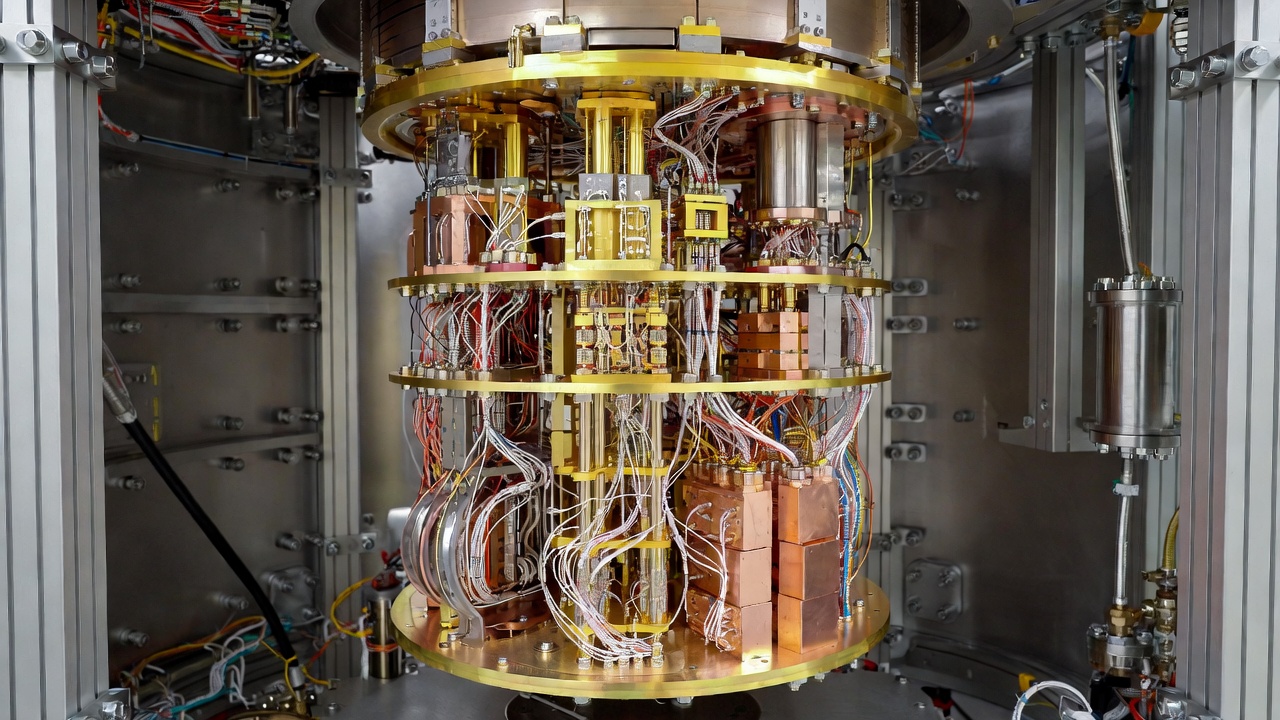
Right now, you can’t buy a quantum laptop. The machines fill rooms, need near-absolute-zero temperatures, and cost millions. But companies like IBM, Google, and startups are already running real experiments. Current uses include:
- Drug discovery: Simulating molecular structures to find new medications faster.
- Financial modeling: Optimizing portfolios or risk analysis beyond classical limits.
- Logistics: Finding the most efficient delivery routes for companies like FedEx or DHL.
- Cryptography: Breaking old encryption — and building new, quantum-safe methods.
For most of us, this is invisible infrastructure work. But when you hear about breakthroughs in machine learning or smart home automation, quantum computing may be part of the research behind the scenes.
Limitations You Should Know
It’s tempting to think quantum computers will replace everything. They won’t. For everyday tasks — browsing, streaming, word processing — classical computers are faster and more efficient. Quantum machines are specialists, not generalists. They’re also incredibly error-prone: qubits are fragile, and even cosmic rays can disrupt calculations. Reliable, large-scale quantum computers are still years away, despite what breathless headlines claim.
When Will You Use Quantum Computing?
Most people will interact with quantum computing through the cloud first. IBM, Amazon, and Microsoft already offer quantum access via their cloud platforms. A developer might use a few qubits to solve a chemistry problem, then feed the result into a classical app. Eventually, quantum-powered features may show up in AI tools or smartphone assistants without you ever knowing a qubit was involved. Think of it like GPS: you just use the map, not the physics of relativity that makes it accurate.
Should You Care Now?
If you’re shopping for a laptop or phone today: ignore quantum computing entirely. No product advertises “quantum” legitimately in consumer gadgets yet. But if you’re curious about where tech is heading — and want to separate real innovation from marketing fluff — understanding the basics pays off. The next time a company claims “quantum-powered” AI, you’ll know to ask questions: Is it actual quantum hardware, or just a rebranded algorithm?
For more grounded tech advice, check out our guides on smartphones and PC builds — no hype, just honest recommendations.
The Bottom Line
Quantum computing is real, it’s advancing, and it will eventually reshape industries. But for now, it’s a background technology — one that powers scientific breakthroughs more than everyday purchases. Stay curious, keep learning, and don’t fall for quantum-washing.
If you want to stay ahead of the curve, keep following Sanso Uka Tech. We’ll tell you when quantum actually matters for your wallet.
- What Is Quantum Computing
 What Is Quantum Computing? A Practical Guide (2026) | Sanso Uka Tech What Is Quantum Computing? A Practical Guide for… Read more: What Is Quantum Computing
 - Best AI Image Generators in 2026
 Best AI Image Generators in 2026: Which One Is Actually Worth It? Best AI Image Generators in 2026: Which One… Read more: Best AI Image Generators in 2026
 - Is AI Replacing Jobs
 Is AI Replacing Jobs? The 2026 Data on What’s Actually Happening By Sanso Uka The question of whether AI is… Read more: Is AI Replacing Jobs
 - Tech Trends 2026
 Tech Trends to Watch in 2026: What’s Actually Worth Your Attention Tech Trends to Watch in 2026: What’s Actually Worth… Read more: Tech Trends 2026
 - Best Free AI Tools 2026
 Best Free AI Tools 2026: My Honest Stack for $0 By Sanso Uka Let’s cut through the noise. I’ve spent… Read more: Best Free AI Tools 2026
 - What Is Generative AI
 What Is Generative AI? A Plain-English Guide for 2026 What Is Generative AI? A Plain-English Guide for 2026 By Sanso… Read more: What Is Generative AI
 - Future of Artificial Intelligence 2026
 Future of Artificial Intelligence 2026: From Chatbots to Personal Agents By Sanso Uka If 2025 was the year we all… Read more: Future of Artificial Intelligence 2026
 - Best AI Tools 2026
 Best AI Tools 2026: ChatGPT, Claude, Gemini & More Compared Updated · March 2026 Best AI Tools 2026:The Ones Actually… Read more: Best AI Tools 2026
 - How to Set Up Smart Lighting at Home
 How to Set Up Smart Lighting at Home: Complete Beginner’s Guide (2026) How to Set Up Smart Lighting at Home:… Read more: How to Set Up Smart Lighting at Home
 - IoT Devices for Beginners
 Best IoT Devices for Beginners in 2026: Where to Start Best IoT Devices for Beginners in 2026: Where to Start… Read more: IoT Devices for Beginners
 - Best Smart Smoke Detector 2026
 Best Smart Smoke Detector 2026: Which One Actually Protects Your Home? By Sanso Uka Let’s be honest—most of us ignore… Read more: Best Smart Smoke Detector 2026
 - How to Control Your Smart Home with Your Phone
 How to Control Your Smart Home with Your Phone: A Practical Setup Guide By Sanso Uka Learning how to control… Read more: How to Control Your Smart Home with Your Phone