
Latest iPhone 17 Rumors and Leaks: What to Expect (2026)
The latest iPhone 17 rumors and leaks paint an intriguing picture of Apple’s next flagship smartphone, expected to launch in September 2026. As someone who’s followed Apple’s release cycles for over a decade, I’ve learned to distinguish between credible leaks from reliable sources and wild speculation that generates clicks but rarely materializes. This year’s rumor mill has been particularly active, with supply chain reports, patent filings, and analyst predictions suggesting some genuinely significant changes coming to the iPhone lineup.
Apple typically maintains tight secrecy around upcoming products, but the complex global supply chain inevitably reveals details months before official announcements. Component manufacturers, assembly partners, and industry analysts piece together information that, when properly evaluated, provides reasonably accurate previews of what’s coming.
In this comprehensive guide, I’ll break down all the credible iPhone 17 rumors and leaks circulating as of January 2026, separating substantiated reports from speculation. We’ll examine expected design changes, camera improvements, performance upgrades, new features, potential pricing, and which rumors deserve your attention versus which are likely fabricated. By the end, you’ll have a clear understanding of what the iPhone 17 will likely offer and whether it’s worth waiting for versus buying current models.
Expected Design Changes and New Form Factors
The most substantial iPhone 17 rumors and leaks focus on potential design revisions that would mark the first significant aesthetic changes since the iPhone 12 introduced flat edges in 2020. Multiple credible sources suggest Apple is exploring new approaches to differentiate the Pro models from standard versions.
Bloomberg’s Mark Gurman, who maintains an excellent track record for Apple predictions, reports that the iPhone 17 Pro models will feature a redesigned camera bump. Instead of the square camera module that’s defined iPhones since the iPhone 11, the new design allegedly uses a horizontal bar stretching across the upper back, similar to Google Pixel devices. This change supposedly accommodates larger camera sensors and improved optical image stabilization while creating visual distinction from standard iPhone 17 models.
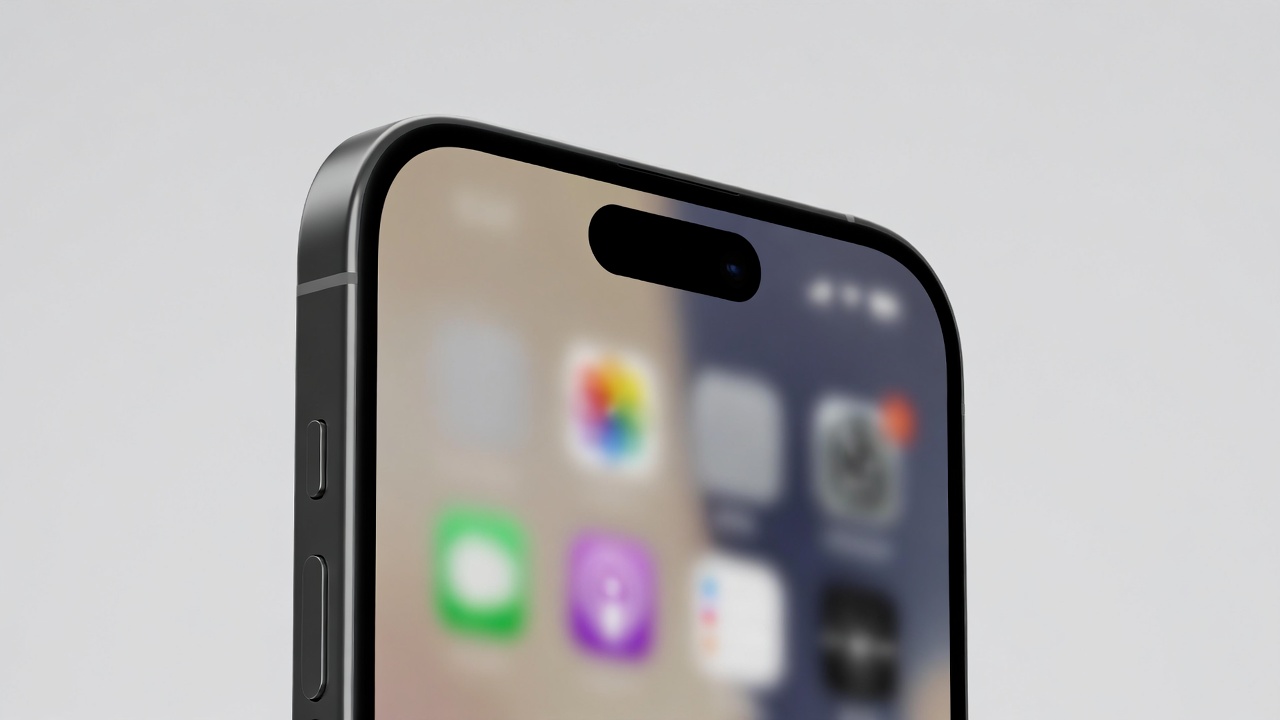
The Dynamic Island, introduced with iPhone 14 Pro, reportedly remains on Pro models but shrinks slightly thanks to improved under-display Face ID technology. Standard iPhone 17 models may finally receive Dynamic Island after two years as a Pro-exclusive feature, replacing the traditional notch that’s been carried forward since iPhone X. This democratization of premium features follows Apple’s typical pattern of bringing last year’s Pro capabilities to current standard models.
Material changes are rumored for the Pro Max variant specifically. Analyst Ming-Chi Kuo, another reliable Apple predictor, suggests the iPhone 17 Pro Max will use a titanium-aluminum hybrid frame that’s lighter than the current titanium design while maintaining similar strength. The standard iPhone 17 and 17 Plus allegedly stick with aluminum frames, creating clearer material-based differentiation across the lineup.
Perhaps the most intriguing design rumor involves a potential “iPhone 17 Slim” or “iPhone 17 Air” variant—a new ultra-thin model that would slot between the standard iPhone and Pro models in both features and pricing. Supply chain reports from DigiTimes suggest this device would measure just 6-7mm thick (versus 7.8mm for current iPhones), sacrifice some battery capacity and camera capabilities for extreme portability, and target users who prioritize form factor over maximum performance. This would represent the most significant lineup expansion since the Plus/Max differentiation. Those interested in how this fits within broader iOS ecosystem developments should consider how new form factors influence software design.

Camera System Improvements and Capabilities
Camera improvements dominate the latest iPhone 17 rumors and leaks, with Apple reportedly planning the most significant imaging upgrades in several generations to maintain competitive advantages against increasingly capable Android flagships.
The headline camera rumor involves a 48MP ultra-wide camera joining the existing 48MP main camera on Pro models. Currently, only the main camera uses the high-resolution sensor while ultra-wide and telephoto remain at 12MP. Upgrading the ultra-wide to 48MP would enable significant improvements to macro photography, ultra-wide shots in low light, and overall image quality when zooming from ultra-wide perspectives.
Telephoto improvements allegedly focus on the Pro Max exclusively. Multiple sources suggest Apple will introduce a periscope telephoto system with 10x optical zoom, doubling the current 5x capability. This would match capabilities Samsung has offered for years and address one of the iPhone’s few remaining camera weaknesses compared to Android competitors. The periscope design uses a prism to reflect light through a longer focal length within the phone’s slim body, enabling greater magnification without increasing thickness.
Computational photography receives reported upgrades through improved AI processing capabilities. The new A19 chip (discussed later) supposedly includes enhanced neural processing specifically optimized for multi-frame image processing. This enables better night mode performance, improved Smart HDR that handles extreme dynamic range scenes more naturally, and enhanced portrait mode edge detection that struggles less with complex hair and translucent objects.
Video capabilities may see the introduction of 8K recording at 30fps on Pro models, finally matching capabilities available on Android flagships for years. However, rumors disagree on whether this actually materializes—8K video creates massive file sizes and questionable practical value given limited 8K display adoption. Apple might judge that improved 4K processing delivers better real-world benefits than 8K checkbox marketing.
One particularly interesting leak from Chinese supply chain sources suggests Apple is testing an advanced lens coating that dramatically reduces lens flare and maintains image quality when shooting toward bright light sources. If accurate, this addresses a weakness that’s plagued iPhone cameras for years—excessive lens flare when photographing sunsets, stage lighting, or any scene with bright point light sources in frame.
Performance Upgrades: A19 Chip and RAM Increases
Performance improvements in the latest iPhone 17 rumors and leaks center on the expected A19 and A19 Pro chips built on TSMC’s next-generation 2nm manufacturing process, promising substantial efficiency gains alongside performance improvements.
The transition to 2nm architecture represents a significant manufacturing advancement from the current 3nm process used in A17 Pro. This smaller transistor geometry enables either higher performance at the same power consumption or equivalent performance with dramatically better battery efficiency. Apple reportedly targets 15-20% CPU performance gains and 25-30% GPU improvements on the A19 Pro compared to A17 Pro, while reducing power consumption by 20-25%.
RAM upgrades appear likely across the lineup based on multiple credible sources. Standard iPhone 17 models reportedly jump from 6GB to 8GB RAM, while Pro models increase from 8GB to 12GB. These increases primarily support advanced Apple Intelligence features that require substantial on-device processing. More RAM enables larger language models to run locally, improves multitasking performance, and ensures iOS 20 features don’t feel constrained by memory limitations.
The neural engine, Apple’s AI-focused processor component, supposedly receives major upgrades with transistor count increasing by 40% and processing capabilities doubling compared to current generation. This enables more sophisticated on-device AI features including real-time translation, advanced photo editing that understands scene context, and improved Siri functionality that processes more requests locally rather than requiring cloud connectivity.
Storage configurations may finally eliminate the 128GB base tier on Pro models, with 256GB becoming the new entry point at the same $999 starting price. Standard models reportedly maintain 128GB options but add 512GB configurations, filling a gap in the current lineup where users wanting more storage must jump directly to 1TB Pro models. Understanding how these specifications compare to other devices helps when exploring the broader smartphone market landscape.
Display Technology and Screen Improvements
Display improvements feature prominently in the latest iPhone 17 rumors and leaks, with Apple reportedly planning advances in brightness, efficiency, and refresh rate technology that widen the gap between standard and Pro models.
All iPhone 17 models supposedly adopt ProMotion displays with 120Hz refresh rates, finally bringing this feature to the entire lineup after years as a Pro exclusive. However, rumors suggest implementation differs—Pro models get LTPO (Low-Temperature Polycrystalline Oxide) displays that dynamically adjust refresh rates from 1Hz to 120Hz based on content, maximizing battery efficiency. Standard models allegedly use fixed 60Hz/120Hz switching without the granular adjustment, meaning less battery optimization but still improved smoothness compared to fixed 60Hz displays.
Peak brightness reaches new highs according to supply chain reports. Pro models supposedly achieve 2,500 nits peak brightness for HDR content (versus current 2,000 nits), improving outdoor visibility and HDR video impact. Standard models jump from 1,000 nits to 1,500 nits, narrowing the brightness gap between tiers while maintaining Pro advantages.
Display sizes might shift slightly across the lineup. The rumored iPhone 17 Slim would feature a 6.6-inch display, slotting between the standard 6.1-inch iPhone 17 and 6.7-inch Plus model. Pro sizes allegedly remain at 6.3 inches for Pro and 6.9 inches for Pro Max, representing small increases from current 6.1 and 6.7-inch sizes. These fractional changes enable slightly larger display area while maintaining similar overall device dimensions.
Under-display Face ID technology appears in multiple rumors, particularly for Pro models. This would eliminate the visible notch or Dynamic Island, creating an uninterrupted screen surface while maintaining Face ID functionality through sensors hidden beneath the display. However, implementation challenges make this feature uncertain—multiple sources disagree on whether it’s ready for 2026 or pushed to 2027’s iPhone 18.
Micro-lens array technology, currently exclusive to Pro Max, reportedly expands to all Pro models. This display layer improves brightness and power efficiency by directing more light toward the viewer rather than being lost to the backlight system. The technology enables the aggressive brightness increases mentioned earlier while actually reducing power consumption compared to achieving similar brightness through traditional methods.
Battery Life and Charging Improvements
Battery and charging rumors suggest meaningful improvements across the board, though expectations should remain measured given the physical constraints of battery technology and Apple’s conservative approach to charging speeds.
Battery capacity increases are reported for all models thanks to improved internal space utilization and denser battery chemistry. The standard iPhone 17 supposedly features a 3,500mAh battery (up from 3,349mAh), the Plus model reaches 4,600mAh (up from 4,383mAh), Pro gets 3,800mAh (up from 3,650mAh), and Pro Max achieves 5,000mAh (up from 4,685mAh). These increases, combined with the more efficient A19 chips, reportedly deliver 15-20% longer battery life across typical usage patterns.
The rumored iPhone 17 Slim presents interesting battery trade-offs. To achieve the ultra-thin profile, it supposedly uses a smaller 3,200mAh battery—the smallest in the lineup. However, the efficient 2nm chip and potential display optimizations might enable acceptable all-day battery life despite the capacity compromise. This model clearly targets users prioritizing form factor over maximum endurance.
Charging speed improvements finally materialize according to multiple sources. Wired charging allegedly increases from the current 27W (though Apple advertises 20W) to genuine 45W fast charging, enabling 50% charge in approximately 20 minutes versus the current 30 minutes. This would still trail Android flagships offering 65W, 100W, or even 150W charging, but represents meaningful progress for Apple’s traditionally conservative charging approach.
MagSafe wireless charging supposedly jumps from 15W to 25W, reducing wireless charging times significantly while maintaining magnetic alignment convenience. Third-party Qi2 chargers that use the MagSafe-compatible standard would also benefit from this speed increase, creating a better accessory ecosystem. Reverse wireless charging remains rumored but unconfirmed—the ability to charge AirPods or Apple Watch by placing them on the back of the iPhone has appeared in rumors for years without materializing.
USB-C port retention is confirmed after the iPhone 15’s transition from Lightning. However, Pro models reportedly upgrade to USB 4.0 specification supporting 40 Gbps transfer speeds, dramatically improving file transfer for ProRes video and large photo libraries. Standard models maintain USB 3.2 speeds from iPhone 15, creating another Pro differentiation point. Understanding these connectivity improvements matters when considering integration with other computing devices in your ecosystem.

New Software Features and iOS 20 Integration
Software improvements accompanying the iPhone 17 focus on deeper Apple Intelligence integration, enhanced privacy features, and capabilities that leverage the new hardware’s increased processing power.
Apple Intelligence receives major upgrades according to Bloomberg reports. On-device language models supposedly double in size and capability on Pro models with 12GB RAM, enabling more complex queries to process locally without cloud connectivity. Standard features like text summarization, email drafting assistance, and notification prioritization work more reliably and handle nuanced requests better than current implementations.
Siri improvements are rumored to be substantial, finally addressing long-standing complaints about Apple’s assistant trailing Google and Amazon alternatives. Enhanced natural language understanding, better contextual awareness that remembers previous queries, and improved integration with third-party apps all appear in multiple reports. Whether these improvements prove genuinely transformative or incrementally better remains uncertain until official demonstrations.
Privacy features expand with reported “Advanced Data Protection” becoming standard rather than optional. This encrypts more iCloud data categories end-to-end by default, preventing even Apple from accessing photos, notes, and backups without your explicit decryption keys. Current implementation requires users to opt-in; making it default would significantly improve privacy for less technical users who don’t navigate settings menus.
Health features supposedly include blood pressure monitoring on Apple Watch with iPhone integration for tracking and analysis. While technically an Apple Watch feature, the iPhone 17’s improved health app and processing capabilities enable more sophisticated trend analysis and personalized recommendations. Blood glucose monitoring remains rumored but likely still years away from accurate non-invasive implementation.
Satellite communication features expand beyond emergency SOS to include standard text messaging via satellite when cellular coverage is unavailable. This would match capabilities Starlink offers through partnerships with Android manufacturers and represent a significant value addition for users in rural areas or frequent travelers to remote locations. However, implementation costs and carrier relationships make this feature uncertain for 2026. Those tracking these capabilities should monitor developments in competing platforms as the feature landscape evolves.
Pricing, Availability, and Model Lineup Changes
Pricing rumors for the iPhone 17 vary considerably, though the overall consensus suggests modest increases for Pro models offset by the addition of mid-tier options that create new price points.
Standard iPhone 17 models allegedly maintain current pricing: $799 for the base 6.1-inch iPhone 17, and $899 for the 6.7-inch iPhone 17 Plus. Apple historically avoids raising standard iPhone prices, using Pro models to capture premium spending while maintaining accessible entry points. The consistency would continue this strategy.
The rumored iPhone 17 Slim/Air supposedly slots between standard and Pro at $899-949, creating a new premium tier for users wanting elevated design and features without full Pro pricing. This positioning would compete directly with Android flagships in the $800-1000 range while maintaining clear differentiation from $999+ Pro models.
iPhone 17 Pro pricing supposedly increases to $1,099 (up from $999) while Pro Max reaches $1,299 (up from $1,199). The $100 increase across Pro models reflects component cost increases for improved cameras, larger displays, and enhanced materials. However, starting storage doubling to 256GB somewhat justifies the premium—users previously paid $1,099 for 256GB iPhone 15 Pro, so $1,099 for the same storage in iPhone 17 Pro represents flat year-over-year pricing at that capacity.
Release timing follows Apple’s traditional September pattern, with announcements expected in the second week of September 2026 and availability beginning the following Friday. Pro models supposedly ship first, with the rumored Slim variant potentially delayed until October to manage supply chain complexity. This staggered approach has become common as Apple introduces new form factors that require production ramp-up.
Color options reportedly refresh with new finishes replacing current options. Pro models allegedly introduce “Titanium Bronze” and “Titanium Slate” while retiring Blue Titanium. Standard models supposedly add “Emerald” green and “Sunset” coral orange options. Color rumors prove particularly unreliable historically, so take these specifics with skepticism until official announcement.
Evaluating Rumor Credibility: What to Believe
Not all iPhone 17 rumors and leaks deserve equal credibility. Understanding which sources have proven track records and which regularly publish speculative content helps separate likely reality from wishful thinking.
Mark Gurman at Bloomberg maintains perhaps the best track record for Apple predictions, with his reports proving accurate 80-90% of the time. His claims about camera redesign, A19 chip improvements, and display upgrades carry substantial weight. Ming-Chi Kuo, an analyst with supply chain sources, similarly demonstrates high accuracy, particularly for hardware specifications and component details.
Established leak aggregators like MacRumors and 9to5Mac carefully vet sources before publishing, assigning reliability ratings to different claims. Their “confirmed” or “highly likely” categories deserve attention, while “possible” or “rumored” should be treated as speculation until corroborated.
Conversely, many YouTube channels and social media accounts publish attention-grabbing “leaks” with minimal factual basis. Claims about foldable iPhones, under-display Touch ID (distinct from Face ID), or dramatic price reductions appear regularly despite lacking credible sourcing. These generate engagement but rarely materialize in actual products.
Patent filings provide interesting possibilities but poor prediction accuracy. Apple files thousands of patents annually; only a small fraction become actual features. Patents indicate areas of research interest but shouldn’t be interpreted as confirmed features for any specific product.
Supply chain rumors from Asian manufacturing sources carry mixed credibility. Legitimate leaks do emerge from component manufacturers and assembly partners, but distinguishing authentic leaks from intentional misinformation or misunderstood contexts requires expertise that casual observers lack. Approach supply chain reports cautiously unless confirmed by established analysts.
The most reliable approach: wait for convergence. When multiple independent credible sources report the same feature, likelihood increases substantially. Single-source claims, no matter how detailed, should be treated as possible rather than probable until corroborated. Understanding these dynamics helps when evaluating technology news across all categories, not just smartphones, as explored in our technology news coverage.
Should You Wait for iPhone 17 or Buy Now?
Given all these iPhone 17 rumors and leaks, the practical question becomes whether waiting 8-9 months for the new model makes sense versus purchasing current iPhone 15 models now at discounted prices.
Wait for iPhone 17 if you specifically want rumored features like the redesigned camera system, ultra-thin Slim variant, improved battery life, or enhanced AI capabilities. The September 2026 launch is far enough away that waiting makes little sense unless your current phone remains functional and you’re not experiencing significant pain points that a new device would solve immediately.
Buy iPhone 15 Pro now if you need a phone immediately, can find substantial discounts (which typically emerge around January-March as retailers clear inventory ahead of spring), or don’t find the rumored iPhone 17 improvements compelling enough to justify waiting. The iPhone 15 Pro remains an excellent device that will receive software updates for 5+ years, making it a solid investment even with iPhone 17 on the horizon.
Consider waiting for iPhone 16 price drops when iPhone 17 launches. Apple typically continues selling the previous generation at $100-200 discounts when new models release. If iPhone 17 improvements seem incremental rather than revolutionary, getting an iPhone 16 Pro for $799-899 in September 2026 might provide better value than spending $1,099 on the latest model.
The rumored iPhone 17 Slim creates interesting timing considerations. If the ultra-thin design appeals and you can wait potentially until October 2026, this new form factor might justify the patience. However, first-generation products often have unforeseen compromises—the original iPhone 17 Slim might sacrifice battery life or camera capability more than anticipated in exchange for thinness.
For most users with phones 2-3 years old or older, upgrading to current iPhone 15 models makes practical sense rather than waiting. The improvements from iPhone 13/14 to iPhone 15 exceed the rumored incremental gains from iPhone 15 to iPhone 17. Getting those benefits now versus waiting nearly a year provides real value, particularly if discounts reduce the cost differential.
Conclusion
The latest iPhone 17 rumors and leaks suggest a meaningful but evolutionary update to Apple’s smartphone lineup rather than a revolutionary redesign. The most credible reports point toward camera improvements, enhanced AI capabilities, better battery life, and potential new form factors that expand choice without fundamentally reimagining what an iPhone is.
The rumored features that deserve the most attention include the redesigned camera system with improved ultra-wide and telephoto capabilities, the efficient 2nm A19 chip that should deliver substantial battery life improvements, the potential iPhone 17 Slim variant creating a new category, and deeper Apple Intelligence integration that makes AI features genuinely useful rather than novelty additions.
Approach less-credible rumors with healthy skepticism, particularly claims about dramatic departures from Apple’s established design language or pricing strategies. The company iterates carefully rather than making radical changes, meaning expectations should center on refinement and optimization rather than reinvention.
My recommendation: if you currently own an iPhone 13 or older and your device is showing age, don’t wait for iPhone 17—upgrade to discounted iPhone 15 models as they become available. The immediate quality-of-life improvements outweigh the incremental gains you’d see waiting for iPhone 17. If you have an iPhone 14 or 15 and are curious about new features, wait for official announcements in September before deciding. The rumored improvements seem meaningful but not compelling enough to guarantee upgrades for recent iPhone owners. Most importantly, treat rumors as interesting possibilities rather than confirmed reality—Apple always includes surprises that leaks miss entirely, making the actual September announcement worth experiencing with an open mind.
🛒 Recommended Products for iPhone Accessories
Based on the latest iPhone 17 rumors and leaks discussed in this article, we’ve curated a selection of top-rated products that deliver exceptional performance and value. These recommendations are carefully chosen to help you implement the solutions that best fit your needs and budget.




- Best Cheap Smartwatch Under $50
 Best Cheap Smartwatch Under $50: 5 Reliable Picks for 2026 By Sanso Uka If you’re hunting for the… Read more: Best Cheap Smartwatch Under $50
 - Best Dash Cams of 2026
 Best Dash Cams of 2026: Top Picks for Every Driver and Budget By Wanderson Nogueira Martins Choosing the… Read more: Best Dash Cams of 2026
 - How to Transfer Data to New Phone
 How to Transfer Data to a New Phone: A Step-by-Step Guide for 2026 By Sanso Uka Upgrading to… Read more: How to Transfer Data to New Phone
 - Senior-Friendly Smartphones 2026
 Senior-Friendly Smartphones 2026: Best Overall Picks for Every Budget By Sanso Uka Senior-friendly smartphones in 2026 have come… Read more: Senior-Friendly Smartphones 2026
 - Best Mechanical Keyboards in 2026
 Best Mechanical Keyboards in 2026 Best Mechanical Keyboards in 2026: Top Picks for Every Budget and Use Case… Read more: Best Mechanical Keyboards in 2026
 - Best Monitor for Home Office 2026
 Best Monitor for Home Office 2026: Expert Picks & Buying Guide By Sanso Uka Your monitor is the… Read more: Best Monitor for Home Office 2026
 - How to Extend Smartphone Battery Life
 How to Extend Smartphone Battery Life: 12 Practical Tips That Actually Work By Sanso Uka You unplugged your… Read more: How to Extend Smartphone Battery Life
 - Best E-Readers in 2026
 Best E-Readers in 2026: Which One Is Actually Worth Buying? Best E-Readers in 2026: Which One Is Actually… Read more: Best E-Readers in 2026
 - Refurbished vs New Laptop
 Refurbished vs New Laptop: Which Should You Buy in 2026? By Sanso Uka When you’re in the market… Read more: Refurbished vs New Laptop
 - Best Gaming Headsets Under $100
 Best Gaming Headsets Under $100 in 2026: Top Picks for Every Platform By Sanso Uka Finding the best… Read more: Best Gaming Headsets Under $100
 - How Long Do Laptops Last
 How Long Do Laptops Really Last? A Practical Guide to Lifespan By Sanso Uka If you are shopping… Read more: How Long Do Laptops Last
 - Best Portable Charger 2026
 Best Portable Charger in 2026: Top Power Banks for Every Budget and Use Case By Wanderson Nogueira Martins… Read more: Best Portable Charger 2026