
Is AI Replacing Jobs? The 2026 Data on What’s Actually Happening
By Sanso Uka

The question of whether AI is replacing jobs has moved from a futuristic concern to a present-day reality check for millions of workers. Headlines often scream about an “AI apocalypse,” but the actual picture in early 2026 is more nuanced—and in some ways, more urgent. While mass layoffs solely attributed to AI aren’t yet the norm, the technology is fundamentally reshaping the hiring landscape, freezing out new graduates, and rapidly automating specific tasks. For the practical tech user, understanding this shift is the first step to navigating it.
It’s Not (Yet) Mass Layoffs, It’s a Hiring Freeze
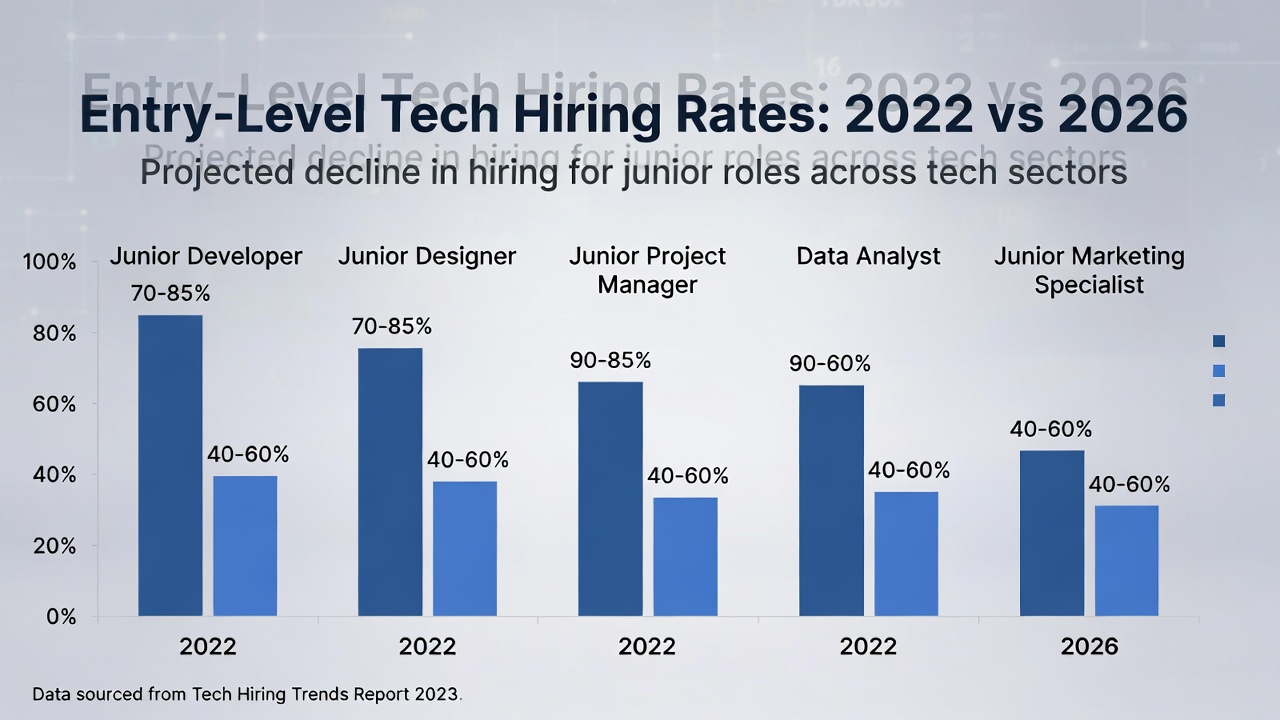
The most significant impact of AI on employment right now isn’t the wholesale replacement of existing workers, but a chilling effect on new hiring. Recent research from Anthropic found that while AI has the potential to automate many tasks, it hasn’t yet led to a spike in unemployment for most exposed roles. Instead, companies are simply stopping hiring for those positions, particularly impacting those at the start of their careers. The study found “tentative evidence that hiring into those professions has slowed slightly for workers aged 22-25.” This means a computer science graduate in 2026 is finding it much harder to land that entry-level coding job than someone did five years ago, because junior-level tasks are now being handled by AI agents. 📌 Don’t forget to save this post to reference these key trends as the job market continues to shift.
Which Roles Are Actually at Risk?
To answer “is AI replacing jobs” for yourself, you need to look at tasks, not titles. A recent working paper from the National Bureau of Economic Research looked at the impact of AI on “high-skill” jobs, specifically within software development. The results were stark: “high-skill” workers saw a significant drop in employment and earnings post-AI exposure, while lower-skill workers remained relatively stable. This inverts previous technological revolutions, which typically threatened manual labor first.
Here’s where we’re seeing the most movement:
- Software Development & IT: Tasks like code generation, bug fixing, and documentation are highly automatable. This doesn’t eliminate the need for senior architects, but it dramatically reduces the need for large teams of junior coders. For the latest laptops and workstations to handle these new AI-powered development tools, check out our PC builds and components section.
- Creative & Content Roles: Translation, copywriting, and initial design mockups are now routinely handled by AI. The human role shifts from creator to editor and strategic director.
- Data Analysis & Finance: AI is exceptionally good at pattern recognition in large datasets—a core function of many analyst roles. However, interpreting those patterns for business strategy remains a human domain.
It’s also important to acknowledge the limitations. AI still struggles with tasks requiring physical dexterity, interpersonal empathy, complex negotiation, and accountability—which is why roles in plumbing, nursing, therapy, and executive leadership remain firmly in human hands.
The “AI Ghost” in the Workplace
Beyond direct replacement, a more subtle phenomenon is at play. Many companies are not explicitly firing people to hire AI, but they are using AI to squeeze more output from fewer employees. A report from TechCrunch highlighted how the tech sector is seeing a “sobering reality” where AI is automating specific tasks, making entire departments leaner. Your job title might not be replaced, but if AI automates 40% of your tasks, the company may feel justified in merging your role with another. This is the “AI ghost”—you can’t see it taking a specific job, but you feel its effect on workload and headcount. To stay ahead, it’s crucial to understand the core machine learning principles that are driving these tools.

How to Stay Relevant in an AI-Driven Market
The practical question isn’t just “is AI replacing jobs,” but “what can I do about it?” The answer isn’t to become an AI researcher, but to become an AI-augmented professional. Here’s the honest, practical guidance:
- Audit Your Own Tasks: List your core weekly responsibilities. Which are repetitive and rule-based? Those are at highest risk. Which require strategic thinking, emotional intelligence, or physical presence? Those are your safe havens. Focus your energy on excelling in those safe havens.
- Learn the Tools of Your Trade: Whatever your field—writing, design, coding, analysis—there are now AI tools for it. Experiment with the leading AI tools and chatbots in your industry not as a replacement, but as a force multiplier. The goal is to be the person who can do the work of two people because you master the AI, not the one who gets replaced by the person who does.
- Double Down on Human Skills: Communication, persuasion, leadership, empathy, and complex problem-solving. These are the skills AI is not projected to master anytime soon. Make them your differentiator.
💡 Save this guide for later to remind yourself of these actionable steps as you navigate your career.
Conclusion: The Co-Pilot, Not the Pilot
So, is AI replacing jobs? The honest answer is: yes, specific tasks are being automated, which is reducing the need for certain roles, especially at the entry level. The panic is understandable, but the reality requires a more strategic response. AI in 2026 functions less like a robot stealing a single chair and more like a relentless wave that is reshaping the entire shoreline. You can’t stop the wave, but you can learn to surf. The workers who thrive will be those who view AI not as a competitor, but as the most powerful co-pilot they’ve ever had. Your next step is simple: pick one AI tool relevant to your field and spend an hour this week learning how to use it. That one hour is the down payment on your future relevance.
Related Reading at Sanso Uka Tech
For a broader perspective on managing the costs of upskilling in this new economy, you might find the budgeting tools and guides at sansouka.online to be a helpful resource.
- What Is Quantum Computing
 What Is Quantum Computing? A Practical Guide (2026) | Sanso Uka Tech What Is Quantum Computing? A Practical Guide… Read more: What Is Quantum Computing
 - Best AI Image Generators in 2026
 Best AI Image Generators in 2026: Which One Is Actually Worth It? Best AI Image Generators in 2026: Which… Read more: Best AI Image Generators in 2026
 - Is AI Replacing Jobs
 Is AI Replacing Jobs? The 2026 Data on What’s Actually Happening By Sanso Uka The question of whether AI… Read more: Is AI Replacing Jobs
 - Tech Trends 2026
 Tech Trends to Watch in 2026: What’s Actually Worth Your Attention Tech Trends to Watch in 2026: What’s Actually… Read more: Tech Trends 2026
 - Best Free AI Tools 2026
 Best Free AI Tools 2026: My Honest Stack for $0 By Sanso Uka Let’s cut through the noise. I’ve… Read more: Best Free AI Tools 2026
 - What Is Generative AI
 What Is Generative AI? A Plain-English Guide for 2026 What Is Generative AI? A Plain-English Guide for 2026 By… Read more: What Is Generative AI
 - Future of Artificial Intelligence 2026
 Future of Artificial Intelligence 2026: From Chatbots to Personal Agents By Sanso Uka If 2025 was the year we… Read more: Future of Artificial Intelligence 2026
 - Best AI Tools 2026
 Best AI Tools 2026: ChatGPT, Claude, Gemini & More Compared Updated · March 2026 Best AI Tools 2026:The Ones… Read more: Best AI Tools 2026
 - How to Set Up Smart Lighting at Home
 How to Set Up Smart Lighting at Home: Complete Beginner’s Guide (2026) How to Set Up Smart Lighting at… Read more: How to Set Up Smart Lighting at Home
 - IoT Devices for Beginners
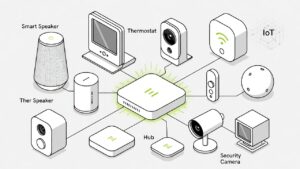 Best IoT Devices for Beginners in 2026: Where to Start Best IoT Devices for Beginners in 2026: Where to… Read more: IoT Devices for Beginners
 - Best Smart Smoke Detector 2026
 Best Smart Smoke Detector 2026: Which One Actually Protects Your Home? By Sanso Uka Let’s be honest—most of us… Read more: Best Smart Smoke Detector 2026
 - How to Control Your Smart Home with Your Phone
 How to Control Your Smart Home with Your Phone: A Practical Setup Guide By Sanso Uka Learning how to… Read more: How to Control Your Smart Home with Your Phone