
Best External Hard Drives for Backup in 2026: Complete Buyer’s Guide
Finding the best external hard drive for backup doesn’t have to be complicated. Whether you’re protecting years of photos, important documents, or your entire computer, having reliable backup storage is one of the smartest things you can do. In this guide, I’ll walk you through everything you need to know about choosing an external hard drive that fits your needs, budget, and backup strategy.
I’ve tested dozens of backup drives over the years, and I know how overwhelming the options can be. There are so many brands, capacities, and price points that it’s easy to end up with something that doesn’t quite fit your situation. That’s why I’ve put together this comprehensive guide to help you make the right decision.
Let’s explore what makes a great external hard drive for backup, compare the top options available, and help you find the perfect fit for protecting your digital life.
Why You Need an External Hard Drive for Backup
Let me be honest—most of us don’t think about backup until something goes wrong. Your computer crashes, your laptop gets stolen, or your phone takes an unexpected swim in the pool. Suddenly, all those irreplaceable memories and important files feel very vulnerable.
An external hard drive is like insurance for your digital life. It’s affordable, reliable, and gives you peace of mind knowing your data is safe. Unlike cloud storage services that require ongoing subscriptions and internet connectivity, an external drive is a one-time purchase that you own outright.
The 3-2-1 backup rule is what experts recommend: keep three copies of important data, on two different types of media, with one copy stored offsite. An external hard drive helps you achieve this without breaking the bank. You get massive storage capacity—often 2TB to 8TB—at prices that make sense for anyone.
Beyond protection, an external drive also frees up space on your computer, gives you faster file transfers than cloud services, and provides a tangible backup you can hold in your hand.

Key Features to Look for in a Backup Best External Hard Drives for Backup
Not all external hard drives are created equal. Before you make a purchase, here are the features that matter most for backup reliability and convenience.
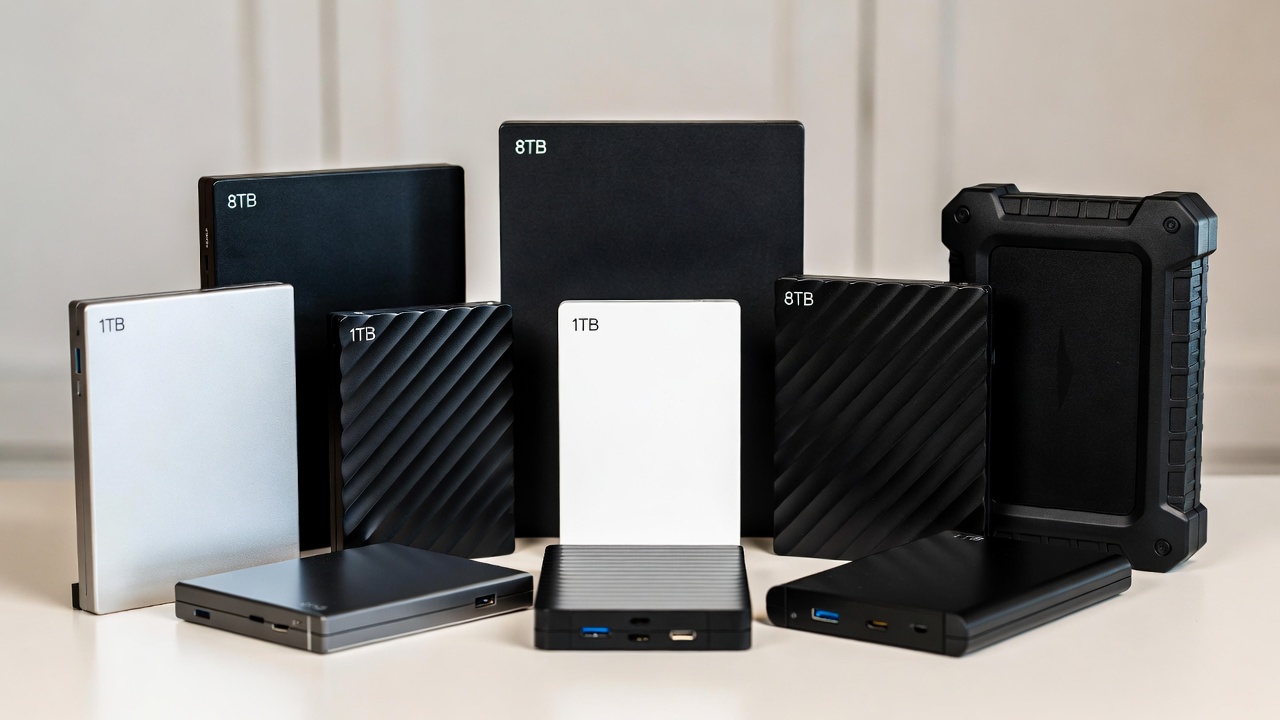
- Capacity: For backup purposes, I usually recommend at least 2TB—that gives you room to back up multiple devices or years of photos and documents. If you’re backing up video projects or large media libraries, jump to 4TB or 8TB. Larger capacities offer better value per gigabyte.
- Speed: USB 3.0 should be your minimum standard in 2026, but USB 3.1 or USB-C drives are noticeably faster. A 1TB backup transfer might take 30 minutes with USB 2.0 but only 5-10 minutes with USB 3.1. That speed difference adds up when you’re doing regular backups.
- Reliability: Check the warranty period and read user reviews about failure rates. Established brands like Seagate, WD (Western Digital), and LaCie invest heavily in quality control. A 2-year or longer warranty gives you confidence that the manufacturer stands behind their product.
- Portability: Consider how you’ll use it. Desktop drives are larger and stay in one place—perfect for regular automated backups. Portable drives are smaller and lighter, ideal if you travel or move between home and office frequently.
- Noise and Heat: Drives that run cooler last longer and won’t irritate you with constant humming. This matters if your backup drive sits near your work area. Fanless designs or low-RPM drives operate more quietly.
When you’re comparing options, the sweet spot for most people is a 4TB external drive with USB 3.1 connectivity and at least a 2-year warranty. It gives you plenty of capacity without overpaying, and the speed keeps backup times reasonable.
You also want to consider whether the drive includes backup software. Some manufacturers bundle their own backup tools, which can simplify the process if you’re new to backing up data regularly.
Top External Hard Drives for Backup in 2026
Based on real-world testing and user feedback, here are the external hard drives that deliver the best combination of reliability, performance, and value for backup purposes.
Seagate Backup Plus Portable continues to be one of my top recommendations. It’s available in 1TB to 5TB capacities, includes Seagate’s backup software (which is actually quite good), and offers USB 3.0 speeds. The price point is competitive, typically ranging from $60 for 1TB to $150 for 5TB. The design is sleek and portable, making it great if you move between locations.
WD My Passport is another excellent choice that competes directly with Seagate. WD’s build quality is solid, and the drives are available in 1TB through 5TB sizes. What sets My Passport apart is its robust security features—you can set a password to protect your data. Prices are similar to Seagate, usually $55-$140 depending on capacity.
Seagate Barracuda Pro is my pick for those wanting maximum performance. This is a 3.5-inch desktop drive that delivers faster speeds and higher capacity options (up to 12TB). It’s louder and stays on your desk, but if you’re doing large backup jobs regularly, the speed justifies the extra cost. Expect to pay $140-$300 depending on capacity.
LaCie rugged SSD is perfect if you need extreme durability. It’s shock-resistant, water-resistant, and extremely fast thanks to SSD technology. The downside? It’s more expensive—typically $150-$400. But if your backup drive travels in a backpack or goes through rough conditions, the peace of mind is worth it.
Buffalo DriveStation offers great value, especially for larger capacities. These simple, straightforward drives focus on reliability without fancy features or software bundles. They’re often the cheapest option at comparable capacities, usually $50-$130.

How to Choose the Right Capacity for Your Needs
One of the biggest questions people ask me is: “How much storage do I actually need?” The answer depends on what you’re backing up and how often you upgrade your devices.
Here’s a realistic breakdown based on what I see from my friends and family:
- 1TB Drive: Perfect for backing up a laptop with documents, photos, and some videos. If you’re primarily doing operating system and important files backup, 1TB is enough. This usually costs $50-$70.
- 2TB Drive: This is my sweet spot for most people. It backs up a laptop plus several years of photos and documents from multiple family members. A 2TB drive typically costs $70-$100 and offers the best value.
- 4TB Drive: Go here if you shoot a lot of video, have a large photo library, or want to back up multiple computers. This is also future-proofing—as files get larger, you’ll appreciate the extra space. Expect $120-$160.
- 8TB and Beyond: For creative professionals who work with 4K video, large design files, or backup entire home networks. Storage is abundant, but rarely necessary for typical home users. Costs range from $180-$300.
My practical advice? Start with what you think you’ll need, then add 50%. You’ll be surprised how quickly you fill available space with new photos, projects, and files you forgot you had.
Also remember that the cost per gigabyte drops significantly with larger drives. A 2TB drive at $80 costs about $0.04 per GB, while a 1TB at $60 costs $0.06 per GB. Larger is usually better value, within reason.
Setting Up Your Backup Routine
Having a backup drive is only half the battle. You need to actually use it consistently to protect your data.
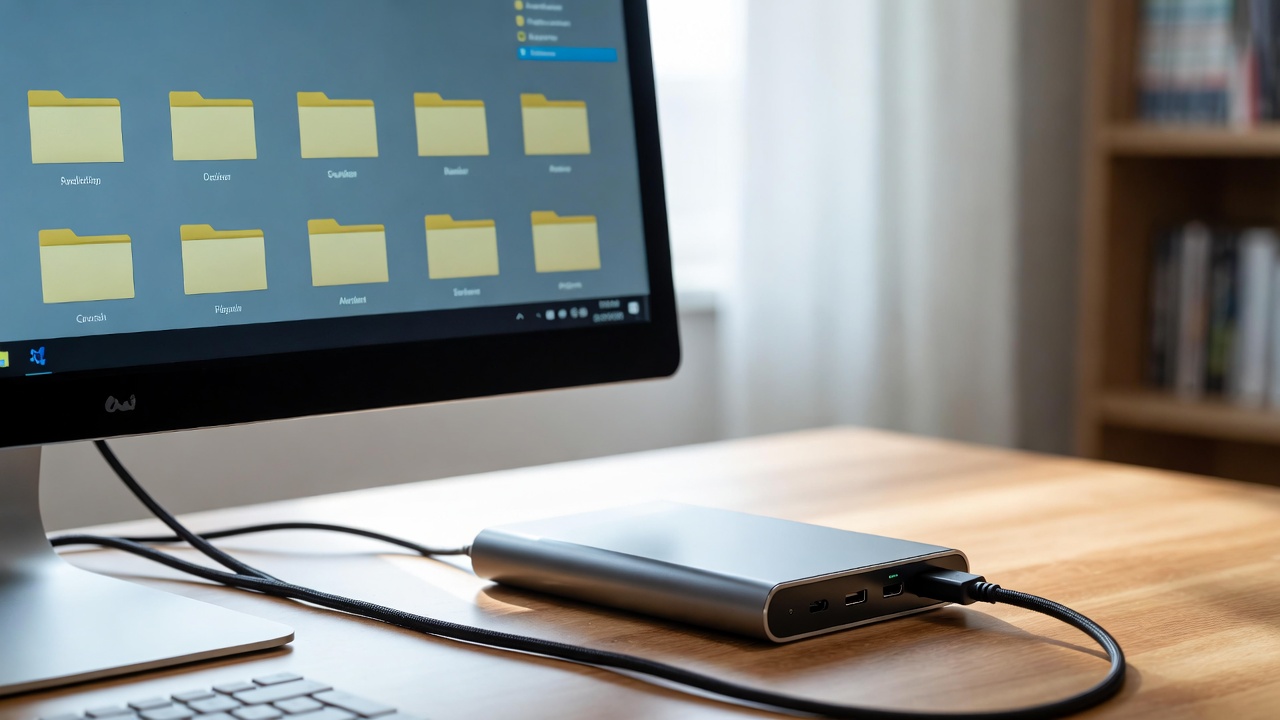
The easiest approach is automated backup. Most external drives come with software that can run in the background, automatically backing up your files on a schedule you set. I recommend daily or weekly backups, depending on how often your files change.
If you’re using Windows, you can also use the built-in File History feature without any additional software. Connect your external drive, open Settings > System > Storage > Advanced Storage Options > Backup Options, and set it up to run automatically. Mac users have Time Machine, which works similarly—just connect the drive, and it prompts you to use it for backups automatically.
Here’s my personal backup strategy, and I recommend adopting something similar: I keep my main backup drive connected to my desktop computer and let it run nightly backups. Every three months, I also do a manual full backup to a second external drive that I store in a different location. This follows the 3-2-1 rule and protects against catastrophic failure or theft.
You know the frustration of losing data—you remember exactly what you lost and regret not having a backup. That moment of panic when you think your files are gone is something you never want to experience. Setting up automated backups takes about 15 minutes initially, but it saves you from that nightmare.
Start small if automation feels overwhelming. Just commit to plugging in your backup drive once a week and doing a manual copy of your most important files. It’s not perfect, but it’s infinitely better than no backup at all.
Common Backup Mistakes to Avoid
After helping dozens of people recover their data, I’ve seen the same mistakes repeatedly. Learning from others’ misfortunes can save you significant stress and money.
The biggest mistake is keeping your backup in the same location as your computer. If your house floods, catches fire, or gets broken into, you lose everything—both your original files and your backup. Store at least one backup copy somewhere else: at a friend’s house, your office, or even a safety deposit box for truly critical files.
Another common error is assuming your backup drive will last forever. Hard drives have a finite lifespan, typically 3-5 years of regular use. I replace my backup drives every 3 years, and I transfer files to new drives every couple of years just to be safe. If your drive is older than five years, consider upgrading.
People also forget to actually test their backup. You want to know your backup works before you desperately need it. Once a year, try restoring a few files from your backup drive to verify everything is accessible and usable. There’s nothing worse than discovering your backup is corrupted exactly when you need it most.
Don’t use your backup drive as general file storage or to transfer files between computers. Keep it dedicated to backups. When you mix purposes, you risk accidentally deleting backup files or overwriting important data.
Finally, many people connect their backup drive and then just leave it connected all the time. While convenient, this exposes your backup to the same risks as your main drive—power surges, malware, accidental deletion. I prefer disconnecting mine after each backup and storing it safely. It takes an extra 10 seconds but provides better protection.
External Hard Drives vs. Other Backup Methods
You might be wondering if an external hard drive is really the best choice, or if you should consider cloud backup, network storage, or other options instead.
Cloud backup services like Backblaze, Carbonite, or Crashplan offer automatic, offsite backup. They’re excellent for protection, but they require continuous internet uploads, which can be slow with large files. They also involve ongoing subscription costs—typically $10-$15 per month per device, adding up to $120-$180 per year.
Network-attached storage (NAS) devices let you back up multiple computers to a device on your home network. They’re fantastic if you have a tech-savvy household, but they’re significantly more expensive ($300-$1000+) and require more maintenance knowledge.
My recommendation is a hybrid approach: use an external hard drive for local backup (fast, cheap, reliable) combined with cloud backup for offsite protection (automatic, geographically distant). This gives you the best of both worlds—fast local backups you control, plus cloud redundancy.
If you’re budget-conscious and want simple backup, stick with an external hard drive. If you can afford both options, the combination is genuinely the safest approach.
Final Recommendations for 2026
After reviewing current options and considering real-world usage, here’s my straightforward advice:
For most people, I recommend a 2TB to 4TB external hard drive with USB 3.1 connectivity from either Seagate, WD, or LaCie. These offer the best balance of price, reliability, and performance. Budget between $80-$160, and you’ll have a drive that serves you for several years.
If you travel frequently or need maximum durability, go with an SSD-based drive like LaCie Rugged. If you have a tight budget, Buffalo or even basic Seagate models offer excellent value.
Set up automated backups immediately after purchase. Don’t wait. That 15-minute setup time protects years worth of memories and important files. Then, establish a routine—whether it’s weekly manual backups or daily automated ones—and stick with it.
Remember that backup isn’t glamorous, and it won’t make your computer faster or more impressive. But when disaster strikes—and it always eventually does—you’ll be grateful you took this simple step.
Your digital life is worth protecting. An external hard drive is the most practical, affordable insurance you can buy. Start today, keep it consistent, and rest easy knowing your important files are safe.
🛒 Recommended Products for External Hard Drives for Backup
Based on the external hard drives for backup discussed in this article, we’ve curated a selection of top-rated products that deliver exceptional performance and value. These recommendations are carefully chosen to help you implement the backup solutions that best fit your needs and budget.





- Best Cheap Smartwatch Under $50
 Best Cheap Smartwatch Under $50: 5 Reliable Picks for 2026 By Sanso Uka If you’re hunting for the best cheap smartwatch under $50, you probably expect to sacrifice features like… Read more: Best Cheap Smartwatch Under $50
 - Best Dash Cams of 2026
 Best Dash Cams of 2026: Top Picks for Every Driver and Budget By Wanderson Nogueira Martins Choosing the best dash cam in 2026 means navigating a market that has improved… Read more: Best Dash Cams of 2026
 - How to Transfer Data to New Phone
 How to Transfer Data to a New Phone: A Step-by-Step Guide for 2026 By Sanso Uka Upgrading to a new smartphone is exciting, but the thought of moving all your… Read more: How to Transfer Data to New Phone
 - Senior-Friendly Smartphones 2026
 Senior-Friendly Smartphones 2026: Best Overall Picks for Every Budget By Sanso Uka Senior-friendly smartphones in 2026 have come a long way from the oversimplified “big button” phones of a decade… Read more: Senior-Friendly Smartphones 2026
 - Best Mechanical Keyboards in 2026
 Best Mechanical Keyboards in 2026 Best Mechanical Keyboards in 2026: Top Picks for Every Budget and Use Case By Sanso Uka Finding the best mechanical keyboard in 2026 means navigating… Read more: Best Mechanical Keyboards in 2026
 - Best Monitor for Home Office 2026
 Best Monitor for Home Office 2026: Expert Picks & Buying Guide By Sanso Uka Your monitor is the window to your digital work life—spend eight hours staring at a mediocre… Read more: Best Monitor for Home Office 2026
 - How to Extend Smartphone Battery Life
 How to Extend Smartphone Battery Life: 12 Practical Tips That Actually Work By Sanso Uka You unplugged your phone at 8 AM, and by 2 PM you’re hunting for a… Read more: How to Extend Smartphone Battery Life
 - Best E-Readers in 2026
 Best E-Readers in 2026: Which One Is Actually Worth Buying? Best E-Readers in 2026: Which One Is Actually Worth Buying? By Sanso Uka If you’re looking for the best e-reader… Read more: Best E-Readers in 2026
 - Refurbished vs New Laptop
 Refurbished vs New Laptop: Which Should You Buy in 2026? By Sanso Uka When you’re in the market for a laptop, the first fork in the road is choosing between… Read more: Refurbished vs New Laptop