
AI Trends Shaping the Tech Industry: Complete 2026 Guide
Understanding the AI trends shaping the tech industry has become essential for professionals, businesses, and technology enthusiasts who want to stay ahead in an increasingly AI-driven world. From revolutionary language models transforming how we work to autonomous systems reshaping entire industries, artificial intelligence is no longer just emerging technology—it’s the foundation upon which the next decade of innovation will be built.
I’ve been following AI developments closely since 2019, initially as a curious observer and eventually as someone whose career has been fundamentally altered by these technologies. What started as experimenting with simple chatbots has evolved into witnessing AI capabilities that seemed like science fiction just three years ago. The pace of change is both exhilarating and slightly overwhelming.
This comprehensive guide explores the most significant AI trends currently transforming the technology landscape, examining their practical implications, potential challenges, and likely trajectory through 2026 and beyond. Whether you’re a business leader planning strategy, a developer choosing skills to learn, or simply someone fascinated by technological progress, you’ll gain insights into the forces reshaping our digital future.
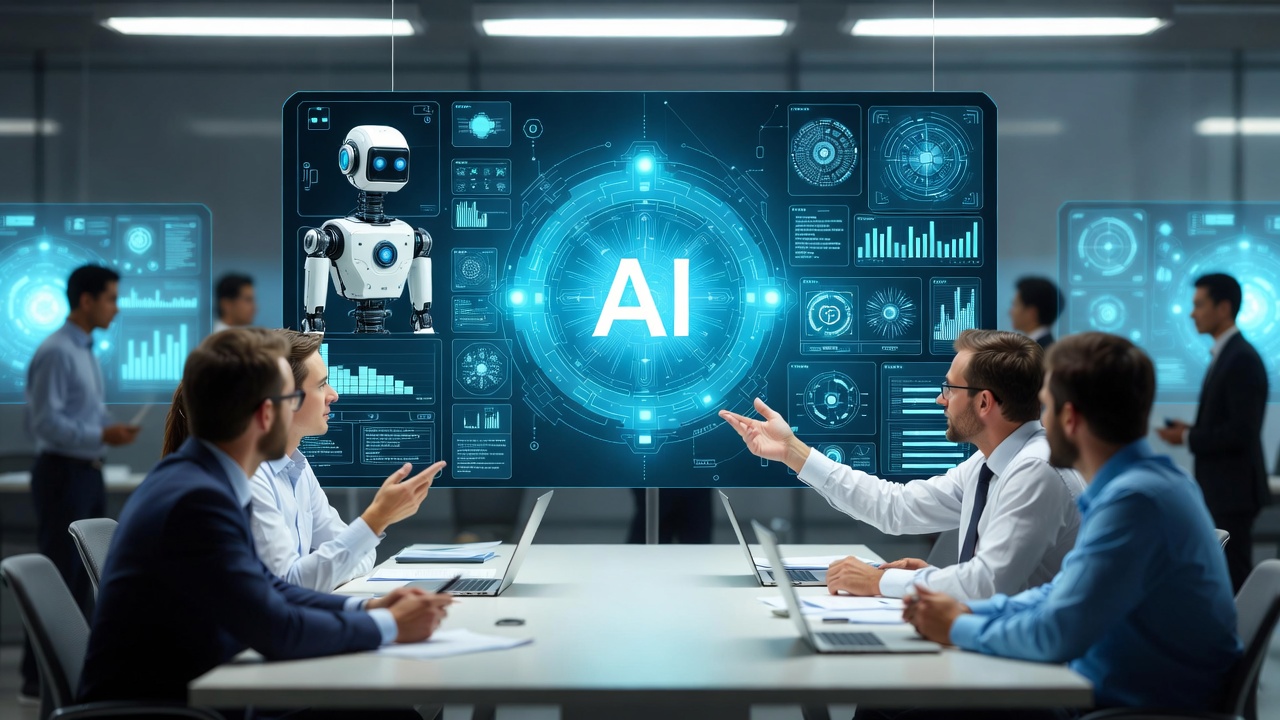
Generative AI Beyond Text: Multimodal Intelligence
Among the most transformative AI trends shaping the tech industry is the rapid evolution of multimodal AI systems that seamlessly integrate text, images, video, audio, and even 3D environments. These systems represent a fundamental shift from specialized AI tools toward general-purpose intelligence that understands and creates across multiple formats simultaneously.
The latest models from companies like OpenAI, Google, and Anthropic now process images alongside text prompts, enabling unprecedented creative and analytical capabilities. You can upload a photo of your refrigerator contents and receive recipe suggestions, or sketch a rough website layout and have AI generate functional code matching your vision. This contextual understanding transforms AI from a text-completion tool into a genuine creative collaborator.
Video generation has progressed from producing short, often bizarre clips to creating coherent, professional-quality content lasting multiple minutes. Tools like Runway, Pika, and OpenAI’s Sora demonstrate how AI can now handle complex visual narratives, camera movements, and consistent character appearances—capabilities that seemed years away just months ago. The implications for content creation, advertising, and education are profound.
Audio synthesis has similarly matured beyond robotic text-to-speech into emotionally nuanced voice generation, realistic music composition, and sophisticated sound design. AI-generated podcasts, audiobooks with celebrity voices (with permission), and dynamic game soundtracks showcase practical applications already reaching mainstream adoption. For insights into how AI tools are revolutionizing creative workflows, explore our comprehensive AI tools and chatbots guide.
AI Agents and Autonomous Task Completion
The emergence of AI agents capable of autonomous multi-step task completion represents one of the most significant AI trends shaping the tech industry in 2026. Unlike traditional AI that responds to single queries, these agents can plan complex workflows, use multiple tools, and iteratively work toward goals with minimal human intervention.
Current AI agents can book travel by comparing flights and hotels across multiple sites, manage email by categorizing messages and drafting appropriate responses, and even write and debug complete software applications by breaking down requirements into manageable steps. This shift from AI-as-tool to AI-as-colleague fundamentally changes how we approach knowledge work and productivity.
The technology underlying these agents combines large language models with function calling, memory systems that retain context across sessions, and feedback loops that learn from success and failure. Companies like Anthropic, Google DeepMind, and numerous startups are racing to create reliable agent frameworks that businesses can deploy safely and effectively.
However, agent reliability remains inconsistent—they can handle straightforward tasks impressively but occasionally make baffling errors on seemingly simple requests. This “last mile” challenge prevents full automation of most workflows, requiring human oversight that limits scalability. The industry is working intensively on improving agent robustness, error detection, and graceful failure handling.
- Personal Assistant Agents: Managing schedules, emails, and routine communications with increasing autonomy, learning individual preferences and communication styles to provide personalized support that adapts over time.
- Development Agents: Writing code, debugging issues, and deploying applications with minimal human guidance, dramatically accelerating software development cycles and democratizing programming capabilities.
- Research Agents: Gathering information across multiple sources, synthesizing findings, and producing comprehensive reports that would traditionally require hours of manual research and analysis.
- Customer Service Agents: Handling complex support interactions that require accessing multiple systems, understanding context, and making judgment calls previously reserved for experienced human representatives.
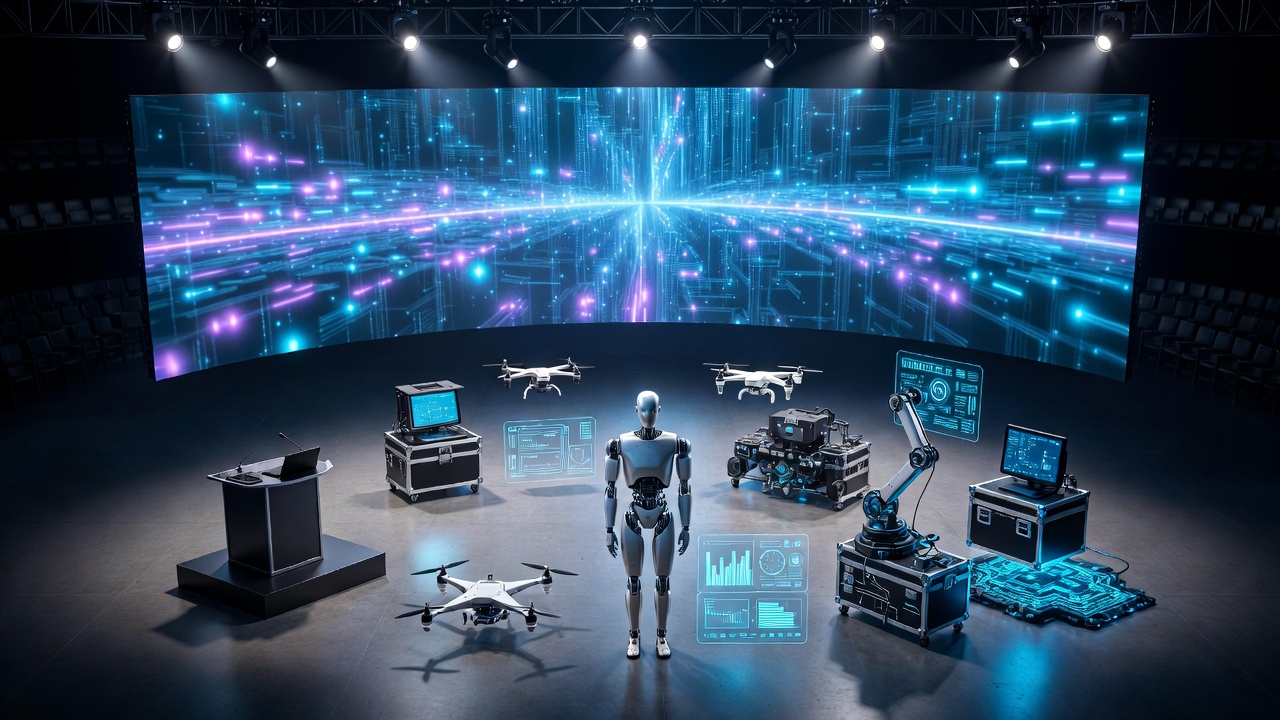
Edge AI and On-Device Intelligence
One of the quieter but increasingly important AI trends shaping the tech industry involves moving artificial intelligence processing from cloud servers to edge devices—smartphones, laptops, IoT sensors, and embedded systems. This shift addresses privacy concerns, reduces latency, and enables AI functionality without constant internet connectivity.
Modern smartphones now include dedicated AI processors (NPUs or Neural Processing Units) capable of running sophisticated models locally. Apple’s iPhone 15 and 16, Google’s Pixel phones, and Samsung’s flagship devices process photos, transcribe speech, and even run smaller language models entirely on-device, without sending data to servers. This privacy-preserving approach appeals to users increasingly concerned about data security.
The performance improvements in edge AI are remarkable—what required cloud processing just two years ago now runs faster locally than round-trip server requests would allow. Real-time language translation, advanced photo editing, and voice assistant interactions benefit tremendously from eliminating network latency, creating more responsive and natural user experiences.
Industrial applications of edge AI are transforming manufacturing, agriculture, and infrastructure monitoring. Sensors with built-in AI analyze equipment vibrations to predict failures, cameras identify crop diseases in real-time, and autonomous vehicles process visual data locally for split-second decisions. These applications require immediate responses impossible with cloud-dependent systems. Learn more about how edge computing integrates with mobile technology in our Android optimization guides.
AI-Powered Software Development Revolution
Perhaps no profession feels AI’s impact more directly than software development, where AI trends shaping the tech industry are fundamentally changing how code gets written, tested, and maintained. AI coding assistants have evolved from simple autocomplete suggestions to sophisticated pair programmers capable of generating entire applications from natural language descriptions.
GitHub Copilot, Amazon CodeWhisperer, and similar tools now handle routine coding tasks that previously consumed hours of developer time—boilerplate code, test writing, documentation, and debugging assistance. Developers report 30-50% productivity improvements in many scenarios, though the technology works best augmenting skilled programmers rather than replacing them entirely.
More impressively, AI can now understand entire codebases, suggesting architectural improvements, identifying security vulnerabilities, and helping developers navigate unfamiliar code written by others. This “institutional knowledge” capability helps onboard new team members faster and maintains code quality across large organizations.
The impact extends beyond professional developers—no-code and low-code platforms powered by AI enable non-programmers to build functional applications through conversation rather than traditional programming. While these tools have limitations, they’re democratizing software creation and blurring the lines between technical and non-technical roles. For those interested in getting started with programming, our essential software development tools provide a solid foundation.

AI Ethics, Regulation, and Responsible Development
As AI capabilities expand rapidly, ethical considerations and regulatory frameworks have emerged as critical AI trends shaping the tech industry’s future direction. Governments, organizations, and researchers increasingly focus on ensuring AI development aligns with human values and societal benefit rather than pursuing capability advancement without constraint.
The European Union’s AI Act, enacted in 2024, represents the world’s first comprehensive AI regulation, classifying AI systems by risk level and imposing requirements on high-risk applications. Similar regulatory efforts are progressing in the United States, China, and other major economies, creating a complex compliance landscape for global AI companies.
Bias and fairness in AI systems have moved from academic concern to practical priority as these systems make increasingly consequential decisions about employment, credit, healthcare, and criminal justice. Companies now invest heavily in auditing tools, diverse training data, and bias detection systems, though perfect fairness remains elusive due to fundamental tensions between different fairness definitions.
Transparency and explainability requirements force AI developers to balance powerful black-box models against interpretable systems that humans can understand and audit. This tension is particularly acute in regulated industries like healthcare and finance, where explaining AI decisions matters as much as accuracy. The field of explainable AI (XAI) has grown rapidly to address these challenges.
Privacy-preserving AI techniques like federated learning, differential privacy, and homomorphic encryption enable training models on sensitive data without exposing individual records. These approaches allow healthcare AI to learn from patient data across hospitals without sharing private information, and consumer devices to improve without uploading personal data to company servers. Stay informed about AI governance developments through our AI future trends analysis.
Specialized AI Models for Vertical Industries
While general-purpose AI models capture headlines, some of the most impactful AI trends shaping the tech industry involve specialized models optimized for specific industries and use cases. These vertical AI solutions often outperform general models significantly when addressing domain-specific challenges.
Healthcare AI has progressed beyond image analysis to include drug discovery acceleration, personalized treatment planning, and administrative task automation. AI models trained specifically on medical literature, clinical trials, and patient outcomes can suggest diagnoses and treatments with accuracy approaching or exceeding human specialists in certain areas, though regulatory approval and liability concerns slow deployment.
Financial services leverage specialized AI for fraud detection, algorithmic trading, credit risk assessment, and regulatory compliance. These models process market data, transaction patterns, and economic indicators at scales impossible for human analysts, identifying opportunities and risks in real-time. The competitive advantage AI provides in finance drives continued investment despite regulatory scrutiny.
Legal AI transforms contract analysis, legal research, and document review—traditionally time-consuming tasks requiring expensive expertise. AI trained on case law and legal documents can review contracts for specific clauses, identify relevant precedents, and draft standard legal documents faster and more consistently than junior associates, though complex judgment and strategy remain human domains.
Manufacturing and supply chain AI optimizes production schedules, predicts equipment failures, and manages inventory across complex global networks. These systems consider thousands of variables simultaneously—supplier reliability, shipping times, demand forecasts, energy costs—to make decisions that improve efficiency and reduce waste beyond human optimization capabilities. Discover how AI integrates with physical systems in our home automation guides.
The Rise of Small, Efficient AI Models
Countering the trend toward ever-larger AI models, one of the most pragmatic AI trends shaping the tech industry involves developing smaller, more efficient models that deliver comparable performance with dramatically reduced computational requirements. This shift addresses sustainability concerns and makes advanced AI accessible to organizations without massive computing budgets.
Model distillation techniques compress large models into smaller versions that retain most capabilities while requiring 10-100x less computing power to run. Companies like Meta, Microsoft, and Anthropic now release model families spanning multiple sizes, letting users choose appropriate complexity for their needs—small models for real-time applications, large models for complex reasoning.
Quantization reduces model precision from 32-bit to 8-bit or even 4-bit numbers, shrinking model size and memory requirements while maintaining acceptable accuracy. This enables running sophisticated models on consumer hardware—gaming PCs, high-end laptops, even smartphones—democratizing access to AI capabilities previously requiring expensive cloud infrastructure.
The environmental impact of AI training has received increasing scrutiny as models grow. Training large language models can consume megawatt-hours of electricity and produce carbon emissions equivalent to hundreds of transatlantic flights. Efficient model architectures, renewable energy commitments, and techniques like parameter-efficient fine-tuning address these sustainability concerns while maintaining capability growth.
Open-source efficient models like Mistral, Phi, and others demonstrate that smaller, carefully designed models can match or exceed larger models on specific tasks. This challenges the “bigger is always better” assumption and suggests that model architecture and training technique matter as much as raw parameter count. For insights on running AI models on personal hardware, check our PC building guides optimized for AI workloads.
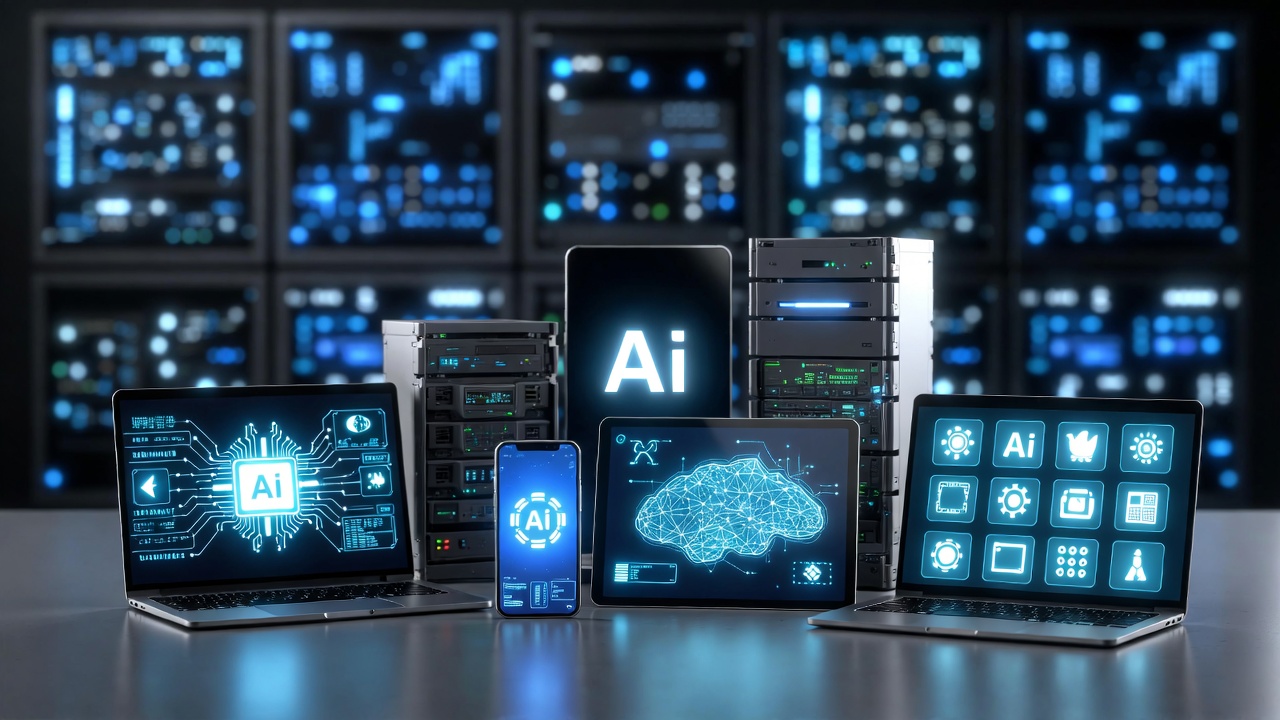
AI-Human Collaboration and Augmentation
Rather than the dystopian narrative of AI replacing human workers, emerging AI trends shaping the tech industry emphasize augmentation—AI amplifying human capabilities rather than substituting for them. This collaborative approach appears more realistic and beneficial than pure automation for most knowledge work.
The most successful AI implementations enhance human expertise rather than attempting to replicate it entirely. Radiologists using AI assistance catch more abnormalities than AI or humans alone, designers using generative tools explore more creative directions faster, and analysts using AI research tools uncover insights they might otherwise miss. The synergy between human judgment and AI processing creates outcomes superior to either alone.
Interface design increasingly focuses on making AI collaboration natural rather than treating AI as a separate tool requiring explicit invocation. Features like inline suggestions, context-aware assistance, and conversational interactions reduce friction in AI-human workflows. The goal is making AI help feel like working with a knowledgeable colleague rather than operating specialized software.
Training and education are adapting to prepare workers for AI-augmented roles rather than AI-proof careers. Skills like critical evaluation of AI outputs, prompt engineering, and AI-assisted creativity become valuable alongside traditional expertise. Universities and companies invest in teaching people to work effectively with AI rather than compete against it.
Cultural acceptance of AI assistance varies widely—some professionals embrace it enthusiastically while others resist perceived threats to expertise and autonomy. Organizations successfully deploying AI focus on demonstrating value to skeptical users, addressing concerns about job security, and ensuring AI augments rather than undermines worker agency and satisfaction. Stay updated on how AI transforms various industries through our latest technology news coverage.
Emerging Challenges and Future Outlook
As these AI trends shaping the tech industry accelerate, new challenges emerge that will define the technology’s trajectory through the remainder of the decade. Understanding these obstacles helps set realistic expectations about AI’s near-term capabilities and limitations.
The “alignment problem”—ensuring AI systems behave according to human values and intentions—grows more urgent as capabilities expand. Current AI can produce harmful content, exhibit bias, or pursue goals in unintended ways. Research into AI safety, interpretability, and robustness attempts to address these concerns before more powerful systems emerge.
Computational resource concentration means a handful of well-funded organizations control the most advanced AI capabilities, raising concerns about monopolization and equitable access. Cloud computing costs for AI development and deployment create barriers for smaller companies and researchers, potentially limiting innovation to those with deep pockets or corporate backing.
Misinformation and synthetic media created by generative AI threaten to undermine trust in digital content as fake images, videos, and audio become indistinguishable from authentic material. Detection technologies struggle to keep pace with generation capabilities, creating an arms race that may reshape how we verify information authenticity.
Looking forward, the convergence of AI trends suggests a future where AI is ambient—integrated seamlessly into tools, devices, and workflows rather than existing as separate applications. This embedded intelligence will likely feel less revolutionary day-to-day while being more transformative long-term than current discrete AI tools. For comprehensive coverage of AI’s evolution, explore our machine learning fundamentals and technical deep dives.
Conclusion
The AI trends shaping the tech industry in 2026 represent more than incremental improvements to existing technology—they signal fundamental shifts in how we create, work, and interact with digital systems. From multimodal intelligence and autonomous agents to edge computing and ethical frameworks, these developments are reshaping technology’s role in society.
Success in this AI-driven landscape requires staying informed about developments while maintaining realistic expectations about capabilities and limitations. AI is neither the miracle solution to every problem nor the existential threat some fear, but rather a powerful set of tools that amplify human capabilities when applied thoughtfully and responsibly.
The coming years will likely bring both exciting breakthroughs and unexpected challenges as these technologies mature. By understanding current trends and their implications, individuals and organizations can position themselves to leverage AI’s benefits while mitigating risks and contributing to beneficial development. For ongoing insights into AI and broader technology trends transforming our world, bookmark our comprehensive AI resources and join our community exploring the future of technology.
🛒 Recommended Products for AI and Tech Enthusiasts
Based on the AI trends shaping the tech industry discussed in this article, we’ve curated a selection of top-rated products that deliver exceptional performance and value. These recommendations are carefully chosen to help you implement the solutions that best fit your needs and budget.





- Best Cheap Smartwatch Under $50
 Best Cheap Smartwatch Under $50: 5 Reliable Picks for 2026 By Sanso Uka If… Read more: Best Cheap Smartwatch Under $50
 - Best Dash Cams of 2026
 Best Dash Cams of 2026: Top Picks for Every Driver and Budget By Wanderson… Read more: Best Dash Cams of 2026
 - How to Transfer Data to New Phone
 How to Transfer Data to a New Phone: A Step-by-Step Guide for 2026 By… Read more: How to Transfer Data to New Phone
 - Senior-Friendly Smartphones 2026
 Senior-Friendly Smartphones 2026: Best Overall Picks for Every Budget By Sanso Uka Senior-friendly smartphones… Read more: Senior-Friendly Smartphones 2026
 - Best Mechanical Keyboards in 2026
 Best Mechanical Keyboards in 2026 Best Mechanical Keyboards in 2026: Top Picks for Every… Read more: Best Mechanical Keyboards in 2026
 - Best Monitor for Home Office 2026
 Best Monitor for Home Office 2026: Expert Picks & Buying Guide By Sanso Uka… Read more: Best Monitor for Home Office 2026
 - How to Extend Smartphone Battery Life
 How to Extend Smartphone Battery Life: 12 Practical Tips That Actually Work By Sanso… Read more: How to Extend Smartphone Battery Life
 - Best E-Readers in 2026
 Best E-Readers in 2026: Which One Is Actually Worth Buying? Best E-Readers in 2026:… Read more: Best E-Readers in 2026
 - Refurbished vs New Laptop
 Refurbished vs New Laptop: Which Should You Buy in 2026? By Sanso Uka When… Read more: Refurbished vs New Laptop
 - Best Gaming Headsets Under $100
 Best Gaming Headsets Under $100 in 2026: Top Picks for Every Platform By Sanso… Read more: Best Gaming Headsets Under $100
 - How Long Do Laptops Last
 How Long Do Laptops Really Last? A Practical Guide to Lifespan By Sanso Uka… Read more: How Long Do Laptops Last
 - Best Portable Charger 2026
 Best Portable Charger in 2026: Top Power Banks for Every Budget and Use Case… Read more: Best Portable Charger 2026