
Tech Trends to Watch in 2026: What’s Actually Worth Your Attention
By Sanso Uka
The tech trends shaping 2026 aren’t just about flashy concepts — they’re about shifts that will change what you buy, how you work, and what your home looks like. Some of these were on the radar in 2024 and are now actually arriving in stores. Others are maturing quietly but matter far more than the headlines suggest. This guide cuts through the noise and focuses on what’s real, what’s close, and what’s genuinely worth tracking this year.
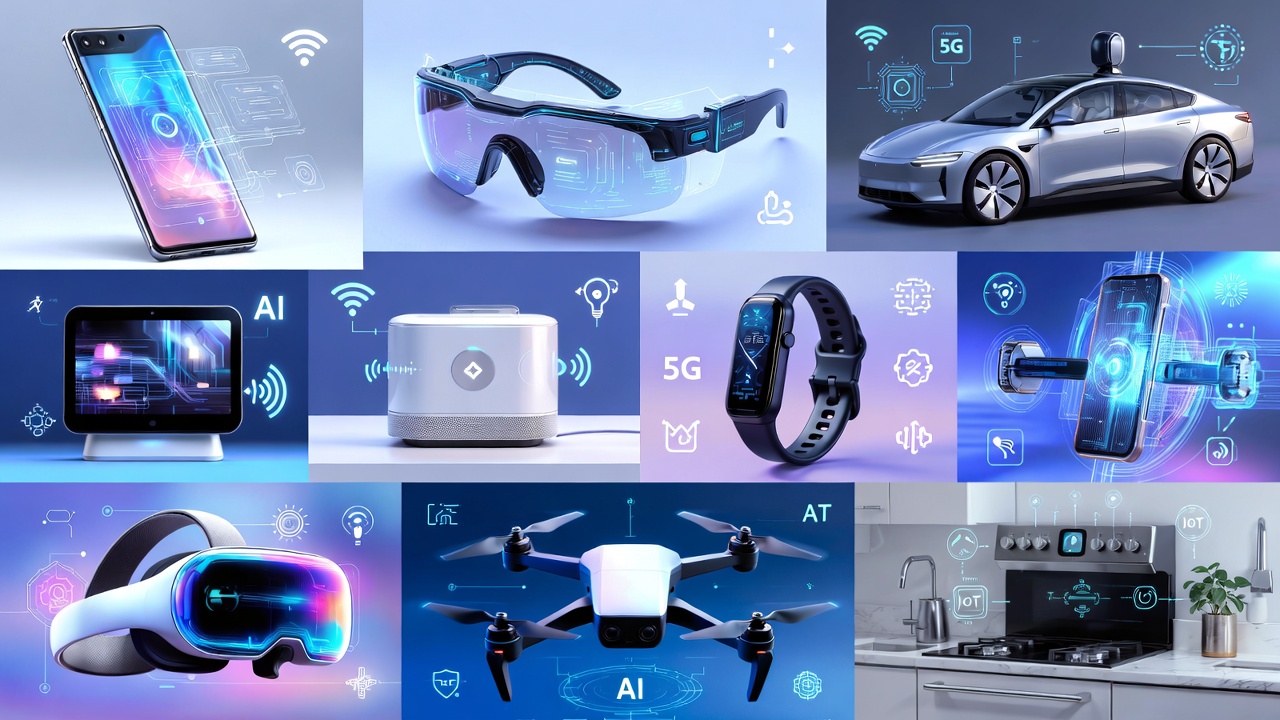
On-Device AI: The Cloud Is No Longer the Only Option
For the past few years, running AI meant sending your data to a remote server and waiting for a response. That model is shifting fast. Chips from Qualcomm, Apple, and MediaTek now include dedicated neural processing units (NPUs) powerful enough to run capable language and image models entirely on your device — without an internet connection.
What this means practically: faster responses, stronger privacy, and AI features that still work when your Wi-Fi is spotty. Apple’s A-series and M-series chips have led the way, but Qualcomm’s Snapdragon X Elite has pushed the conversation into Windows laptops, and mid-range Android phones are following. If you’re buying a new smartphone or laptop in 2026, NPU performance is a real spec to look at — not just clock speed and RAM.
The limitation? On-device models are still smaller than cloud-hosted ones. They handle summarization, photo editing, and voice commands well, but for complex multi-step reasoning or large document analysis, cloud-based tools still win. It’s a trade-off, not a replacement.
For a closer look at how these tools are evolving on both platforms, check out our coverage of AI tools and chatbots and the broader picture of future AI trends.
📌 Don’t forget to save this post — on-device AI is moving fast and this guide will be useful to revisit when you’re next shopping for a phone or laptop.Foldables: Finally Past the “Early Adopter Tax” Phase
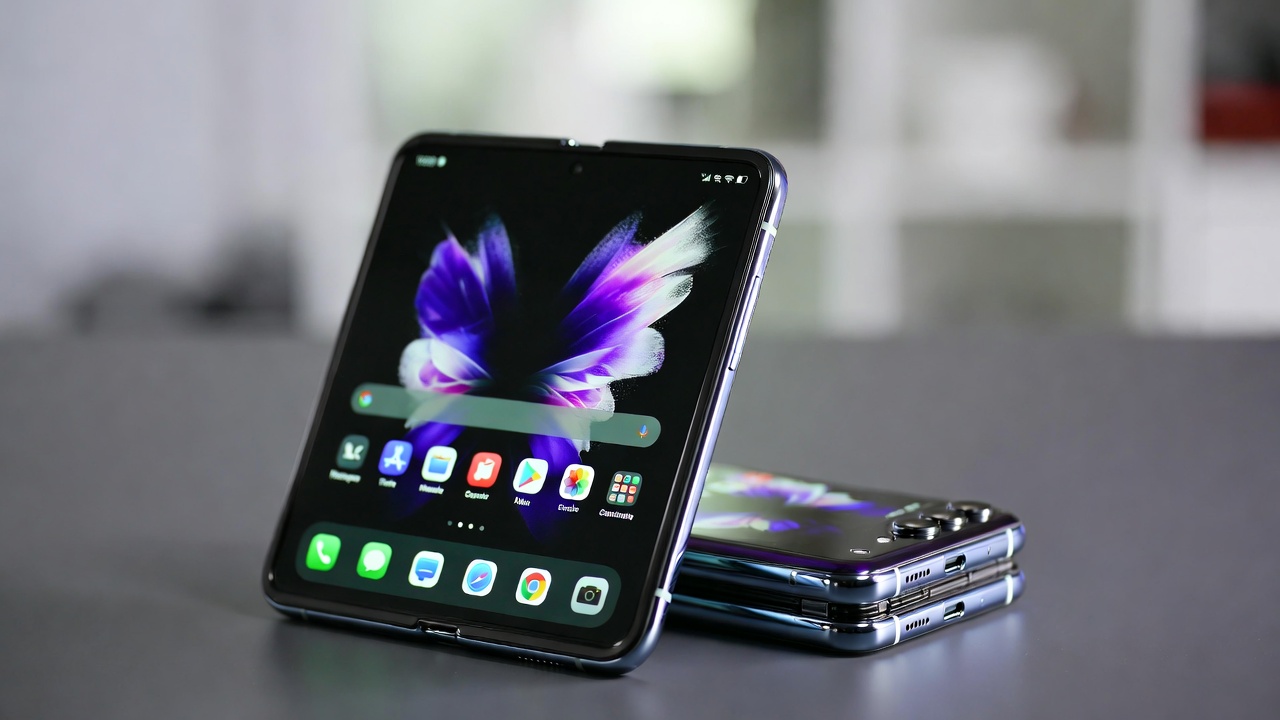
Foldable phones spent several years being impressive and impractical at the same time — expensive, fragile at the crease, and running software that didn’t quite know what to do with the extra screen space. In 2026, that gap has narrowed substantially.
Samsung’s Galaxy Z Fold lineup and its competitors from Motorola and OnePlus have refined the hinge mechanisms to the point where durability is no longer the main conversation. Prices have dropped from the $1,800–$1,999 range of early models toward the $1,100–$1,400 range for many flip and fold options. That’s still premium territory, but it’s now competing with flagship phones rather than requiring its own budget category.
Android’s multitasking features have also improved, making the larger inner display genuinely useful for productivity — split-screen apps, drag-and-drop between windows, and better stylus support on compatible models. If your work involves reading documents, annotating PDFs, or running two apps simultaneously, a foldable starts to make real sense.
Where foldables still fall short: battery life remains a challenge given the thinner form factor, camera systems are sometimes smaller than their non-folding siblings to accommodate the hinge, and software optimization varies across manufacturers. The category is good, not perfect.
You can explore compatible smartphone accessories that work across foldable and traditional form factors if you’re considering the switch.
AR Glasses: The Slow Burn That’s Starting to Heat Up
Augmented reality glasses are not the mass-market product yet — but 2026 is the year the category stops feeling like vaporware. Meta’s Ray-Ban smart glasses have proven that people will wear camera-equipped AI glasses if they look normal. Apple’s Vision Pro, despite its $3,499 price tag, has started a design conversation that competitors are racing to answer with more affordable versions.
What’s realistic in 2026 is a generation of lightweight AR frames that overlay notifications, directions, and basic information onto your field of view — not full holographic computing. Think heads-up display functionality rather than a replacement for your phone screen. Battery life on current designs typically runs two to four hours of active use, which limits their role to specific contexts rather than all-day wear.
The companies to watch aren’t only the obvious ones. Startups with deep optics experience, along with established players like Google (quietly revisiting AR after Glass), are pushing lens and waveguide technology forward. If you’re curious but not ready to spend, 2026 is a good year to observe — the right time to buy is likely 2027 or 2028 for most people.
Smart Home: Matter Protocol Growing Up
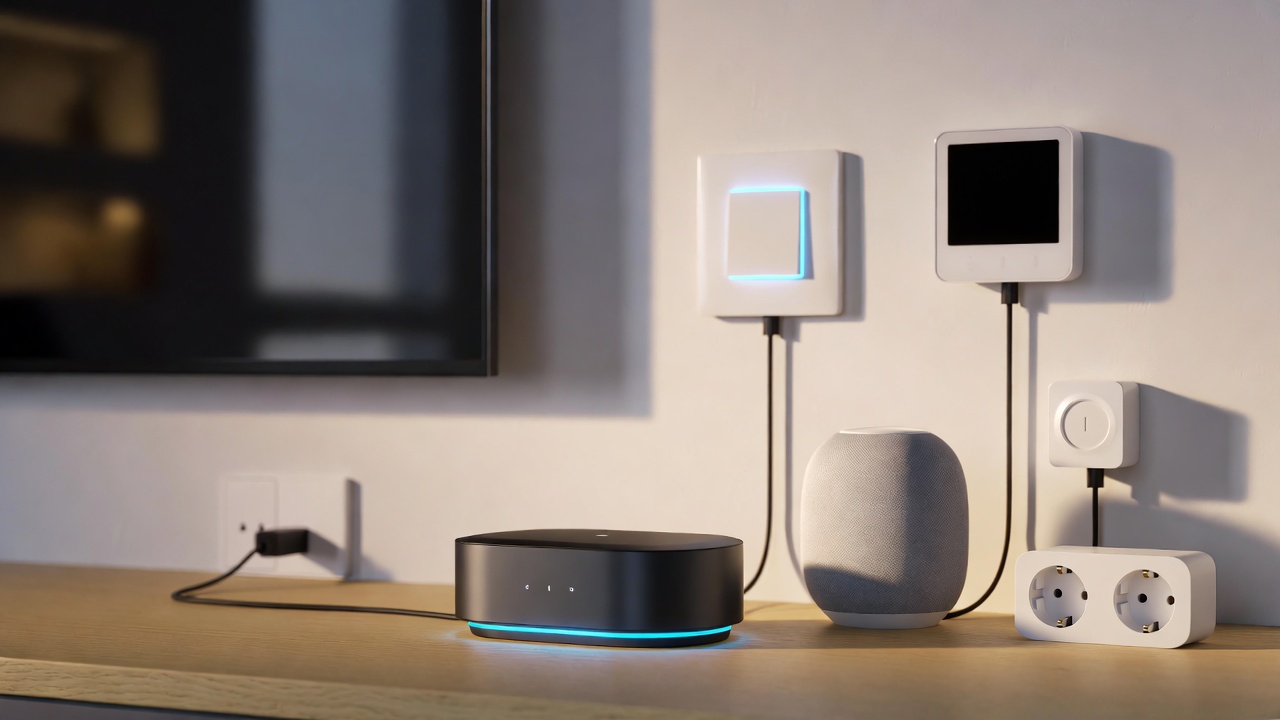
For years, smart home devices meant picking a side — Apple HomeKit, Google Home, Amazon Alexa — and accepting that your devices wouldn’t talk to each other across ecosystems. The Matter standard, developed by the Connectivity Standards Alliance with backing from Apple, Google, Amazon, and Samsung, was designed to fix that. It launched in late 2022 and has been adding device categories steadily since.
By 2026, Matter support covers smart plugs, lights, locks, thermostats, sensors, and increasingly, cameras and appliances. If you’re building or rebuilding a smart home setup, buying Matter-certified devices gives you genuine flexibility — they work across platforms and won’t be stranded if you switch from Alexa to Google Home down the line.
The catch: not all Matter-certified devices are equal in how well they implement the standard, and some features only work within a brand’s own app. Thread — the low-power wireless protocol that Matter uses for devices — requires a Thread border router in your home, which is included in Apple HomePod mini, Google Nest Hub (2nd gen), and some other hubs, but not all routers.
Our guide to home automation covers which hubs and devices work best together if you want a practical starting point.
💡 Save this guide for later — smart home decisions are long-term investments and it’s worth returning to this when you’re ready to expand your setup.PC Gaming Hardware: The Console vs. PC Balance Shifts Again
The GPU market is in an interesting position heading through 2026. NVIDIA’s RTX 50-series and AMD’s RDNA 4 cards have pushed performance ceilings higher, but they’ve also pushed prices up at the top end. What’s more notable for most buyers is what’s happened in the mid-range: cards with hardware ray tracing and AI upscaling (DLSS 4 on NVIDIA, FSR 4 on AMD) are now available at prices that used to get you a mid-tier card with none of those features.
AI-powered upscaling is no longer a niche trick — it’s a standard part of the PC gaming experience. DLSS 4’s multi-frame generation and FSR 4’s improved reconstruction mean that raw rasterization performance matters slightly less than it did two years ago. A GPU running at 1440p with upscaling active can deliver 4K-equivalent quality without the 4K power draw.
On the console side, Sony and Microsoft continue to hold their ground with fixed-hardware efficiency, but the PC’s advantage in resolution, frame rates, and game library has widened. If you’re deciding between a gaming PC and a console in 2026, the honest answer is that a well-built mid-range PC (around $800–$1,100 for the GPU and core components) now beats a current-gen console in nearly every technical metric while offering more flexibility.
Handheld gaming PCs — led by the Steam Deck OLED and competitors from ASUS and Lenovo — have also matured into a genuine category rather than a curiosity. Battery life and thermal management remain the real limitations at this form factor.
Battery Technology: Incremental Progress, Real Impact
Solid-state batteries have been “two years away” for roughly a decade, but the timeline is finally becoming credible. Several automakers have confirmed solid-state cells in limited vehicle production by 2026–2027, and the consumer electronics supply chain is watching closely. Solid-state offers higher energy density (more capacity in the same physical space), faster charging without the same degradation risk, and improved safety compared to lithium-ion.
For smartphones and laptops in 2026, you’re not yet buying solid-state — but you are benefiting from silicon-anode lithium-ion improvements that some manufacturers have adopted. These provide modest but real gains in capacity and charging speed over standard graphite-anode designs. A phone claiming to charge from 0 to 80% in under 30 minutes in 2026 is doing it more safely and with less long-term degradation than a phone making the same claim in 2022.
The trend to watch: if solid-state reaches cost-competitive production for consumer electronics by 2027 or 2028, it will meaningfully change what’s possible in thin devices — more battery in less space, or the same battery in a thinner chassis.
❤️ Bookmark this post to revisit when evaluating your next device purchase — battery tech is one of those details that rarely gets the attention it deserves.What to Actually Do With This Information
Not every trend here requires you to spend money right now. On-device AI and Matter smart home devices are worth acting on today if you’re buying new hardware anyway — the ecosystem advantage is real. Foldables are worth considering if your budget is already in the $1,200+ range for a flagship phone. AR glasses, solid-state batteries in consumer devices, and next-gen handheld PCs are worth watching but not worth rushing into in 2026 specifically.
The pattern with most meaningful tech shifts is that the second or third generation of a product is the one that earns a recommendation without asterisks. Foldables hit that mark this year. AR glasses are one generation behind. On-device AI is arriving simultaneously across categories — which is what makes it the most broadly relevant trend of the bunch.
For more context on how these shifts interact with operating systems and software, our operating systems section tracks how Windows, macOS, and Android are adapting to AI-first hardware. If you’re weighing a hardware upgrade, that’s a useful place to ground the decision in what the software side actually supports.
The clearest next step: if you’re buying a phone or laptop in 2026, prioritize NPU capability and Matter compatibility where relevant. Those two specs will age better than almost anything else on the label.
External Reference
For technical details on the Matter smart home standard and which device categories are currently supported, the Connectivity Standards Alliance specifications page provides the official documentation.
- What Is Quantum Computing
 What Is Quantum Computing? A Practical Guide (2026) | Sanso Uka Tech What Is Quantum Computing? A… Read more: What Is Quantum Computing
 - Best AI Image Generators in 2026
 Best AI Image Generators in 2026: Which One Is Actually Worth It? Best AI Image Generators in… Read more: Best AI Image Generators in 2026
 - Is AI Replacing Jobs
 Is AI Replacing Jobs? The 2026 Data on What’s Actually Happening By Sanso Uka The question of… Read more: Is AI Replacing Jobs
 - Tech Trends 2026
 Tech Trends to Watch in 2026: What’s Actually Worth Your Attention Tech Trends to Watch in 2026:… Read more: Tech Trends 2026
 - Best Free AI Tools 2026
 Best Free AI Tools 2026: My Honest Stack for $0 By Sanso Uka Let’s cut through the… Read more: Best Free AI Tools 2026
 - What Is Generative AI
 What Is Generative AI? A Plain-English Guide for 2026 What Is Generative AI? A Plain-English Guide for… Read more: What Is Generative AI
 - Future of Artificial Intelligence 2026
 Future of Artificial Intelligence 2026: From Chatbots to Personal Agents By Sanso Uka If 2025 was the… Read more: Future of Artificial Intelligence 2026
 - Best AI Tools 2026
 Best AI Tools 2026: ChatGPT, Claude, Gemini & More Compared Updated · March 2026 Best AI Tools… Read more: Best AI Tools 2026
 - How to Set Up Smart Lighting at Home
 How to Set Up Smart Lighting at Home: Complete Beginner’s Guide (2026) How to Set Up Smart… Read more: How to Set Up Smart Lighting at Home
 - IoT Devices for Beginners
 Best IoT Devices for Beginners in 2026: Where to Start Best IoT Devices for Beginners in 2026:… Read more: IoT Devices for Beginners
 - Best Smart Smoke Detector 2026
 Best Smart Smoke Detector 2026: Which One Actually Protects Your Home? By Sanso Uka Let’s be honest—most… Read more: Best Smart Smoke Detector 2026
 - How to Control Your Smart Home with Your Phone
 How to Control Your Smart Home with Your Phone: A Practical Setup Guide By Sanso Uka Learning… Read more: How to Control Your Smart Home with Your Phone