
How AI is Transforming Software Development: A Complete Guide for 2026
The impact of AI on software development has fundamentally changed how we write, test, and deploy code. If you’re a developer or tech enthusiast, you’ve probably noticed how artificial intelligence tools have become essential parts of the development workflow. From intelligent code completion to automated testing, AI is reshaping every aspect of software creation.
I remember when coding meant spending hours debugging syntax errors and searching Stack Overflow for solutions. Now, AI-powered assistants can spot those errors before I even finish typing. This transformation isn’t just about convenience—it’s revolutionizing productivity, code quality, and how teams collaborate on complex projects.
In this guide, we’ll explore how AI is changing software development, from practical applications you can use today to emerging trends that will shape the future. Whether you’re a seasoned developer or just starting your coding journey, understanding these changes will help you stay competitive in the evolving tech landscape.

AI-Powered Code Assistants: Your New Development Partner
Code assistants powered by AI have become the most visible impact of AI on software development. These tools don’t just autocomplete your code—they understand context, suggest entire functions, and even explain complex algorithms in plain English.
GitHub Copilot, Amazon CodeWhisperer, and similar tools analyze billions of lines of code to provide intelligent suggestions. When I’m working on a new feature, these assistants can predict what I’m trying to build and offer complete code blocks that match my coding style. It’s like having a experienced developer looking over your shoulder, except they never get tired.
The real game-changer is how these tools handle boilerplate code. Tasks that used to take 20-30 minutes—like setting up API endpoints or database connections—now take seconds. This frees developers to focus on solving actual business problems rather than repetitive coding tasks.
However, it’s important to remember that AI assistants are tools, not replacements. You still need to understand what the code does, review suggestions carefully, and ensure it meets security standards. I’ve learned to treat AI suggestions as a starting point that requires human oversight and refinement.

Automated Testing and Quality Assurance
Testing has always been the tedious but necessary part of software development. The impact of AI on software development is perhaps most dramatic in this area, where machine learning algorithms now create, execute, and maintain test suites automatically.
AI testing tools analyze your codebase to identify potential bugs, security vulnerabilities, and performance bottlenecks before they reach production. These systems learn from previous test results to prioritize the most critical tests and skip redundant ones, cutting testing time by 60-70% in many cases.
What really impresses me is how AI handles regression testing. Instead of manually writing hundreds of test cases, AI tools observe how users interact with your application and generate tests based on real-world usage patterns. They can even predict which parts of your code are most likely to break when you make changes.
Visual testing has also improved dramatically. AI-powered tools can detect UI inconsistencies across different browsers and devices that human testers might miss. They compare screenshots pixel-by-pixel and flag even the smallest visual regressions. For teams working with mobile applications, this capability is invaluable.
Intelligent Code Review and Documentation
Code reviews used to mean waiting for senior developers to find time in their busy schedules. Now, AI tools provide instant feedback on code quality, security issues, and best practices compliance.
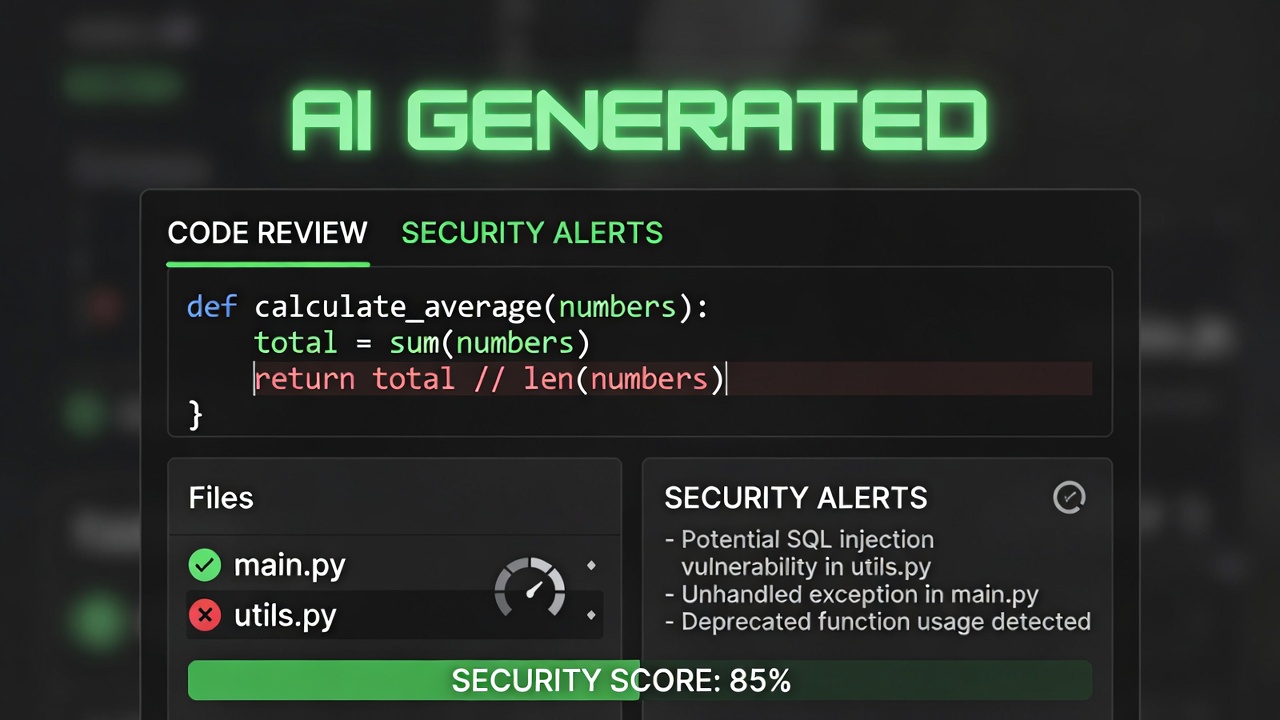
These systems go beyond simple linting. They understand architectural patterns, detect code smells, and suggest refactoring opportunities. When I submit a pull request, AI reviewers immediately flag potential issues like memory leaks, SQL injection vulnerabilities, or inefficient algorithms.
- Security Analysis: AI scans code for common vulnerabilities like cross-site scripting, authentication flaws, and data exposure risks, often catching issues that human reviewers miss in complex codebases.
- Performance Optimization: Machine learning models identify performance bottlenecks and suggest optimizations based on millions of analyzed code patterns and real-world performance data.
- Style Consistency: AI ensures code follows team conventions and industry standards, automatically detecting deviations from established patterns and suggesting corrections.
- Automated Documentation: Natural language processing generates clear documentation from code, explaining what functions do, their parameters, and expected outputs in human-readable format.
Documentation generation is particularly useful for legacy codebases. AI can analyze undocumented code and create comprehensive documentation automatically, saving weeks of manual work. This helps new team members understand complex systems much faster.
The integration with AI tools and chatbots makes it even more powerful, allowing developers to ask questions about code functionality in natural language.
Predictive Analytics for Project Management
The impact of AI on software development extends beyond coding itself into project planning and management. AI systems now predict project timelines, identify risks, and optimize resource allocation with impressive accuracy.
These predictive tools analyze historical data from thousands of completed projects to estimate how long features will take to build. When I’m planning sprints, AI can warn me if we’re overcommitting based on our team’s actual velocity, not optimistic estimates.
Risk detection has become proactive rather than reactive. AI monitors code commits, team communication patterns, and project metrics to flag potential problems weeks before they become critical. It might notice that a particular module is getting unusually complex or that dependencies are creating bottlenecks.
Resource optimization is another area where AI shines. The system suggests the best developers for specific tasks based on their skills, past performance, and current workload. This data-driven approach reduces burnout and improves team productivity significantly.
Natural Language to Code Generation
Perhaps the most revolutionary impact of AI on software development is the ability to generate working code from plain English descriptions. This technology is bridging the gap between business requirements and technical implementation.
You can now describe what you want in natural language—”Create a user authentication system with email verification and password reset”—and AI generates the complete implementation. While the code still needs review and customization, it provides a solid foundation that would have taken hours to build from scratch.
This capability is democratizing software development. Business analysts and product managers can prototype ideas without waiting for developer availability. When working with essential software tools, non-technical team members can create simple automations and integrations themselves.
The technology works both ways too. AI can read existing code and explain what it does in plain English, making legacy systems more accessible. This is especially helpful when onboarding new developers or conducting knowledge transfer sessions.

AI in DevOps and Infrastructure Management
DevOps practices have been transformed by AI’s ability to predict, prevent, and resolve infrastructure issues automatically. The impact of AI on software development operations has made deployments faster, safer, and more reliable.
AI-powered monitoring systems analyze application performance in real-time, detecting anomalies before they affect users. These tools learn normal behavior patterns and automatically alert teams when metrics deviate from expected ranges. They can even trigger automated remediation actions like scaling resources or routing traffic away from problematic servers.
Continuous integration and deployment pipelines now use AI to optimize build times and predict deployment risks. The system analyzes code changes to determine which tests are necessary, skipping irrelevant ones and reducing pipeline execution time by 40-50%. It can also predict the likelihood of a deployment causing issues based on similar past changes.
Infrastructure as code has become smarter with AI assistance. Tools can suggest optimal cloud configurations, identify cost-saving opportunities, and automatically right-size resources based on actual usage patterns. For teams managing home automation systems or complex deployments, this optimization is crucial.
Security scanning in the deployment pipeline has reached new levels of sophistication. AI analyzes container images, dependencies, and configurations for vulnerabilities, comparing them against constantly updated threat databases and suggesting secure alternatives automatically.
Machine Learning Integration in Applications
Developers are now integrating machine learning capabilities directly into their applications without needing deep AI expertise. Pre-trained models and accessible APIs have made features like image recognition, natural language processing, and recommendation engines available to every developer.
The barrier to entry has dropped dramatically. You don’t need to understand neural network architectures or train models from scratch. Instead, you can use services that provide ready-made AI capabilities through simple API calls. This has opened up possibilities that were science fiction just five years ago.
Common applications include chatbots for customer service, personalized content recommendations, fraud detection systems, and intelligent search functionality. These features used to require dedicated AI teams but can now be implemented by general software developers in days rather than months.
The ecosystem of AI tools continues expanding rapidly. From machine learning platforms to specialized models for specific industries, developers have unprecedented access to powerful AI capabilities that enhance their applications.
Challenges and Considerations
While the impact of AI on software development has been overwhelmingly positive, it’s not without challenges. Understanding these issues helps developers use AI tools more effectively and responsibly.
Code quality concerns arise when developers blindly accept AI suggestions without understanding them. I’ve seen junior developers copy-paste AI-generated code that works but introduces security vulnerabilities or technical debt. The key is using AI as a productivity tool while maintaining critical thinking and code ownership.
Bias in AI models is another consideration. These systems learn from existing codebases, which means they can perpetuate outdated patterns or suboptimal practices. Regular code reviews and staying informed about AI future trends help mitigate these issues.
Privacy and intellectual property questions need attention too. When AI trains on public repositories, there are ongoing debates about code licensing and attribution. Organizations must establish clear policies about what code can be used for training and how AI-generated code is managed.
Dependency on AI tools creates potential vulnerabilities. If critical development tools become unavailable or change their pricing models, teams need backup plans. Maintaining core programming skills remains essential, even as AI handles more routine tasks.

The Future of AI in Software Development
Looking ahead to 2026 and beyond, the impact of AI on software development will continue accelerating. Emerging trends suggest even more dramatic changes in how we build software.
Autonomous development agents are already being tested—AI systems that can take high-level requirements and deliver complete, tested, deployed applications with minimal human intervention. While we’re not there yet, progress is rapid. These systems will handle increasingly complex tasks, from PC builds and components software to enterprise applications.
AI pair programming will evolve from code completion to genuine collaboration. Future tools will engage in dialog, ask clarifying questions, suggest architectural approaches, and challenge assumptions just like a human colleague would. The interaction will feel more like working with a senior developer than using a tool.
Low-code and no-code platforms powered by AI will become more sophisticated, enabling non-developers to create production-ready applications. This democratization will shift developers’ focus from writing basic CRUD applications to solving truly complex problems that require human creativity and judgment.
The integration with emerging technologies like quantum computing and advanced gaming platforms will create new opportunities. AI will help developers navigate these complex technologies without requiring years of specialized training.
Practical Steps to Embrace AI in Your Development Workflow
Understanding the impact of AI on software development is one thing—actually using it effectively is another. Here are practical steps to integrate AI into your workflow without becoming overly dependent on it.
Start with code completion and gradually expand to more advanced features. Most developers find immediate value in AI-powered autocomplete, which builds confidence before trying automated testing or code generation. Spend a few weeks with basic features before exploring advanced capabilities.
Establish team guidelines for AI usage. Decide which tasks are appropriate for AI assistance and which require pure human judgment. Create review processes for AI-generated code, ensuring someone with expertise validates suggestions before they enter production.
Invest in understanding how AI tools work. You don’t need to become a machine learning expert, but knowing the basics of how these systems operate helps you use them more effectively and understand their limitations. Resources on gadgets and technology can provide additional context.
Maintain your fundamental skills. AI should enhance your capabilities, not replace them. Continue learning core programming concepts, algorithms, and architectural patterns. The best developers combine AI assistance with deep technical knowledge.
Stay updated on new tools and capabilities. The AI landscape evolves rapidly, with new tools and features launching constantly. Follow industry news, experiment with new platforms, and share learnings with your team.
Conclusion
The impact of AI on software development represents one of the most significant shifts in our industry’s history. From intelligent code assistants to automated testing and predictive analytics, AI is making developers more productive, code more reliable, and software development more accessible.
The transformation isn’t about replacing developers—it’s about augmenting human creativity and problem-solving with machine efficiency and pattern recognition. The developers who thrive will be those who embrace these tools while maintaining strong fundamentals and critical thinking skills.
As we move through 2026 and beyond, AI will continue reshaping how we build software. By understanding these changes, adapting your workflow thoughtfully, and staying informed about emerging trends, you can harness AI’s power while avoiding potential pitfalls. The future of software development is collaborative—humans and AI working together to create better solutions faster than ever before.
🛒 Recommended Products for AI Software Development
Based on the impact of AI on software development discussed in this article, we’ve curated a selection of top-rated products that deliver exceptional performance and value. These recommendations are carefully chosen to help you implement the solutions that best fit your needs and budget.





- Best Cheap Smartwatch Under $50
 Best Cheap Smartwatch Under $50: 5 Reliable Picks for 2026 By Sanso Uka If you’re hunting for the best cheap smartwatch under… Read more: Best Cheap Smartwatch Under $50
 - Best Dash Cams of 2026
 Best Dash Cams of 2026: Top Picks for Every Driver and Budget By Wanderson Nogueira Martins Choosing the best dash cam in… Read more: Best Dash Cams of 2026
 - How to Transfer Data to New Phone
 How to Transfer Data to a New Phone: A Step-by-Step Guide for 2026 By Sanso Uka Upgrading to a new smartphone is… Read more: How to Transfer Data to New Phone
 - Senior-Friendly Smartphones 2026
 Senior-Friendly Smartphones 2026: Best Overall Picks for Every Budget By Sanso Uka Senior-friendly smartphones in 2026 have come a long way from… Read more: Senior-Friendly Smartphones 2026
 - Best Mechanical Keyboards in 2026
 Best Mechanical Keyboards in 2026 Best Mechanical Keyboards in 2026: Top Picks for Every Budget and Use Case By Sanso Uka Finding… Read more: Best Mechanical Keyboards in 2026
 - Best Monitor for Home Office 2026
 Best Monitor for Home Office 2026: Expert Picks & Buying Guide By Sanso Uka Your monitor is the window to your digital… Read more: Best Monitor for Home Office 2026
 - How to Extend Smartphone Battery Life
 How to Extend Smartphone Battery Life: 12 Practical Tips That Actually Work By Sanso Uka You unplugged your phone at 8 AM,… Read more: How to Extend Smartphone Battery Life
 - Best E-Readers in 2026
 Best E-Readers in 2026: Which One Is Actually Worth Buying? Best E-Readers in 2026: Which One Is Actually Worth Buying? By Sanso… Read more: Best E-Readers in 2026
 - Refurbished vs New Laptop
 Refurbished vs New Laptop: Which Should You Buy in 2026? By Sanso Uka When you’re in the market for a laptop, the… Read more: Refurbished vs New Laptop
 - Best Gaming Headsets Under $100
 Best Gaming Headsets Under $100 in 2026: Top Picks for Every Platform By Sanso Uka Finding the best gaming headset under $100… Read more: Best Gaming Headsets Under $100
 - How Long Do Laptops Last
 How Long Do Laptops Really Last? A Practical Guide to Lifespan By Sanso Uka If you are shopping for a new computer… Read more: How Long Do Laptops Last
 - Best Portable Charger 2026
 Best Portable Charger in 2026: Top Power Banks for Every Budget and Use Case By Wanderson Nogueira Martins Finding the best portable… Read more: Best Portable Charger 2026